
Opinion
The Grid of Sovereignty: Powering Industrialization Through Shared Electricity
A 1,200-kilometer power line between Tanzania and Zambia is a test of whether the continent can treat energy as a common asset rather than a national trophy.

By Ratnakar Wagh
Consider a peculiar African paradox. In one capital, ministers cut ribbons on a vast new power station and wonder what to do with the surplus. A thousand kilometers away, factory owners run diesel generators because the national grid cannot be trusted. The electrons exist. The border is in the way.
That paradox is now being tested in Tanzania and Zambia. Tanzania’s installed generation capacity reached 4,646 megawatts this year, against a peak demand of about 2,271 megawatts, which leaves a theoretical surplus of roughly 2,375 megawatts. Much of that cushion comes from the Julius Nyerere Hydropower Project, a 2,115-megawatt plant that President Samia Suluhu Hassan inaugurated on August 22nd. Next door, Zambia’s grid has been hostage to drought-sensitive hydropower and chronic shortfalls. The two countries need each other. What they have lacked is a wire.
The Wire That Matters
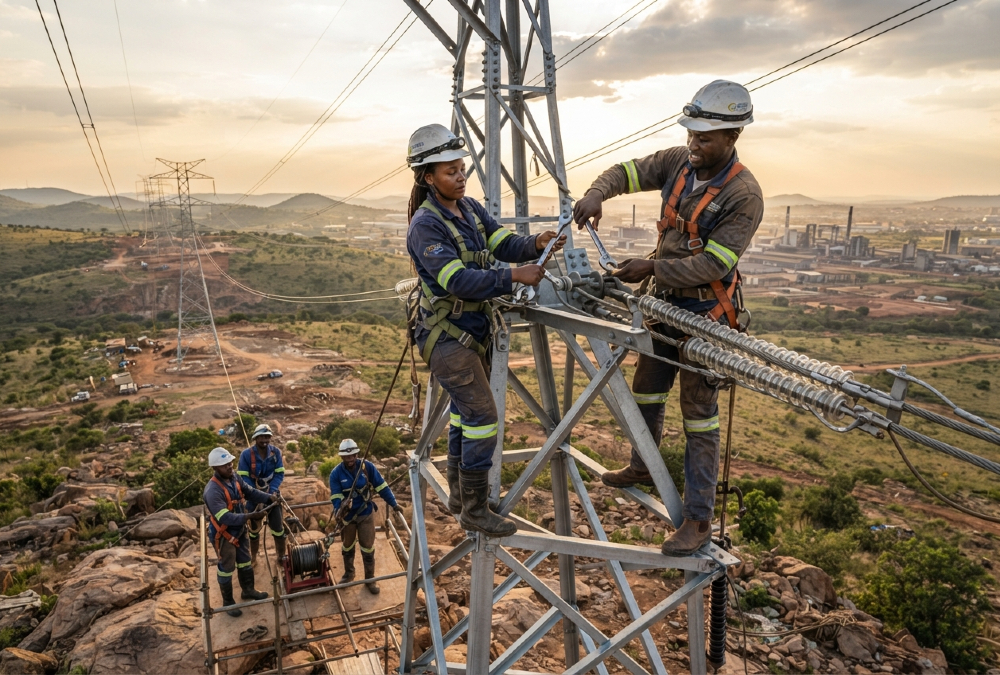
The Tanzania-Zambia Transmission Interconnector, known as TAZA, is meant to supply it. The line operates at 400 kilovolts on much of the Tanzanian side and 330 kilovolts in Zambia, and it is part of a wider 2,300-kilometer (1,430-mile) corridor. The project was first agreed in 2014, carries an estimated price tag of US$1.2 billion, and is designed to carry 500 megawatts.
Progress has been uneven, as it usually is with African infrastructure. Tanzania’s section was originally due for commissioning in May 2026. The Energy Ministry now says it is 92 percent complete and expects to finish in December 2026. Zambia is further behind: its government says the full scope will be commissioned by the second quarter of 2029. Its share is backed by US$292 million in grant financing. A decade and a half from signature to switch-on is not a scandal by continental standards. It is, however, a reminder that the binding constraint on African power is rarely engineering. It is patience, finance and political follow-through.
Power Lines Are Trade Deals
Economists like to say that infrastructure is policy by other means. A transmission line is a trade agreement made of steel and copper, and it changes behavior in at least three ways.
First, it changes what manufacturers can promise. A factory that cannot guarantee a stable supply cannot sign export contracts with confidence. Reliable power is less a convenience than a precondition for the energy-hungry industries, from smelting to fertilizer to data centers, that African governments say they want.
Second, it changes the economics of generation itself. A power plant built for one small national market must be sized, financed and priced around that market’s limits. A plant that can sell across borders can be larger, cheaper per unit and easier to finance, because lenders can see a bigger pool of customers. Tanzania appears to understand this. Its energy minister has confirmed that Kenya and Zambia are both seeking to buy its surplus electricity, and Tanzania says it has already agreed to sell to Zambia, even though the direct interconnector is not yet complete.
Third, it changes how countries insure one another. Hydropower-dependent systems suffer when rains fail, and the rains rarely fail everywhere at once. A connected grid lets a country in deficit import in a bad year and export in a good one. The line is, in effect, a regional insurance policy against the climate.
The Illusion of Surplus
A skeptical reader should pause here. A “surplus” on paper is not always a surplus in practice, and Tanzania’s own numbers are a caution. When a new 400-kilovolt line between Chalinze and Dodoma came online, national peak demand rose by 150 megawatts within days. The demand had been there all along, suppressed by constraints in the network. Much of Africa’s apparent oversupply is really undelivered supply. The real lesson of the continent’s electricity crisis is that transmission and distribution, the dull middle of the power system, are where the shortage actually lives.
This is also why the argument for new generation alone is misleading. Africa’s investment fashion favors the glamorous end of the chain: solar farms, dams, gas plants. Lines, substations and grid codes win fewer headlines and fewer ribbon-cuttings. Yet an unconnected power plant is a stranded asset, and a continent that builds generation faster than it builds grids will keep rediscovering the same blackout.
The Harder Test Is Political
Technology is not what will decide whether TAZA fulfills its promise. Cross-border power trade needs agreed tariffs, transparent dispatch rules, creditworthy utilities and a willingness to be dependent on a neighbor. Governments that regard electricity as a symbol of sovereignty tend to hoard it, and utilities that cannot collect bills at home are poor partners abroad. The line will bring a new kind of vulnerability along with its benefits: a country that imports power can be held to account, or held to ransom.
The prize, though, is considerable. Completion of the line would physically join the Southern African Power Pool and the Eastern Africa Power Pool into a combined market spanning more than 20 countries. Africa has spent years negotiating a continental free-trade area for goods. Moving electricity across borders may be the harder test, and the more rewarding one, since power is the input that nearly every other product depends on.
Connect the Grid, Then the Markets
The question TAZA poses is a simple one. If Africa wants to link its markets as ambitiously as it says it does, can it link its grids with the same energy? Tanzania and Zambia are close to an answer, though not yet there. The next chapter of African industrialization will depend less on how many megawatts the continent generates than on how intelligently it moves them. The countries that grasp that first will not just keep their lights on. They will keep their factories open.
Ratnakar Wagh is an entrepreneur, management professional, and CEO of Tanzania-based Kinglion Investment Company, an investment firm driving industrial development across Africa through initiatives in manufacturing, renewable energy, and logistics infrastructure. He specializes in organizational transformation, sustainability, and leadership, with a strong focus on building high-performing teams and creating long-term value across emerging markets.
