
Business
Mursik, Kenya’s Marathon Drink, and Africa’s Brand Gap
Kenya’s marathon champions run on mursik, a smoked fermented milk that costs a fraction of imported Greek yogurt. The question is who will capture the value, and whether Africa will build its own brands or keep renting other people’s stories.

By Sheena Raikundalia
As runners crossed the finish line at the Standard Chartered Nairobi Marathon last week, a question nagged at me. What awaits Kenya’s champions when they get home?
It is not a sports drink. It is a gourd of mursik, the smoked, fermented milk that Kalenjin families have made for generations.
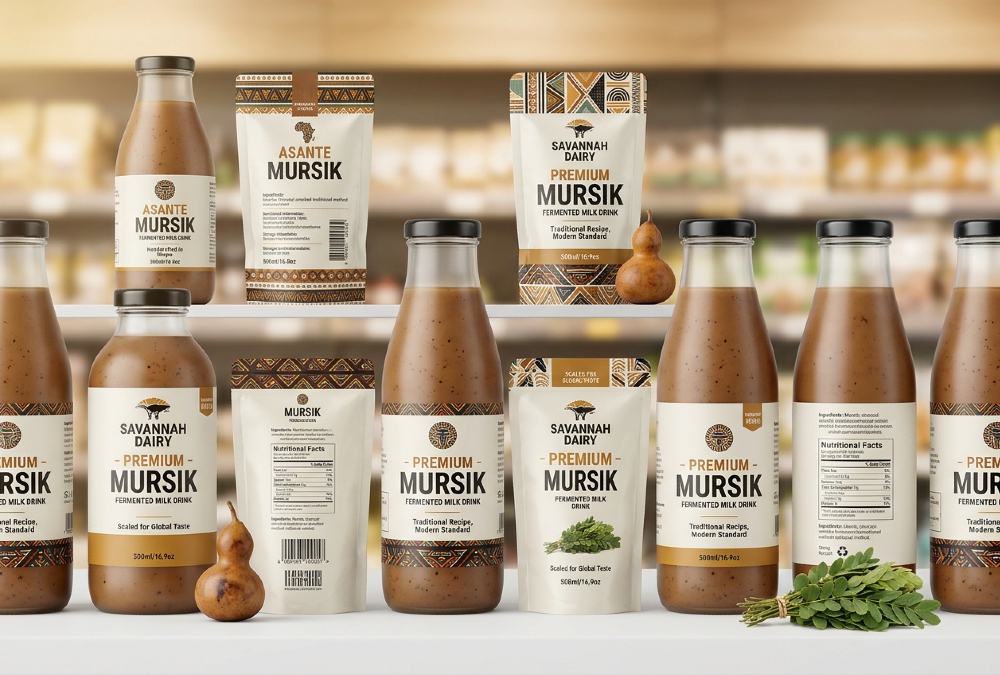
Now walk into a Nairobi supermarket. At Carrefour, a liter of Kenyan-made Greek-style yogurt sells for KSh 778 (US$6). Mursik is beginning to appear in the same retail landscape. Soin sells it through health stores at KSh 249 (US$1.90) a liter. Even dressed up as a wellness product, a drink with a far deeper claim to authenticity commands less than a third of the price of a borrowed Greek story.
The Myth of the Native Advantage
The obvious reply is that Kenya’s premium is simply lower because its product is humbler. History suggests otherwise. Greek yogurt’s global triumph was not engineered by a Greek company. In 2005 Hamdi Ulukaya, a Kurdish immigrant from Türkiye, bought a yogurt plant in upstate New York that Kraft was closing. He launched Chobani two years later. By October 2025 the company was valued at around US$20 billion.
Strained yogurt had been made for centuries across the Eastern Mediterranean and the Middle East. Ulukaya did not invent it. He built the category. That meant a consistent product that tasted the same in Ohio as in Oregon, modern packaging, a story about protein and health, and a brand that shoppers were happy to pay more for. The lesson is uncomfortable. Heritage is not a moat. It is raw material, and whoever refines it first keeps the margin.
A Better Story Than Anything on the Shelf
On narrative alone, mursik should win. It is fermented, made from local milk, and traditionally prepared in a gourd cleaned and flavored with the charred wood of a native tree. It is bound up with one of the most remarkable athletic traditions on earth, produced by a region whose distance runners have dominated the world’s marathons for a generation. No marketing agency in Manhattan could invent that.
Nor is Kenya alone. Across the continent, fermented dairy is a quiet inheritance. South Africans drink amasi, West Africans make nunu and fura da nono, and Ethiopian households churn ergo. These are products of pastoral intelligence, refined over centuries, and each is a possible category waiting for a builder. As global shoppers hunt for gut health, probiotics and “functional” food, Africa is sitting on a pantry that Western brands would pay consultants millions to discover.
What the Story Lacks
What mursik lacks is everything around the story. Building that is unglamorous work:
- Food science and consistent fermentation, so that a bottle in Mombasa tastes like one in Eldoret
- Quality standards and safety certification, which unlock supermarket shelves and export markets
- Reliable supply from dairy cooperatives, with fair contracts and cold-chain infrastructure
- A brand that people outside the Rift Valley, and eventually outside Kenya, actually want to buy
None of this is romantic, and all of it is expensive. It is also where the money is. The farmer who milks the cow earns a sliver of what the brand owner collects. Whoever controls the label, the standards and the distribution controls the margin.
The Question That Matters
That raises the question of who owns the value once it is created.
Africa has been here before. Ethiopia spent years contesting a foreign company’s attempt to patent methods tied to teff, a grain its people have grown for millennia. South Africa’s rooibos growers fought for, and eventually won, European Union protection for the name of their tea, a hard-won recognition that a product’s identity belongs to its place of origin. Shea butter, harvested largely by rural women across the Sahel, fills the shelves of global cosmetics houses, while most of the retail profit lands far from the villages that produce it.
The pattern is familiar. Communities keep a tradition alive, outsiders professionalize it, and the finished product is sold back to its originators at a premium. If the farmers, cooperatives and communities who preserved mursik are not the ones building the business, someone else eventually will. The story will then be sold back to us at a premium.
Who Will Build It?
It need not end that way. Kenya has the ingredients: a vast dairy sector, a growing middle class that is rediscovering its own foods, universities with food science programs and a continental free trade area that could make a good product travel. What it needs is capital that is patient, regulators that help rather than hinder, and entrepreneurs who treat tradition as an asset rather than an embarrassment. Cooperative ownership models and geographical-indication protections could ensure that the communities behind the knowledge share in the upside.
Kenya has given the world its greatest marathon runners. Who will build the drink that goes with them? Will it be us?
Sheena Raikundalia is an accomplished entrepreneur, former lawyer, government policy advisor, and angel investor with deep expertise across the legal, financial services, and impact investment sectors in Europe and Africa. She has played a pivotal role in advancing Africa’s technology and innovation ecosystems, leveraging a career that spans top-tier London law firms, leadership as Country Director of the UK-Kenya Tech Hub for the UK Foreign, Commonwealth & Development Office (FCDO), and her current position as Chief Growth Officer at agri-tech company Kuza One. Sheena is recognized for her strategic vision, commitment to fostering innovation, and strong advocacy for Africa’s growth potential in technology, entrepreneurship, and impact investment.
