
Opinion
Africa’s Oil Moment: From Crude Exports to Energy Power
From Juba to Lagos to Lamu, a wave of refinery and pipeline projects promises to keep more of Africa’s oil wealth at home. Whether it delivers depends on governance, not geology.

By Ratnakar Wagh
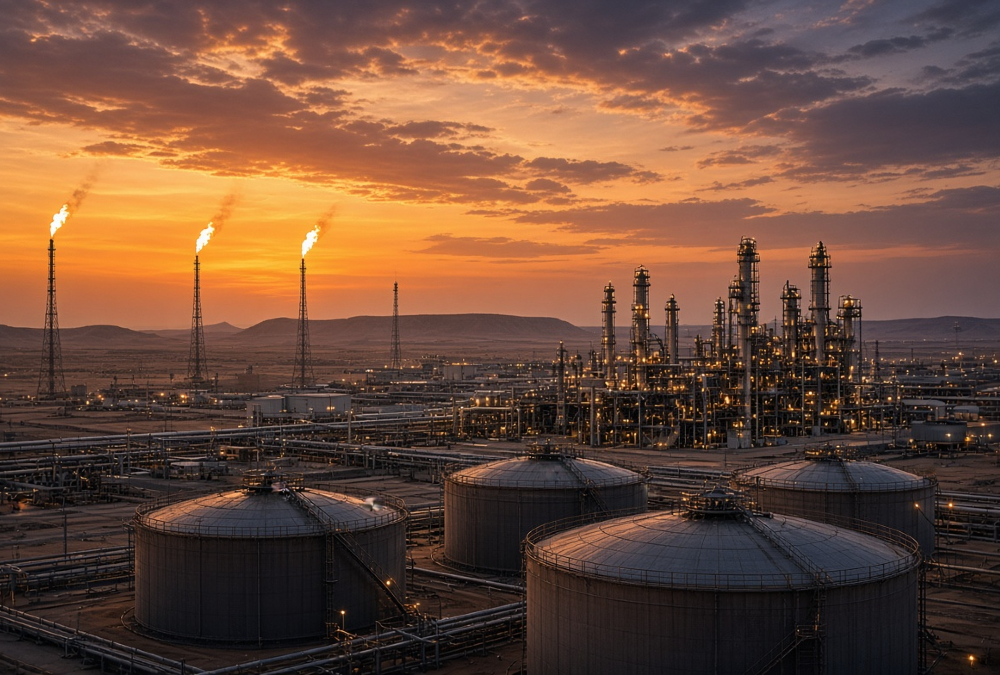
For most of the past century, Africa’s oil has followed a familiar route: out of the ground, onto a tanker and away to be refined somewhere else. The continent sold its crude cheaply and bought back gasoline, diesel and jet fuel at a premium. It is among the oldest bad bargains in the global economy. A growing number of African governments now say they want to end it.
Start in South Sudan, where a long-delayed agreement involving South Africa is finally inching forward. Exploration is under way in Block B2, and plans call for a 60,000-barrel-per-day refinery at Pagak. The project is still in the exploration phase and has a long way to go. But the ambition is plain: to turn a landlocked country’s underground resources into products that create jobs and revenue at home.
South Sudan is not alone. In Nigeria, the Dangote Refinery has reportedly reached a processing rate of 700,000 barrels per day. If the figure holds, it shows that a privately financed African refinery can operate at world-scale volumes, and that Africa’s largest crude producer need not keep importing the fuel it burns. The refinery also opens a path to selling refined products across the region and beyond.
Uganda, meanwhile, is pressing ahead with its oil ambitions. The East African Crude Oil Pipeline, which runs through Tanzania, is designed to carry the country’s crude to the coast and on to international markets. Kenya has drawn major investment interest in a planned 700,000-barrel-per-day refinery at Lamu, announced in September 2026. The project could serve markets across East Africa, though construction, financing and environmental hurdles remain. Angola, one of the continent’s established producers, is expanding its own refining capacity to cut its reliance on imported petroleum products.
Why Refining Matters More Than Drilling
Pumping crude is the easy part of the value chain. It requires capital and equipment, but comparatively few workers, and it leaves producers exposed to every swing in global prices. Refining is different. It demands skilled engineers, technicians and managers. It pulls in investment in ports, pipelines, storage and power. And it keeps a larger share of each barrel’s value inside the country that produced it.
The prize, in short, is industrial rather than merely extractive: jobs, expertise and infrastructure that outlast any single oil field. Picture an Africa in which producers supply one another with crude and refined fuels instead of leaning so heavily on distant suppliers. Intra-African energy trade would shorten supply chains, cushion shocks and give the continent’s economies a stake in one another’s success.
The Catch
None of this is guaranteed. Oil wealth has a long record of enriching the few and disappointing the many, and refineries are no exception. A plant that is poorly financed, badly managed or starved of crude becomes a very expensive monument. Pipelines cross borders, and with them come disputes over tariffs, security and sovereignty. Environmental risks are real, particularly for projects near fragile ecosystems and communities.
Four tests will separate durable success from expensive disappointment:
- Commercial viability. Projects must make economic sense without perpetual subsidy.
- Governance. Revenues and contracts need transparency, so that benefits reach citizens rather than a connected elite.
- Environmental responsibility. Safeguards must be built in from the start, not bolted on after the first spill.
- Regional cooperation. Pipelines, ports and trade rules work only when neighbors agree to make them work.
A Position of Strength
The goal should not be to swap one dependency for another, nor to become another captive of the global oil market. It should be more modest and more important: a continent able to meet more of its own energy needs, build competitive industries and negotiate with the rest of the world from strength rather than necessity.
Africa has the resources and, increasingly, the projects. What remains uncertain is whether it has the discipline to finish them well. The answer will determine whether this oil moment becomes a lasting industrial transformation or just another boom.
Ratnakar Wagh is an entrepreneur, management professional, and CEO of Tanzania-based Kinglion Investment Company, an investment firm driving industrial development across Africa through initiatives in manufacturing, renewable energy, and logistics infrastructure. He specializes in organizational transformation, sustainability, and leadership, with a strong focus on building high-performing teams and creating long-term value across emerging markets.
