
Opinion
How South Africa’s Auto Industry Can Become an African EV Powerhouse
Exporting Yesterday’s Cars Won’t Save South Africa’s Auto Industry.

By Des H. Rikhotso
For decades, South Africa’s automotive sector has stood as the crown jewel of the nation’s industrial policy. Contributing roughly 5.2 percent to GDP and anchoring over 110,000 direct manufacturing jobs, the industry proved that an emerging economy could integrate into sophisticated global value chains. Yet, as global decarbonization accelerates and trade alignments fracture, a dangerous complacency has crept into boardrooms and policy circles alike.
The prevailing consensus suggests that as Western markets tighten carbon borders and phase out internal combustion engines, South Africa can simply pivot its export dependency toward the rest of the continent under the African Continental Free Trade Area (AfCFTA).
This assumption is a strategic trap. It mistakes geographic diversification for industrial transformation.
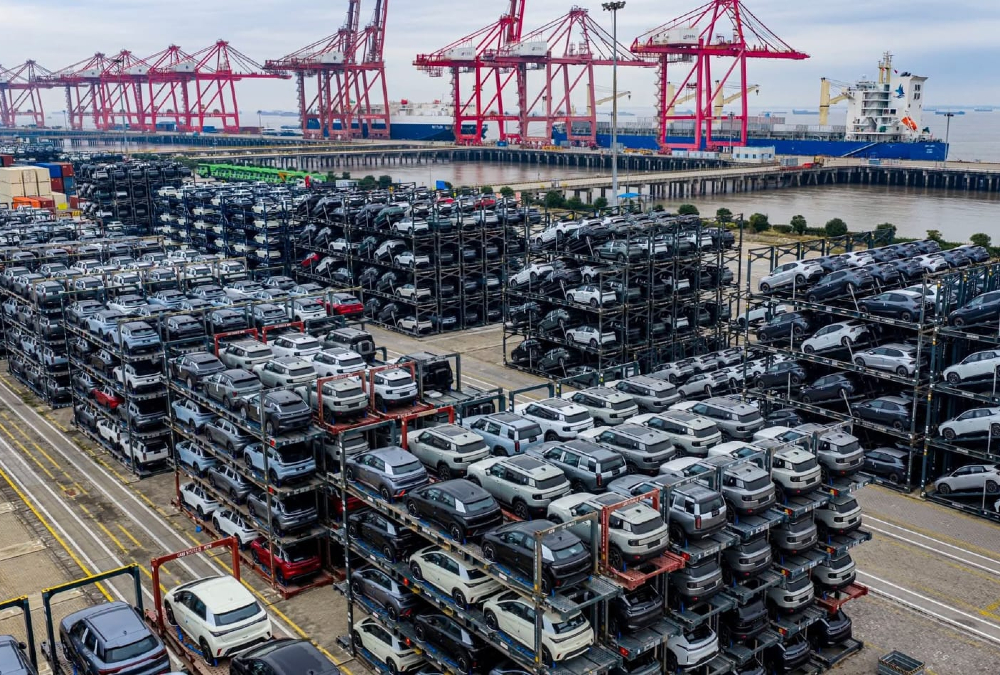
Simply redirecting our current export model toward African neighbors will fail if we ignore the underlying unit economics and supply-chain realities. Today, South Africa’s manufacturing footprint operates largely as an enclave calibrated for affluent Western consumers. We build high-spec, high-cost vehicles engineered for European highways and North American financing structures. That product mix is fundamentally misaligned with the price points, road infrastructure, and credit realities of the broader African consumer base.
To build a future-fit automotive ecosystem – one that anchors regional industrialization rather than defending legacy assembly lines – policymakers and investors must execute three structural shifts before the window of opportunity closes.
Product-Market Alignment Across the Continent
Under the South African Automotive Masterplan (SAAM 2035), the state set ambitious targets to lift local vehicle production to 1 percent of global output and deepen local content to 60 percent. However, actual production has stalled below 600,000 units annually, and local content hovers stubbornly near 40 percent.
Part of this stagnation stems from building the wrong vehicles for our own neighborhood. Across sub-Saharan Africa, mobility demand is exploding, driven by rapid urbanization and commercial logistics. Yet the market is overwhelmingly dominated by affordable, durable vehicles, with demand often met by imported pre-owned cars because new locally assembled models are priced out of reach.
The transition to New Energy Vehicles (NEVs) offers a rare chance to reset this equation, provided we do not treat EVs solely as luxury exports for the European Union. Instead of merely defending legacy internal combustion assembly lines, South Africa must incentivize the production of entry-level, ruggedized NEVs, including electric two- and three-wheelers, light commercial delivery vans, and modular passenger vehicles, engineered specifically for African terrain, grid realities, and purchasing power.
Government instruments like the Section 12V 150 percent tax deduction for EV and hydrogen investments provide a strong fiscal starting point. However, incentives must explicitly reward affordability and domestic utility rather than just export volume. If we build vehicles that Africans can actually afford to buy and maintain, regional volume will finally provide the scale our factories desperately lack.
Advancing Localization Beyond SKD Assembly
As legacy Western original equipment manufacturers (OEMs) hesitate over capital allocation, Chinese and Indian automakers have rapidly captured market share across South Africa and the wider continent. Their entry brings welcome competition and lower price points, but it also introduces a structural risk: the entrenchment of Semi-Knocked-Down (SKD) assembly.
SKD operations – where prefabricated kits are imported and bolted together locally – create minimal industrial depth. They bypass local steel, glass, plastics, and electronics suppliers, leaving domestic Tier-2 and Tier-3 component manufacturers starved of volume. Over the past two years alone, a dozen South African component makers have shut their doors, costing thousands of skilled jobs.
Integrating new Asian OEM entrants into the South African industrial fabric cannot stop at final assembly. Industrial policy must enforce rigorous, phased localization thresholds tied directly to market access and Automotive Production and Development Programme (APDP2) rebates.
At the same time, South Africa must address the operational bottlenecks that make local component manufacturing uncompetitive. Chronic port congestion, deteriorating freight rail capacity, and high energy costs act as an implicit tax on local suppliers. Financing must also evolve beyond standalone OEM plant subsidies to provide blended capital for Tier-2 and Tier-3 tooling, automation, and working capital. True localization means owning the intellectual property and manufacturing capability of the components inside the vehicle, not merely applying the final coat of paint.
Continental Value Chains: From Enclaves to Regional Scale
Perhaps the most profound shift required is psychological and geopolitical: South Africa must abandon a South Africa-centric manufacturing model. No single African nation possesses the domestic market size or the complete mineral-to-market supply chain required to compete against the subsidized industrial ecosystems of China, North America, or Europe.
True competitiveness lies in co-creating a cross-border Southern African value chain. The Southern African Development Community (SADC) holds roughly 25 percent to 30 percent of the world’s reserves of critical energy-transition minerals. South Africa commands nearly 80 percent of global manganese reserves and deep chemical-engineering expertise. The Democratic Republic of Congo (DR Congo) dominates global cobalt production. Zambia and Botswana hold vast copper and nickel deposits, while Zimbabwe possesses major lithium reserves.
Recent proposals by the International Trade Administration Commission (ITAC) to recognize critical minerals sourced from SADC and Southern African Customs Union (SACU) countries as qualifying local content under auto incentives mark a vital step forward. By allowing up to 50 percent of processed regional mineral value to count toward local content targets, policy begins to align regional comparative advantages.
Yet regulatory tweaks are not enough. South Africa must actively partner with the DR Congo-Zambia Battery Council and regional development banks to build synchronized cross-border corridors. Precursor refining in the Copperbelt, cathode manufacturing in South Africa, and specialized wire-harness or component production across neighboring SADC states can dramatically lower landed battery costs and achieve genuine economies of scale.
The Narrowing Window
The global automotive industry is undergoing its most radical transformation in a century. Supply chains for the next three decades are being locked in right now.
If South Africa clings to its role as a protected, high-cost assembly outpost hoping that AfCFTA tariff reductions will automatically absorb its current output, it risks slow industrial hollowing-out. Conversely, if business leaders and policymakers embrace product-market alignment, enforce deep Tier-2 and Tier-3 localization, and integrate regional mineral value chains, South Africa can anchor an industrial renaissance.
The choice is stark: defend an aging enclave, or co-create the mobility ecosystem that powers Africa’s next century of growth.
Des H. Rikhotso is a business commentator and C-suite executive with more than 28 years of leadership experience across Southern, East, and West Africa. He has held senior roles at BMW Group Africa, Volkswagen Group Africa, Toyota/Lexus South Africa, Nissan Group of Africa, and other leading automotive and industrial companies. Rikhotso is the recipient of South Africa’s NAAMSA Accelerator Award as the 2026 Automotive Industry Social Commentator and Influencer of the Year. He writes on business, mobility, industrial policy, and leadership in Africa and the Middle East. He holds undergraduate and postgraduate business degrees from the University of the Western Cape, Wits Business School, and the University of South Africa. He contributes opinion articles in a private professional capacity. He can be reached via email at: [email protected].
