
Opinion
Economic Integration and Oil Mean Nothing Without Execution

By Dishant Shah
Africa has no shortage of regional economic agreements. It has often had a shortage of the political will and institutional discipline needed to make them work. It has no shortage of underground wealth, either. The harder question, for trade pacts and petroleum alike, is whether a country can turn promise into productive capacity.
Two stories from East and Southern Africa suggest an answer. One is about borders that matter less. The other is about oil that matters more. Both come down to the same principle: prosperity is built by institutions, and neither geography nor geology builds it for you.
The East African Community’s Quiet Success
Consider first the East African Community (EAC), an unusual exception to the continent’s record of ambitious but unfulfilled agreements. With eight member states, a combined market of more than 300 million people and an institutional framework that goes well beyond a conventional free trade agreement, it has become one of Africa’s strongest examples of regional integration.
What makes the journey instructive is that integration was treated as a process, not a declaration. The Customs Union arrived in 2005, followed by the Common Market Protocol in 2010. The Monetary Union Protocol came in 2013, laying the groundwork for a common currency. Political federation remains the long-term ambition. The sequencing is the point: each step gave the next something to stand on.
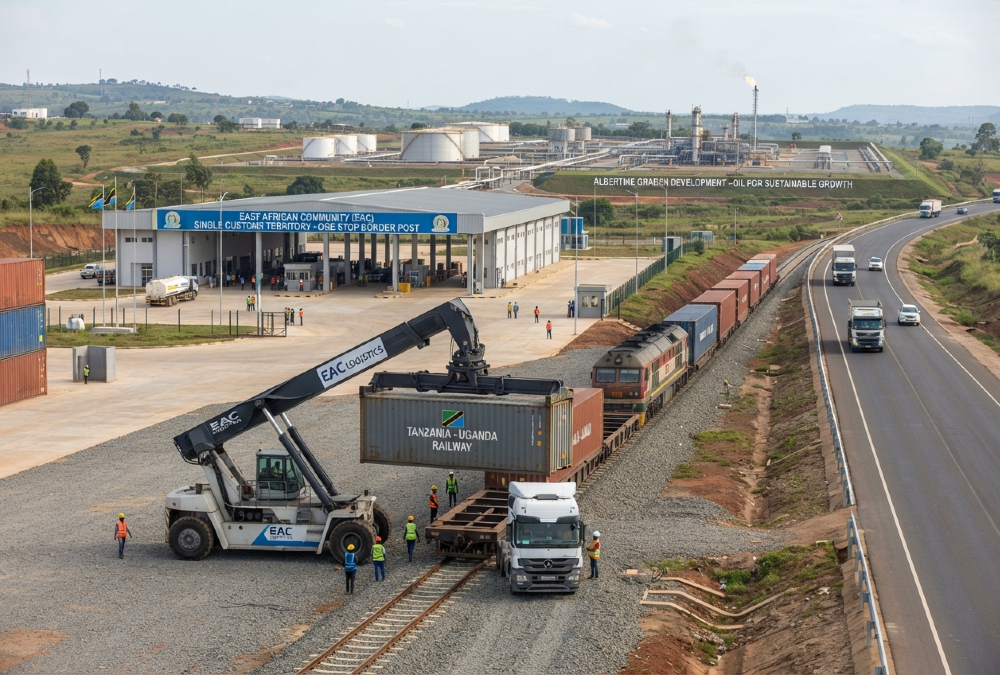
The real story lies in the practical mechanisms built around those milestones. A common external tariff, preferential intra-regional trade and harmonized customs procedures have created a more connected commercial market. Road corridors, ports, railways and energy networks are helping link landlocked economies to regional and international markets. This matters more than any communiqué, because integration means little until goods can actually move.
Most important, the EAC has institutions that outlast political announcements. Common market rules, regional bodies and mechanisms for policy coordination give cooperation a framework beyond any single government or electoral cycle. The African Union’s Africa Regional Integration Report 2025 gave the bloc an overall score of 0.77, reflecting the strength of its institutional and legal foundations.
None of this makes the EAC perfect. Non-tariff barriers, uneven implementation, infrastructure gaps and competing national interests still complicate the project. But the bloc demonstrates something that the rest of the continent would do well to absorb: regional integration is not achieved on a map. It happens when countries gradually make borders less consequential for businesses, workers, investors and consumers.
The Harder Arithmetic of Oil
If integration shows what patient institution-building can achieve, oil shows what happens when institutions are tested by sudden opportunity. Africa’s petroleum story is not really about what lies beneath the ground. It is about how much economic value stays above it.
Namibia and Uganda are two fascinating case studies in how new oil frontiers can reshape national economies. Namibia’s offshore Orange Basin has drawn major international players, including TotalEnergies, Shell and Galp. Uganda is moving toward commercial production from the Albertine Graben, with the Kingfisher and Tilenga projects and the East African Crude Oil Pipeline forming the backbone of its petroleum industry.
Discovering oil is the easy part. Turning it into lasting prosperity is considerably harder, and three questions will determine who really benefits.
How much value stays at home? Revenues matter, but so do local suppliers, skilled employment, engineering capabilities and supporting industries. A country that exports crude while importing most of its equipment, expertise and finished products captures only part of the opportunity.
Who controls the economics? Foreign capital and technical expertise are often indispensable in frontier exploration, and foreign investment is not the problem. Poorly structured incentives and weak accountability are. Governments must negotiate commercially sound agreements, collect revenue efficiently and build the institutional capacity to protect the public interest.
What happens after the oil runs out? Oil is a finite asset. Roads, ports, electricity networks, industrial capabilities and a skilled workforce can generate returns long after production declines. The challenge is to convert underground wealth into productive assets rather than merely finance a temporary consumption boom.
There is also a less comfortable reality. Infrastructure costs, volatile prices, environmental risks and project delays can all erode the returns that looked so attractive on the day a discovery was announced. Optimism is not a fiscal strategy.
One Test, Two Stories
At first glance, a customs union and an offshore oil block have little in common. One is slow, bureaucratic and largely invisible; the other is dramatic, capital-intensive and headline-friendly. Yet they pose the same question: can a country, or a region, build the rules, capabilities and discipline that turn opportunity into durable prosperity?
The EAC suggests the answer begins with patience: sequencing reforms, harmonizing procedures and building institutions that survive their founders. Namibia and Uganda face the same fundamental test from a different direction, whether petroleum becomes a catalyst for broader development or a brief windfall. They have different starting points, but the measure of success is identical. The real value of a discovery is the productive capacity, fiscal strength and economic resilience a country builds with it.
Africa’s future will not be decided by how many agreements it signs or how many barrels it finds. It will be decided by whether it builds the institutions that make borders matter less and resources matter more. The continent has the ingredients. The question now is whether it has the discipline.
Dishant Shah is a partner at Legion Exim, a company specializing in facilitating the export of high-quality engineering products directly sourced from manufacturers in India to Africa. His areas of expertise include new business development and business management.
