
Opinion
Africa’s Diaspora Is Not Just Exporting Culture. It Is Building a Market.
From jollof to fintech, people of African descent abroad are linking economies that once had little reason to talk to one another.

By Dishant Shah
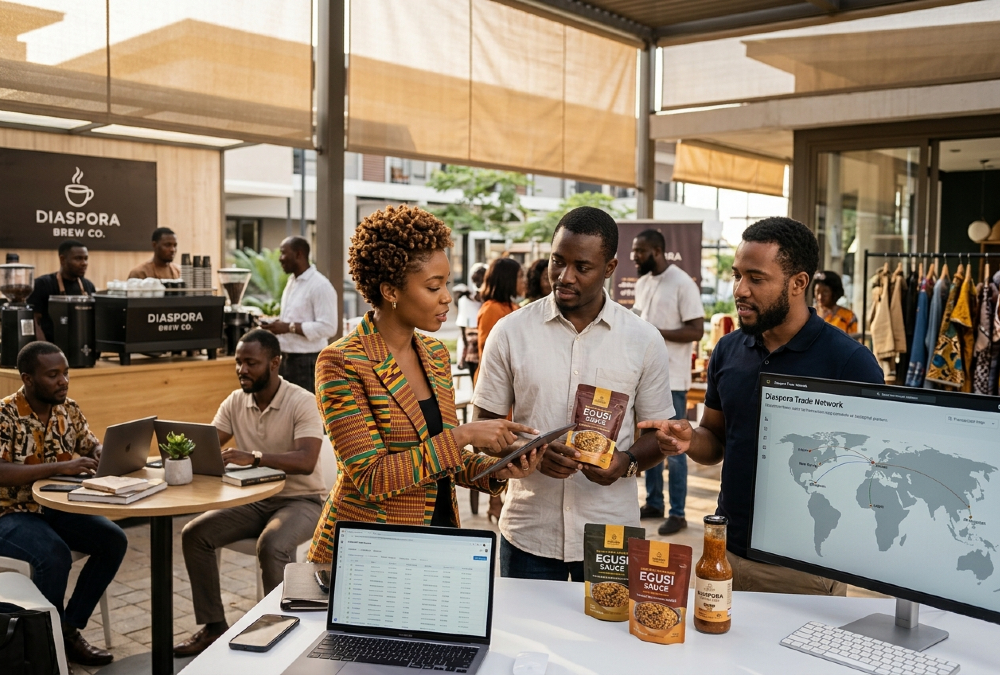
Walk into a restaurant in London, a boutique in Paris, a grocery store in New York or a record shop in Toronto, and the evidence is hard to miss. African food, fashion, beauty and music are no longer niche tastes. They are shaping what mainstream consumers buy. The more interesting question is how they got there. Much of the demand did not travel through advertising or retail strategy. It traveled through diaspora networks first.
From Niche to Mainstream
Food is the clearest example. Jollof rice, plantain, cassava, yam, West African spice blends and pepper sauces have moved from the “ethnic” shelf to restaurant menus, supermarket aisles and global food conversations. What began as cultural familiarity is turning into commercial demand, and demand that has been tested among loyal customers is far easier to scale than demand that has to be invented.
Fashion’s Two-way Street
Fashion follows a similar path. African prints, contemporary designers and streetwear now circulate between Lagos, Accra, Johannesburg, London and New York. The diaspora plays two roles at once. It is the customer who buys, and the cultural translator who explains why a garment or a label matters. Few marketing departments can match that combination.
Trust as Competitive Advantage
Then there is technology. African founders and engineers in global tech hubs are building companies around problems they understand from both ends of the journey: payments, remittances, logistics, identity, commerce and financial inclusion. Capital is plentiful in the places where they work. What it cannot easily buy is trust, local market knowledge and access. Diaspora networks supply all three.
A Loop, Not a Line
The result is an economic loop. People leave Africa, build careers and businesses elsewhere, and then create fresh demand for African products, talent, ideas and technology. Along the way, they introduce African tastes to consumers who had never encountered them. Each turn of the loop strengthens the next.
That suggests a better way to think about the diaspora. It is not merely a population living outside Africa. It is a distributed commercial network, one that connects markets that previously had little reason to interact.
Seen this way, “cultural export” is the wrong frame. It implies a one-way flow, from Africa outward, with the rest of the world as a passive audience. What is happening looks more like a web: people, capital and preferences moving in several directions at once, with the diaspora at the center of the knot.
Which raises the question that investors, brands and policymakers would do well to ask. How much of Africa’s next great consumer story will be built not in spite of the diaspora, but through it?
Dishant Shah is a partner at Legion Exim, a company specializing in facilitating the export of high-quality engineering products directly sourced from manufacturers in India to Africa. His areas of expertise include new business development and business management.
