
A Diaspora View of Africa
The African Diaspora is Broader than we think


By Gregory Simpkins
For more than a century, members of the African Diaspora in America and the Caribbean have made efforts to create linkages with our distant kin on the continent of Africa. This has gone beyond those born on the continent or their children who maintain familial ties. Those born outside of the continent have often tried to create and maintain connections with those of our people in Africa – sometimes successful, sometimes not.
However, the Diaspora is far broader than the United States, Canada, the Caribbean, and Europe. Here in the United States, we acknowledge people whose familial ties are from the Caribbean, such as Vice President Kamala Harris, whose father was from Jamaica, or the late former Secretary of State Colin Powell, also of Jamaican heritage. We are sometimes fans of Caribbean-born entertainers, such as the late Jamaican singer Bob Marley, Barbadian singer Rihanna, and Trinidadian singer Nicki Minaj.
However, we are largely unaware of Diasporans from other parts of the world, especially Latin America. The Diaspora populations in non-Caribbean parts of the Western Hemisphere are particularly large in Brazil (55,900,000, including multiracial people), Columbia (4,944,400), Venezuela (3,156,817), Mexico (1,386,556), Peru (1,200,000), Ecuador (680,000), Guyana (225,860), Suriname (200,406), Argentina (149,493) and Grenada (101,309).
Some of us have visited the legendary Diaspora-rich cities of Rio de Janeiro, Brazil (even though 8 of 10 residents of Salvador, Brazil are Diasporan), or Havana, Cuba, or hope to visit them in search of a connection to our African culture in this part of the world. But how many of us are aware of other cities on this side of the Atlantic Ocean with large Diaspora populations and cultures from the continent?
For example, Límon, Costa Rica, is considered the center of Afro-Costa Rican culture. In addition to the country’s beautiful landscapes, world-class beaches, and plentiful and diverse fauna and flora, Límon offers an experience of the inherited customs of West Africa. The Antilles definitively marked what Afro-Costa Rican culture is in architecture, food, music, and traditions.

Afro-Costa Ricans in Límon, Costa Rica
Then there is Esmeraldas, Ecuador. This city of roughly 650,000 people is about 70 percent Afro-Ecuadorian and maintains many African countries’ cuisine, culture, and particularities. Also, the city is home to breathtaking landscapes with outstanding beaches.
Isla Cólon, Panama, has the highest level of Diasporans in that country, with 48 percent African descendants. This city also boasts of inherited customs of West Africa, as evidenced in architecture, food, music, etc., along with stunning landscapes, world-class beaches, and beautiful and diverse fauna and flora.
When visiting Mexico, one likely thinks of cities such as Acapulco, but Mexico has Latin America’s fourth largest Diasporan population. Cuajinicuilapa is one of several regions in Mexico with the highest population of people of African descent, with an estimated 229,661 Afro-Mexicans.
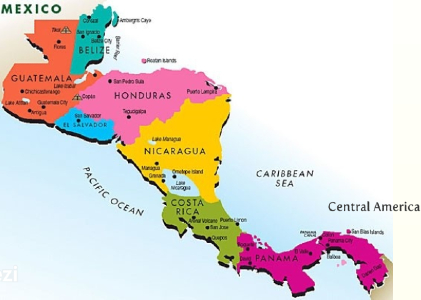
We tend not to think of the Diaspora when the names of Central American countries are mentioned (although Mexico is considered part of North America). Yet, there is much African tradition in these countries, in addition to several South American countries other than Brazil.
There is a truism that businesspeople come first as tourists and return later to do business. Since we tend not to visit these countries to seek African cultural enrichment, we wouldn’t think of establishing connections with members of the Diaspora there who could be business partners. We are missing the potential for mutually enriching trade and investment opportunities. Who knows how much potential revenue is lost due to this lack of connections?
A hand-up is much preferable to a handout
There are Diaspora companies involved in sectors spanning agricultural processing to wellness products to fashion to technology. Innovation is growing across the global Diaspora, but there must be a means of identifying and accessing these innovators. There does not seem to be such a consolidated source of information and connection.
If we remain out of communication and out of touch with one another, it will be as though we are operating partially blind with one hand tied behind our back. Indeed, connections among North Americans, Africans, and Caribbeans have tremendous economic potential, some already in place. However, more can be done if we can overcome language and cultural barriers and open our minds to new linkages that we didn’t expect.
Not only are there producers of products and services in many more places than we may have thought, but there are Diaspora venture funds, logistical companies, and marketing firms that can be the tide that lifts many more boats than occurs now. If you combine all these connections, the global Diaspora can make tremendous strides. This is not an appeal to exclusionary economics; instead, it is an effort to encourage the Diaspora to do all it can and meet potential non-Diaspora partners on a stronger basis. A hand-up is much preferable to a handout.
When the African Union made the Diaspora the sixth region of Africa in 2003, they did so not meaning just North America, Europe, the Caribbean, and Brazil; they meant for it to be all of the Diaspora. How will we access our brethren in the Middle East and the Pacific region if we cannot even reach them on this side of the Atlantic? We must leave none behind in our effort to build global Diaspora economic strength.
There are descendants of Latin America and the Caribbean who have succeeded commercially in North America, such as Rihanna. Not only is Rihanna an acclaimed entertainer, but she has brought business skills from Barbados to the U.S., creating the multimillion-dollar Fenty Beauty cosmetics and the Fenty X Savage lingerie lines.
However, a lack of initial celebrity did not hamper Nailah Ellis-Brown, who started Ellis Island Tea, using a Jamaican family-inspired line of naturally sweetened hibiscus tea beverages. Her company is now one of the largest Black-owned beverage companies in America.
One must ask how many other descendants of Latin America and the Caribbean have become successful without acknowledging their heritage and how many others operate in Central and South America without broader international clientele or investment for lack of notoriety or connections.
Perhaps the next time you visit these regions, you may discover products that could succeed if more potential customers knew about them. More financial and marketing supporters recognized the opportunities they presented. At the very least, if you visit these countries I have described earlier, you might enjoy the trip while you are there more than you would have previously and benefit more in the long run.
Gregory Simpkins, a longtime specialist in African policy development, is the Principal of 21st Century Solutions. He consults with organizations on African policy issues generally, especially in relating to the U.S. Government. He also serves as Managing Director for the Morganthau Stirling consulting firm, where he oversees program development and implementation. He further acts as a consultant to the African Merchants Association, where he advises the Association in its efforts to stimulate an increase in trade between several hundred African Diaspora small and medium enterprises and their African partners.
