
Editorial
South Sudan: Where to from Here?
By Dennis Matanda
Editor-in-Chief | The Habari Network
An exclusive interview with Mabior Garang de Mabior, Spokesperson for the Sudan’s People’s Liberation Movement-in-Opposition (SPLM-IO)
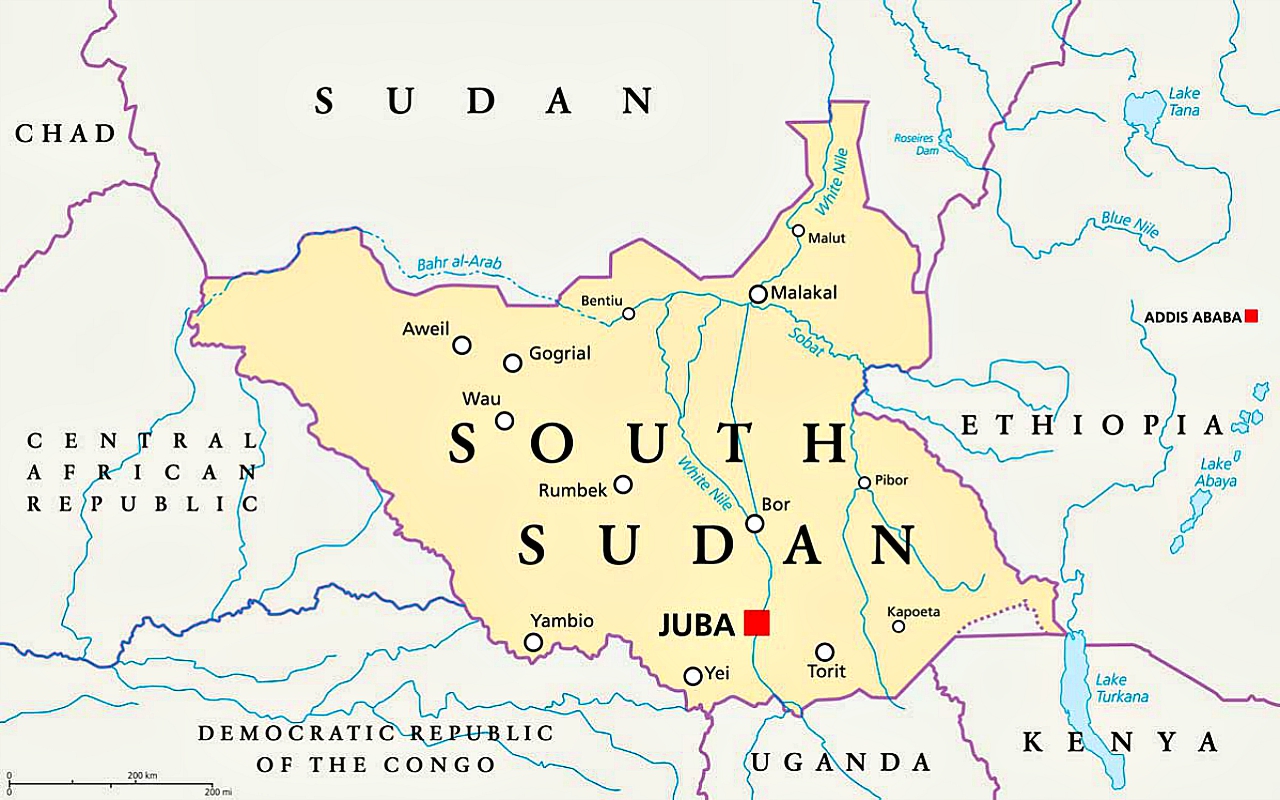
INSET: South Sudan is hurtling toward a November 12 deadline to form a transitional government to end 6 years of fighting that has killed over 400,000 and created 2.3 million refugees. The country descended into war on December 15, 2013, two years after becoming the world’s newest state. The conflict started as a dispute between President Salva Kiir and former Vice President, Dr. Riek Machar over the party nomination of its presidential flag-bearer. A heated December 13 meeting of the party leadership failed to resolve the issue. Within a few days fighting broke out in the military between Kiir and Machar loyalists, effectively cutting it in half.
In 2015, the Agreement for the Resolution of the Conflict in South Sudan (ARCSS), was brokered to end the fighting but it fell apart in 2016 after fighting recurred between forces loyal to the two principals. In September 2018, a Revitalized Agreement for the Resolution of the Conflict in South Sudan (R-ARCSS) was concluded to give peace a chance yet again. However, many of the issues that triggered the collapse of the ARCSS remain unresolved, chief among them the security arrangements. Fearing the likelihood of a repeat scenario, the opposition SPLM-IO called for a delay in installing the new government. President Salva Kiir however threatened to move ahead with the agreement with or without the opposition.
The SPLM-IO’s concerns are shared by a cross-section of South Sudanese including the South Sudan Civil Society Forum, a coalition of over 200 community-based organizations working in conflict-affected areas. The Forum has proposed a delay of 100 days to iron out the outstanding issues in order to prevent a relapse into war. On November 8, President Kiir and Machar met in Kampala, Uganda under the auspices of Ugandan President, Yoweri Museveni. The two sides agreed to a 100-day delay in a last-ditch effort to resolve outstanding issues. To find out the latest and what comes next, The Habari Network reached out to SPLM-IO senior negotiator and spokesperson, Mabior Garang de Mabior.
INTRO: For his age, Mabior Garang de Mabior has an extensive profile. He has lived in 7 countries on 3 continents, was educated in 4 of those countries, and is fluent in Spanish thanks to an early education in Cuba.
Mabior has also been a witness to history: He is the first bon son of South Sudan’s Founding Father, Dr. John Garang de Mabior – a near mythological figure in the two Sudans and highly regarded in Africa for his intellect and political skills.
The senior Garang participated in Sudan’s first armed struggle that broke out in 1955 and ended with the signing of the 1972 Addis Ababa Agreement. When that deal fell apart, he launched a second struggle in 1983 under the banner of the Sudan People’s Liberation Movement and Army (SPLM/A). Fighting ended in 2005 following the signing of the Comprehensive Peace Agreement (CPA) which paved the way for a referendum leading to South Sudan’s birth in 2011. Dr. Garang did not live to see this though: he died in a helicopter crash during a visit to neighboring Uganda a few months after signing the CPA and 3 weeks after his inauguration as President of the Government of South Sudan and Vice President of Sudan. This incident is still shrouded in mystery.
The younger Garang served his father’s cause for the better part of his young adult life. He cut short his college education to undergo military training in the SPLM/A several years before it opened peace talks. On the eve of the CPA he went to George Mason University but again pulled out to attend his father’s funeral. His quest to continue his father’s work led him back to the military as a captain in the Office of the Chief of Staff at Army Headquarters. In August 2012, 1 year after independence, Mabior, then out of uniform, broke his family’s political silence and declared his opposition to the country’s leadership.
War broke out a year later on December 15, 2013. That night security forces rounded up Kiir’s opponents and conducted targeted killings of members of the Nuer ethnic group – Machar’s community.
An African Union (AU) investigation termed these massacres as genocidal and called for the establishment of a Special Court to punish the perpetrators. Machar managed to escape following an attack on his house and went on to launch a rebellion under the SPLM-IO banner. Mabior publicly blamed the government for conducting and condoning targeted killings against the Nuer. Multiple death threats followed, prompting him to flee to exile. He subsequently teamed up with SPLM-IO, becoming its spokesperson and a member of its negotiating team.
Joining this movement was seen as significant and symbolic: Machar in 1991 opposed Dr. Garang militarily, leading to a bitter struggle that divided the SPLM/A. The pair eventually reconciled ahead of the CPA, paving the way for the movement’s reunification. Says Mabior: “those who accuse me of reaching out to SPLM-IO may as well hold my father in contempt because it was he who reconciled with Dr. Machar. In any case Dr. Machar had been involved in extensive reconciliation involving the communities affected by the 1991 events. This has been conveniently forgotten by some.”
Mabior’s decision to join Machar established him as a bridge in his country’s volatile politics. South Sudan’s top politicians have whipped up ethnic animosities between the Nuer and Dinka, the country’s two largest communities. Mabior is a Dinka, and from a prominent family, yet he was seen as standing up to Kiir’s Dinka-dominated government and publicly criticizing it for persecuting Nuers for political purposes. Mabior returned to South Sudan in 2015 under the terms of a short-lived peace deal. He became one of Africa’s youngest cabinet members as minister of water and irrigation. He returned to exile for the second time after that agreement collapsed.
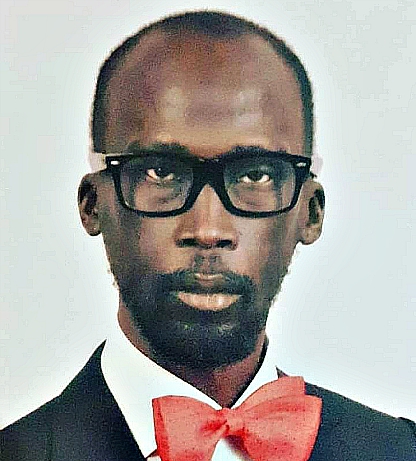
Capt. Mabior Garang de Mabior – (Chairman) National Committee for Information and Public Relations – SPLM/SPLA (IO)
Questions:
Dennis Matanda: I have to say it is an honor and privilege to talk to you and thanks for giving us your time.
Mabior Garang de Mabior: Thanks for having me on your network.
DM: Why did the SPLM-IO call for a delay in implementing the Revitalized Agreement?
MG: The question I would pose to you and your viewers is what kind of peace do we wish to see in the next 100 days? As we speak there is no solution on the security arrangements. Those who have followed our process would know that the collapse of the security arrangements is what destroyed the 2015 Agreement. This should not be taken lightly. During the chaos that gripped Juba after fighting erupted in July 2016, Dr. Machar’s residence was hit with rocket fire, tank fire, and aerial bombardment in what was a clear attempt to eliminate him. This is itself reminiscent of the opening stages of the civil war in 2013. We must prioritize the security arrangements if we are to avoid making the same mistakes and also to create a conducive environment to encourage our internally displaced communities and refugees to return and start rebuilding their shattered lives. We also need to prioritize humanitarian needs instead of focusing on government jobs.
The status of our Chairman, Dr. Riek Machar, is also an issue. Dr. Machar as you probably know has been literally confined to house arrest since 2016. This has been done in the false hope that he will be cut off from our movement and frozen out of the process of finding a solution to our country’s difficult situation.
He was initially held in South Africa against his will and then transferred to Khartoum. All this was done at the instigation of the Intergovernmental Authority on Development (IGAD), the mandated mediator of the South Sudan crisis. This is essentially a weaponized mediation; I cannot think of a more appropriate term. I cannot recall any instance in Africa’s recent history where a mediator has sought to destroy one of the parties to a negotiated settlement that it was mediating.
Dr. Machar has not been negotiating as a free man. The irony in all this is that the mediation knows full well that his participation is key to bestowing a semblance of legitimacy on what is essentially a very one-sided conflict resolution initiative. To put it plainly, the process favors the government side, sending it a signal that its intransigence will not be met with costs. To make matters worse Kiir enjoys the military backing of President Museveni who sits on the mediation team. It is a well-known fact that Kampala’s partiality on the South Sudan issue effectively makes it a party to the crisis. Meanwhile the objective of the Kiir regime is not peace; they want to portray our side as an obstacle but nothing could be farther from the truth. Kiir and his supporters hope to mobilize diplomatic pressure to push us against the wall and coerce us to return to Juba when many issues remain unresolved, particularly the security arrangements. We have been there before and we don’t see why anyone would want to see a recurrence of 2016.
DM: Can you tell us a bit more about the other outstanding issues besides security?
MG: We are deadlocked around state boundaries. South Sudan has a 10-state structure that was recognized by ARCSS and IGAD. Kiir however unilaterally expanded the number of states to 28 and then 32. IGAD noted that the decision to reconfigure the country’s internal boundaries was contrary to the peace agreement. Moreover, IGAD pointed out that any future agreement on boundaries should be part of a constitution-making exercise and involve South Sudanese, rather than enforced through presidential decrees. Our view on this is simple: the Revitalized Agreement is resuscitating the ARCSS and since ARCSS recognizes 10 states then the matter should not be open for debate. The issue of boundaries should not be preempted: it should be part of a constitutional process.
DM: The United Nations Security Council said that outstanding issues should not delay the formation of a transitional government. What is your position?
MG: The United Nations, more than anyone else in my opinion, knows what happened in 2016. They had a peacekeeping mission on the ground and know how quickly the security situation deteriorated. Indeed they were overwhelmed by the chaos, to say nothing about the early warning that they tried to act upon months before the fighting erupted. The UN Security Council has good intentions and the frustration by the international community is understandable, but, as we always say, the road to hell is paved with good intentions. The security arrangements we are calling for are covered under Chapter II of the Revitalized Agreement. An Independent Boundary Commission was set up to resolve the boundary issue. These are therefore not outstanding issues; they are an integral part of the Agreement that all of us should be faithfully implementing.
DM: Since security is such a paramount issue, can you elaborate on what needs to be done?
MG: It might be better for me to take your viewers through what happened in 2016 so that they can get a clearer picture and judge the situation for themselves. In 2016 we were coerced into returning to Juba and forming a government on the understanding the security and other issues could be discussed later.
Due to this pressure, the transitional government was formed before parliament was reconstituted. This meant that the legislative mechanisms that were required to institute and uphold the security arrangements were not in place. Tensions were very high right from day one. We basically had two armies positioned at different points around and inside Juba in dangerous proximity. It was plain for the international community to see that all that was required was a slight spark. The SPLM-IO lost two intelligence officers in the days leading to the fighting. It does not make any sense why anyone should pressure South Sudanese to return to this same scenario in the interests of peace.
DM: The United States was one of the historical supporters of the SPLM but has said in the past that Machar and Salva Kiir should stay out of the transitional government and instead take part in elections. What is your comment?
MG: The US has every right to take whatever position is sees fit. Moreover, as you say, they have a long partnership with South Sudan and thus have a legitimate and abiding interest in peace. However, it is up to the Southern Sudanese to elect whoever they chose. The SPLM-IO does not fear elections. We have supported the establishment of a genuine Popular Conference of all Southern Sudanese to discuss the crisis in our country, devise mechanisms to address it, and prepare the country for free and democratic elections. The regime on the other had has everything to lose in a democratic process. This crisis can be traced back to a leadership dispute in the historical SPLM as the party primaries drew near in 2013. As these went into high gear, the President fired Dr. Machar and the entire cabinet. He then abolished the SPLM organs, calling them “outdated.” All this was done to block the party primaries and prolong the national elections indefinitely. Kiir could not find a persuasive political solution to the party heavyweights that had declared their interest in contesting the primaries. He decided that violence was his best option and remains in office todate. The regime fears the democratic process and in the same vein fears the judicious implementation of this Agreement.
DM: Will South Sudan ever reach peace?
MG: We the Sudanese have struggled as a people since 1955. The peace we attained in 1972 turned out to be unjust and so we went back to the struggle in 1983 and came out in 2005. The 2011 referendum on self-determination should have been the final milestone towards attaining a just and lasting peace led by the historical SPLM. Alas it was not to be and we are now back in war. No nation in history has collapsed in crisis two years after winning independence. This is not a record to be proud of but it is not a good reason to despair. France and England fought one another continuously for 100 years yet they are allies today. The Israel-Palestine conflict rages on with no end in sight as did the Northern Ireland crisis. I am asking you to look at our situation in context. The conflicts we have fought in different parts of Sudan are part and parcel of the larger Sudanese and African struggles for dignity and peace. I don’t believe all is lost; I strongly believe we will get there. This is why we need to be mindful about the kind of peace we want to see in the next 100 days.
ENDS
