
Editorial
Part 5: Why Trump Can’t and Won’t Win
By Dennis Matanda, Ryan Elcock
& Emmanuel Musaazi | The Habari Network
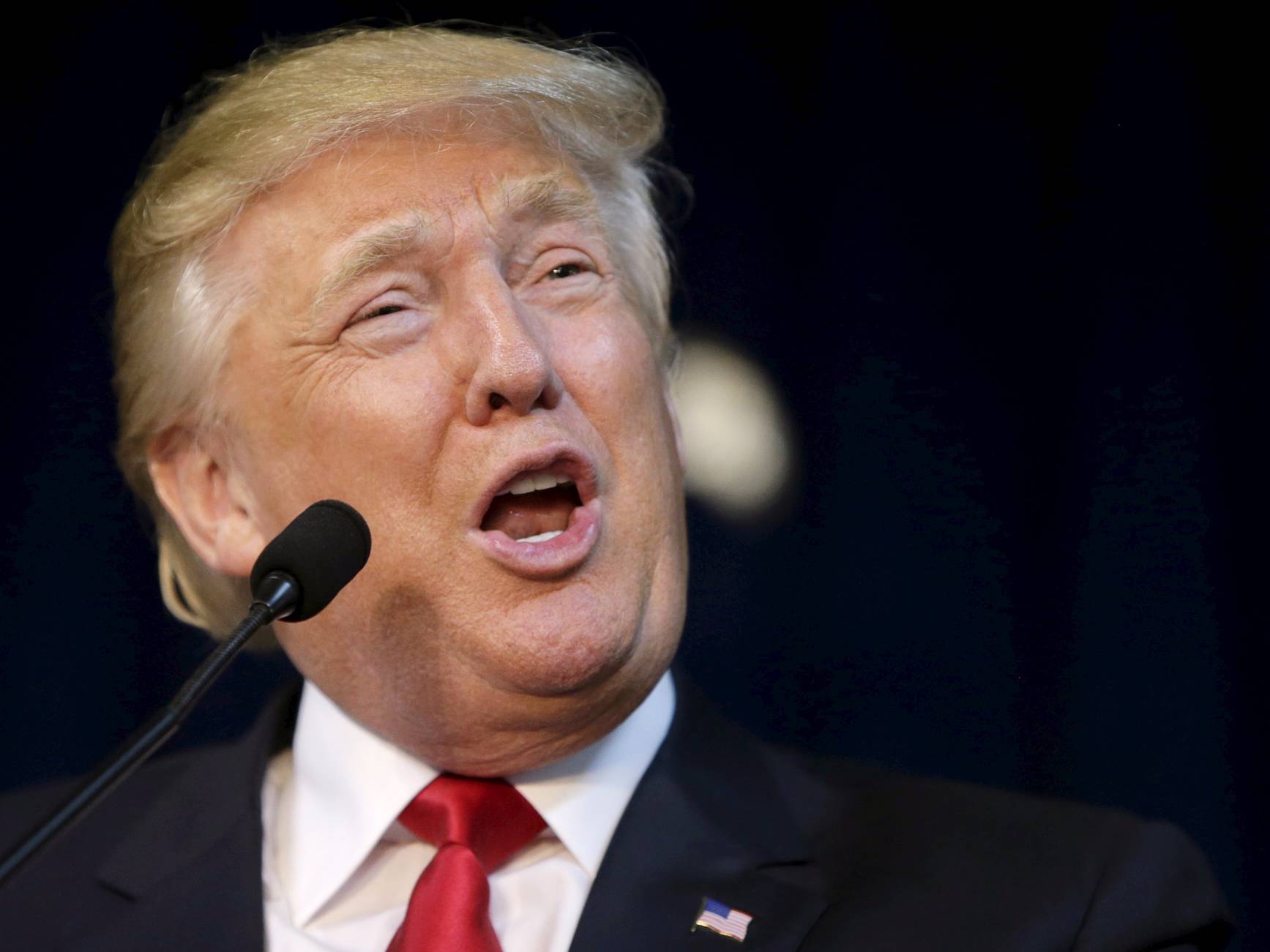
Attempting to box Donald J. Trump appropriately is an arduous task. The larger-than-life man is neither square, rectangular, nor even politician. Suffice to say, Trump is, by far, the most amorphous and most unconventional major party nominee in the history of American politics.
That he has remained at the top of the Republican ticket – getting away with egregious campaign and political faux pas – is not only unprecedented, but perhaps, unrepeatable a feat by ‘lesser mortals.’
For this alone, Trump’s run for the American presidency will become the staple of film, books and social science classrooms for years to come. Some may even suggest that the Trump Phenomenon represents a paradigm shift; at least in bestowing upon other politicians the gift of dealing with hostile publics or debilitating scandal. However, all of us may have gotten our Trump calculus wrong: Unlike ordinary politicians, there is a chance that Trump never really meant to become 45th president of these United States.
The Tea Party Connection
In making this assertion, we are, unintentionally, shackled to a trope that Trump, just like the Tea Party movement that ushered him in, was in it for the huge amounts of money one can extract from the public, for instance, by announcing a run for president.
Of course, it helps that Trump, a real estate billionaire-turned-reality-TV-star; co-author of bestseller The Art of the Deal, had up until 2015, singed the Obama Presidency by dabbling in right wing waters as birther-in-chief. Today, on the eve of his 3rd and final presidential debate against Democratic Party nominee Hillary Clinton, the American electorate knows Trump, or have, at least, heard of him almost as much as they have his rival.
He draws much, much larger crowds than Clinton, and in vanquishing 16 erstwhile rivals in the Republican primary, Trump garnered more votes than any other Republican nominee that went on to compete in the General Election.
In spite of all this, Trump was always going to lose this election; not because of the insurmountable Electoral College disadvantages we spoke of in Part II, or from the right wing echo chamber we alluded to in Part 1. In fact, Trump was also primed to lose in 2016 because some Republican Party operatives stood – stand – to make so much more money from the process of running a populist movement that has no intention of taking power.
Of course, saying something quite as unsubstantiated as this is not fair to Republicans that truly believe in small government principles; that Obamacare is a gross overreach. Also, conservatives may actually be right to say federal regulations are misaligned with the indomitable capitalist spirit that resides in every American soul.
However, when one looks at how the Republican Party dealt with both the largely dead Tea Party movement, and also with Donald Trump, a pattern of for-profit motives emerges – alongside an intransigent opposition in the bicameral U.S. Congress – and a very thin dossier of policy proposals and ideas with which to govern once availed the White House.
Getting the Old and Unsophisticated to Transfer their Wealth
In a POLITICO article entitled “How We Killed the Tea Party“, Paul H. Jossey nonchalantly asserted that it was no secret that the day after Mitt Romney’s defeat was a huge fundraising day in the conservative world.
He based this on a theory that suggested that the Tea Party and other conservative groups intentionally backed candidates that cannot win to assure fundraising. Tracing how monies were raised in the Tea Party heyday, Jossey said that conservative political action committees (PACs) found that anger at the Republican Party sells very well. Essentially, political operatives degenerated the Tea Party into a pyramid scheme that transferred tens of millions of dollars from mostly older, rural, poorer, technologically unsavvy Southerners and Midwesterners to bi-coastal political operatives.
These rich bi-coastal political operatives are now running Donald Trump through an American conservative populace that is even angrier at Washington, DC for the lack of policy successes – Obamacare is very much alive despite more than 50 attempts to kill it legislatively – a government shut down, and an unprecedented credit downgrade.
In his few months as Republican nominee, Trump, like Sarah Palin before him, runs roughshod over what remains of the Tea Party, promising, asserting, grandstanding; bloviating himself into a parallel universe where the vast majority of America believes he will live in perpetuity with his ungovernable ideas.
To be Continued in Part 6…
