
Editorial
How Uganda Can Contribute to East Africa’s Development

Almost all prominent or successful business people in the Great Lakes Region [loosely Sudan, the Democratic Republic of Congo, East Africa including Kenya, Uganda, Tanzania, Rwanda and Burundi] consider Dubai the Mecca for all kinds of trade and commerce. This even smaller piece of land within the tiny United Arab Emirates has a gross domestic product (GDP) of approximately US$ 80 billion.
Contextually, this emirate that sits on less than 4,500 square kilometers has an economy that is about six times that of Uganda; about thrice Kenya’s and probably four times that one of Tanzania.
Granted, the economy has a major infusion of oil revenues which could distort figures for just about anything. However, real estate and construction contributes about 22.6 percent and trade brings in 16 percent of this huge figure.
Dubai’s top exporting destinations include India, Switzerland and Saudi Arabia [US$ 5.8 billion, US$ 2.37 billion and US$ 0.57 billion respectively] but what is even more impressive, though, are the re-export figures of US$ 6.53 billion to India, US$ 5.8 billion to Iran and US$ 2.8 billion to Iraq. Dubai alone imports over US$ 12.55 billion worth of goods from India, about US$ 11.52 billion from China and not to be left out, about US$ 7.57 billion from the United States.
At this juncture, this paper does not, under any circumstances, begrudge the United Arab Emirates or its sections of Abu Dhabi or Dubai. Instead, these small areas have renewed earlier efforts to push for an economic development model based on special economic zones [SEZs].
According to the International Finance Corporation, SEZs are limited areas that offer incentives like duty-free importing and streamlined customs procedures to businesses within a specified zone.
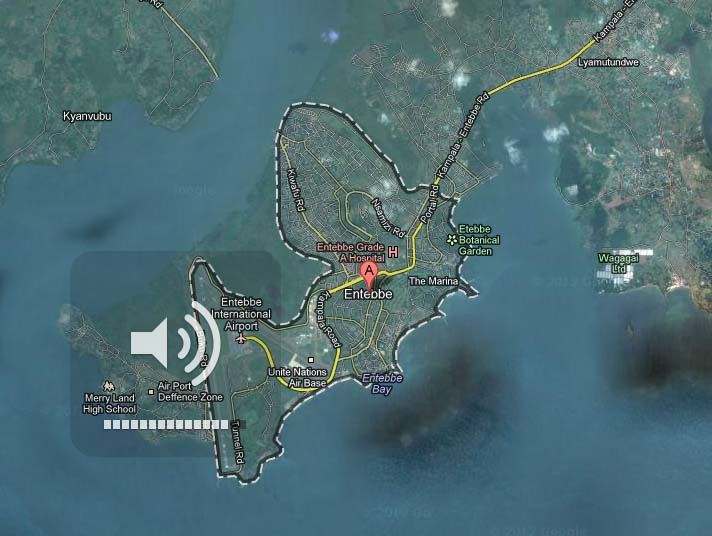
Basically, what Dubai is currently offering its neighbors and all these businessmen from Africa can be, technically and easily, done by Uganda. Not only does the country have the perfect candidate for this kind of thing: it also has a willing implementer that just requires the support of a region that can wholesomely benefit from a project of this magnitude.
