
A Diaspora View of Africa
Diversifying Djibouti’s economy

By Gregory Simpkins
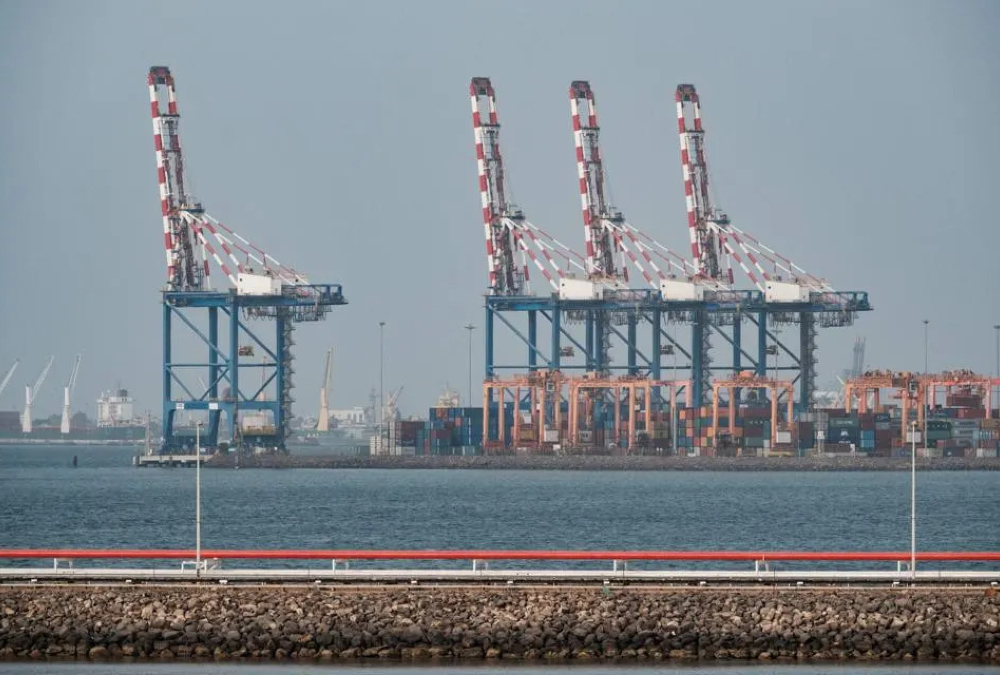
Djibouti is viewed as a small country on the northeastern edge of the African continent. It is little known globally despite its advantageous location for shipping and robust port/terminal system. These factors lead to underestimating the country’s ability to adapt to worldwide economic conditions and grow its economy. This is a serious error.
The African Development Bank’s Country Strategy Paper for Djibouti 2023–2027 is aligned with the Djibouti Vision 2035 and the National Development Plan – Djibouti ICI 2020–2024 – and with the Bank’s operational priorities. It also is aligned with the strategic directions of the Guidance Document for the Future Ten-Year Strategy (2023–2032). Djibouti ICI 2020–2024 places special emphasis on the equitable distribution of the benefits of diversification by promoting inclusive, sustainable and transformative growth.
In February 2020, the Embassy of Djibouti was one of the African diplomatic delegations making presentations to a gathering of Diaspora businesspeople convened in Baltimore, Maryland, by the African Union (AU) Mission to the United States, the U.S. Agency for International Development (USAID) and the State of Maryland. There was significant interest by American businesspeople in the infrastructure projects presented by the embassies making presentations, but when COVID-19 hit two weeks later, plans for making connections were put on indefinite hold, including any discussions on investment in Djibouti’s infrastructure or other sectors.
By virtue of its port system, Djibouti does business in Europe and Asia, and current infrastructure limitations notwithstanding, there is significant trade in the Horn of Africa region.
However, Djibouti has factors that should enhance its efforts to expand its offerings – not only infrastructure, but also in sectors such as agriculture, mining and tourism. In addition to the country’s own plans expressed in in Djibouti ICI 2020–2024, there are several other elements that bode well for Djibouti’s economic expansion.
First, the African Development Bank’s Country Strategy Paper aims to promote investments that will improve the country’s competitiveness to promote the private sector, which is why two focus sectors were selected, namely energy and transport. This CSP also will promote direct private sector financing, the mainstreaming of crosscutting aspects in the operations, the strategy of economies of scale and improvement of the Bank’s portfolio performance.
Second, Djibouti is a member of the Comon Market for Eastern and Southern Africa (COMESA), which was established in December 1994 when it was formed to replace the former Preferential Trade Area (PTA) that had existed since 1981. COMESA (as defined by its founding treaty) was established “as an organisation of free independent sovereign states which have agreed to co-operate in developing their natural and human resources for the good of all their people.” COMESA’s current strategy can be summed up in the phrase “economic prosperity through regional integration.” This allows Djibouti priority access to other COMESA members even outside its region.
There are 21 members states in COMESA, more than a 583 million potential consumer base with a combined Gross Domestic Product (GDP) of US$324 billion. This Regional Economic Community spans about two-thirds of the African continent.
Djibouti also is one of eight members of the Intergovernmental Authority on Development (IGAD). On July 2 2023, IGAD launched at Nagad Station, Djibouti, the Djibouti-Ethiopia railway caravan for the promotion of regional integration to enhance the multifaceted ties between the two countries in the areas of migration and mobility, business and investment, tourism, people-to-people relationships and Diaspora engagement.
The IGAD Ethio – Djibouti Train mission is in line with IGAD’s Vision 2050 where the regional organization in its first phase prioritizes structural transformation of the region through commercialization and expansion of resilient green and blue economies, and sustainable utilization of the natural resources.
Prior to its current 2021-2025 regional strategy, the IGAD region registered an average gross domestic product (GDP) growth rate of about 6.7 percent between 2017 and 2020. In 2020, the services sectors maintained the leading trend by contributing the most to the aggregate GDP at 49 percent, followed by the agriculture sector at 37 percent and the manufacturing sector at 9 percent.
Agriculture employs more than 70 percent of the population and contributes more than 34 percent to regional GDP. It directly supports more than 80 percent of the population and provides the basis for food supplies and export earnings. Djibouti is a significant contributor, especially in transportation services.
Finally, Vision Djibouti 2035, a report constructed from broad countrywide consultations with Prefects and the Presidents of regional councils, surveyed a representative sample population constituted in every region, encompassing rural and urban people: nomads, farmers, executives and workers from the public and private sectors, chief executive officers, trade union leaders, workers in informal sectors, merchant, workers, housewives, young dropouts, students, politicians and clerics, etc.
This consultation showed that populations widely believe that the establishment of local economies is possible because the country has the assets and potentialities to rebuild regional development as a pillar for strong growth in the coming years. The first asset cited was the asphalted road network that connects the capital with the five main towns of the region, but also with Ethiopia, which has an expanding economy. The second asset is the country’s opening to the sea that offers an important coastline for the regions of Arta, Tadjoura and Obock.
Potential investment destinations
Provided that investment is secured, the country’s potential is significant in three sectors alone, especially given its regional linkages and the confidence citizens have that provides optimism in agriculture, mining and tourism.
Agriculture/Aquaculture: Agriculture is the third leading economic activity in Djibouti. The main agricultural products of Djibouti include tomatoes, date palms, goats, animal hides, camels and sheep. According to a FAO report, Djibouti imports most of its fresh vegetables and fruits from neighboring countries, including Ethiopia, Yemen, Kenya, and Europe, especially France.
Irrigated agriculture is possible in some areas of Djibouti, where farmers use diesel engine water pumps to draw water from wells or rivers. One way to reduce the costs and increase the efficiency of irrigation systems in Djibouti is to use solar-powered water pumps, which can harness the abundant solar energy in the country. A study by Aden Atteyeh Sougal, et al., found that solar pumps can save up to 75 percent of the annual operating costs compared to diesel pumps and also can reduce greenhouse gas emissions and noise pollution. The study also suggested some technical and institutional recommendations for implementing solar pumps in Djibouti.
Another strategy would be to engage in urban and peri-urban agriculture since so many Djiboutians live in or around cities and towns. It would expand the economic base of the city through production, processing, packaging and marketing of consumable products. This would result in an increase in entrepreneurial activities and the creation of much-needed jobs, as well as reducing food costs and improving quality.
Aquaculture is another potential industry in Djibouti, given its long coastline and maritime area at the crossroads of the Red Sea and Gulf of Aden. Djibouti’s fishing catch is currently mostly from small-scale fisheries on the eastern coast near Djibouti City. The main fish species caught include sailfish, marlin, wahoo and yellowfin tuna. One possible way to enhance the aquaculture sector in Djibouti is to develop mariculture, which is the cultivation of marine organisms in seawater. Mariculture can provide a source of income and food security for coastal communities, as well as contribute to environmental conservation and biodiversity.
Djibouti has no major laws that would discourage incoming foreign investment. In principle, there is no screening of investment or other discriminatory mechanisms.
Mining: According to the U.S. Geological Survey, the production of mineral commodities – notably cement, clay, salt, sand and gravel – at present represents only a minor part of the economy. Limestone and calcined lime are also currently mined in Djibouti. Additional mining candidates include marble, granite, gypsum, diatomite and perlite. Aside from the obvious building materials and the general use of salt, the last three elements have broad uses, especially in the more arid Horn of Africa.
Gypsum is used as an additive in ceramic materials and ores to facilitate smelting and is used in fertilizer and filler in paper and textiles, in addition to being a soil additive (sometimes called land plaster) to improve soil workability and receptivity to moisture and to overcome the corrosive effect of alkalinity. Diatomite is used to filter impurities to produce potable water in public water systems and also is used as part of various chemical tests and as an insecticide. Perlite helps speed the germination and rooting of plants, improves plant aeration and draining and is widely used in potting mixes and the improvement of clay soils.
There is hope for petroleum extraction from Djibouti, where none is now produced. Saudi Arabian oil engineers have shown interest. In recent years, reports talk about the mining activities carried out by an international coalition of sailors and divers, demonstrating the usage of magnetized cables, underwater drones, sonar and helicopter-towed acoustic devices to forestall Iran’s interference in potential oil exports. These mine-clearing drills stretch from the Persian Gulf to the Gulf of Oman to the Gulf of Aden and Djibouti.
Tourism: Despite its size, Djibouti has great potential for tourism development. Djibouti benefits from a number of niche attractions, including sandy beaches along the Red Sea, salt lakes, volcanic fields and popular underwater diving sites. The fact that its beaches are within easy access of landlocked Ethiopia, and it hosts several foreign military bases, also plays in its favor.
According to the Lonely Planet travel guide, Djibouti offers some of the “weird landscapes” in the world, such as the white clay plain of Grand Barra, the limestone chimneys of Lac Abbé and the basaltic plateaus of Plateau du Serpent, as well as other outdoor activities. There are five popular beaches – Siesta Beach, Heron Beach and Khor Ambado (all in or near the capital), as well as Red Sea Beach, near Obock, and Le Sable Beach in Tadjoura. There are also islands to explore: Mocha Island, Maskali Islands and Seven Brothers Islands. Djibouti is additionally home to some cultural and historical attractions, such as the Hamoudi Mosque, the Place Menelik, and the Abourma Rock Art Site.
Tourism in Djibouti is one of the country’s growing economic sectors and is an industry that generates 53,000 and 73,000 arrivals per year. According to Travel Safe – Abroad, which assesses safety for travelers to worldwide destination, generally speaking, crime rates in Djibouti are relatively low, especially in comparison to its neighbors.
Some opportunities of investment interest include developing more sustainable ecotourism options, promoting Djibouti as a regional hub for trade and travel and diversifying tourism products and markets.
Foreign investment welcome
The Government of Djibouti welcomes all Foreign Direct Investment (FDI). As described earlier, potential investment targets include the country’s promising port/terminal system, agriculture/aquaculture, mining, tourism and the telecommunications sector. President Ismail Omar Guelleh has selected privatization of state-owned enterprises, economic reform and increased foreign investment as top priorities for his government. The president has pledged to seek the help of the international private sector to develop the country’s infrastructure and has accepted the advice of international financial institutions on these matters. Conditions of the structural adjustment agreement signed by Djibouti and the International Monetary Fund stipulate increased privatization of parastatal and government-owned monopolies.
Djibouti has no major laws that would discourage incoming foreign investment. In principle, there is no screening of investment or other discriminatory mechanisms.
Djibouti is on the verge of an economic explosion. Effective implementation or reforms, combined with its natural and infrastructural advantages, could see increased investment that will allow the country to enhance production and facilities to welcome tourists, businesspeople and investors to a new star in northeast Africa.
Gregory Simpkins, a longtime specialist in African policy development, is the Principal of 21st Century Solutions. He consults with organizations on African policy issues generally, especially in relating to the U.S. Government. He further acts as a consultant to the African Merchants Association, where he advises the Association in its efforts to stimulate an increase in trade between several hundred African Diaspora small and medium enterprises and their African partners.
