
Opinion
Decoding China’s Africa Strategy beyond 2021: A Discussion with Paul Nantulya
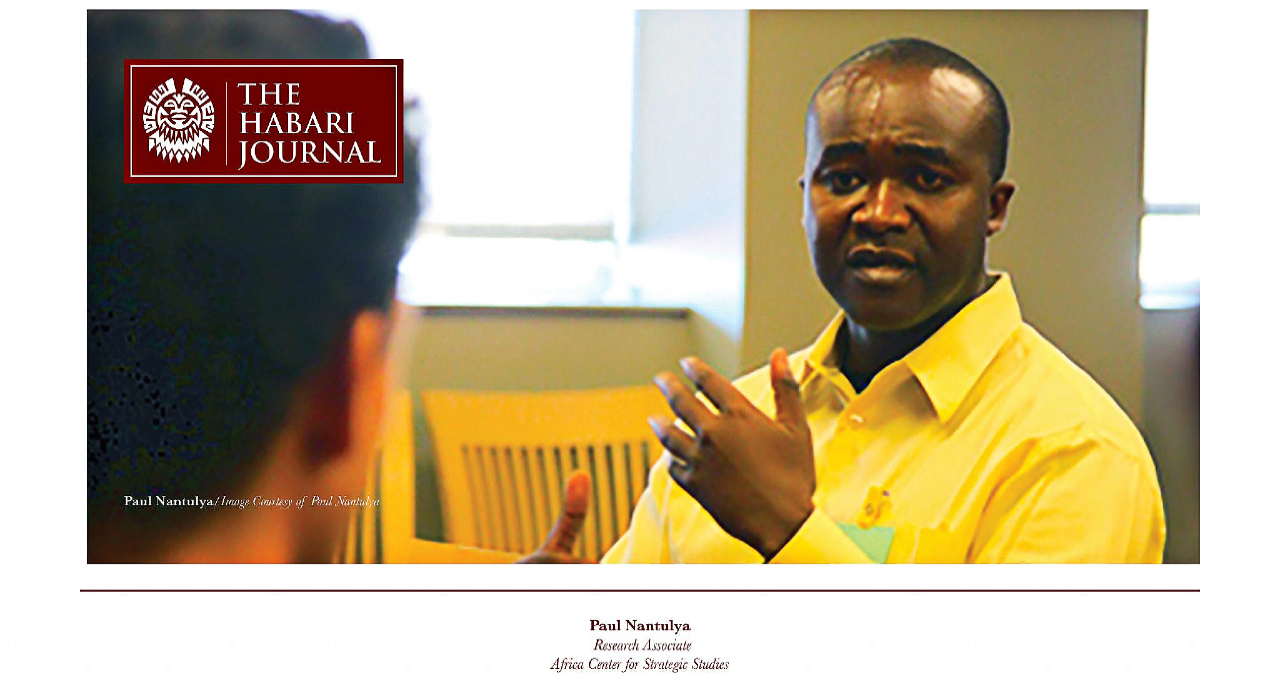
Editor’s Note: State Councilor & Foreign Minister Wang Yi started 2021 by making his first foreign visit to Africa, a tradition dating back 31 years. 2021 also marks the 21st anniversary of the Forum for China Africa Cooperation (FOCAC) which will hold its 8th triennial Summit in Dakar, Senegal, where the China – Africa Cooperation Plan 2021-2023 will be released. As a result, this conversation took place between The Habari Journal’s Ivan Musoke and China Specialist Paul Nantulya from the Africa Center for Strategic Studies, Washington DC.
______________________
Ivan Musoke: Paul,Wang Yi visited Botswana, the Democratic Republic of Congo (DRC), Nigeria, Seychelles, and Tanzania. Before our interview, you noted that China carefully chose these countries to convey where Chinese priorities and Africa/ China relations are heading over the next five years. Can you elaborate?
Paul Nantulya: Thanks for having me on your show. As you correctly noted as started this discussion, these countries highlight different facets of the Africa/China relationship. Botswana underscores China’s continuing effort to cultivate countries that have weak ties with the Communist Party of China and traditionally strong ties to Western powers such as the United States. This has been one of the main strategic trends of China’s recalibrated foreign policy since the first FOCAC Summit in 2000. To give you a little flavor, you should note that by the 7th FOCAC Summit in 2018, over 2,000 Botswana civil servants and around 600 military personnel had trained in China. These numbers were way above the 200 that attended when China first held its Summit in 2000. China’s state-owned enterprises (SOEs) now dominate Botswana’s infrastructure sector and even handle sensitive projects like building the logistics base for the Southern African Development Community (SADC) Standby Force which entered Phase II in October 2019.
Interestingly, Botswana moved up China’s priorities in 2019 when its ruling party joined the Former Liberation Movements of Southern Africa (FLMSA). The FLMSA is a SADC grouping that assembles the ruling parties of Angola, Mozambique, Namibia, South Africa, Zambia, and Zimbabwe, most of whom enjoy ‘strategic partnership relations with China. Indeed, during Wang’s visit, Botswana became the 44th African country to sign onto China’s One Belt One Road (also known as the Belt and Road Initiative or BRI).
Ivan Musoke: What about the Democratic Republic of Congo? Does this have anything to do with …
Paul Nantulya: [Smiling]: Let me interrupt you there. Wang’s stop in Kinshasa focused on a different set of issues that also shape the contours of Chinese foreign policy in Africa.
Ivan Musoke: What I wanted to ask is, doesn’t the DRC fall into a more routine engagement pattern of China cultivating elites from poorly governed countries with vast mineral wealth?
Paul Nantulya: The story is more complex than that. While China does have an abiding interest in the DRC’s extractives, it focuses its diplomatic energy on building trust with its newly elected President, Felix Tshisekedi who comes from the democratic movement. The departure of long-serving leaders that gave China a measure of predictability is something Beijing has had to adjust to. In Congo, it is a delicate task given China’s strong relationship with the Kabila strongmen- Laurent and Joseph. China acted swiftly to contain a fall-out that could have harmed its interests. As you know, Felix’s father Etienne spent decades fighting the Kabila’s through a democratic process. China faced an uphill task to overcome suspicions of the Congolese democratic movement now in power. It is a balancing act China believes it will have to play in the subsequent phases of its engagements, given that protests against some of its most vital partners have intensified in recent years.
Ivan Musoke: Wang visited DRC in 2020, yes?
Paul Nantulya: Indeed, he did as part of what I’ve explained. He touched down in Kinshasa less than a month after Tshisekedi’s historic inauguration. China took pains to distance itself from Joseph Kabila, conducting outreach to Felix’s Union for Democracy Social Progress as a power struggle between him and his predecessor intensified. This was dicey for Beijing, which is traditionally uncomfortable working with opposition parties. However, its entreaties might have paid off. During Wang’s 2021 visit, the DRC signed on to the BRI, inching closer to forging a strategic partnership with China.
The DRC is key to China for another reason altogether: Tshisekedi took over as African Union Chair in early February, an important post that top Chinese officials spend a lot of time trying to influence. For the past 31 years, the inaugural Chinese visit has coincided with the annual AU Heads of State Summit, putting Beijing in a position to observe leadership changes up close and even influence them. As AU Chairman, Tshisekedi will exercise tremendous clout over Africa’s agenda for the year and will shape the Union’s positions at the next FOCAC Summit. The Tshisekedi administration therefore offers China enormous opportunities for engagement.
Ivan Musoke: So, I read that China wrote off US$ 27 million in loans for the DRC?
Paul Nantulya: Yes. The write-off was specifically meant to mitigate against the COVID pandemic DRC. However, China also gave US$ 17 million for development and $ 2 million to support the DRC’s mandate at the African Union.
Ivan Musoke: Could we then say that Nigeria, Tanzania and Seychelles – the other three countries – are just additions to the strategic focus?
Paul Nantulya: Nigeria and Tanzania tick all boxes in terms of what China looks for in its China’s “strategic partnership” criteria. Both sit on strategic maritime nodes along China’s Maritime Silk Road. They also have big economies (Nigeria ranks first and Tanzania eighth).
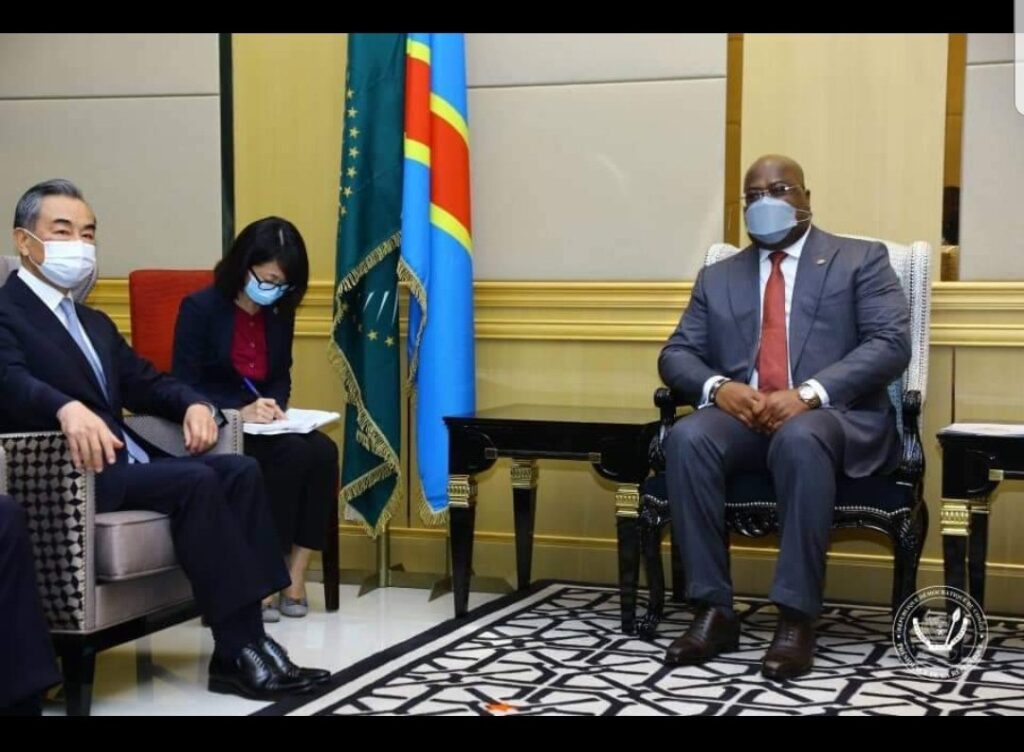
Wang Yi and Felix Tshisekedi | Image Courtesy of Africa24
Thirdly, they host major Chinese strategic investments in ports and other infrastructure. Fourth, both are relatively stable politically.
Ivan Musoke: Obviously, this access to the sea or having a lake is important, yes?
Paul Nantulya: It certainly is, but there are more considerations. Nigeria and Tanzania wield clout in respective regional organizations and therefore have the capacity to mobilize fellow AU Member States behind Chinese interests at the continental and global level. All the criteria I just mentioned are common among the 13 African countries that have ‘strategic partnership relations’ with China. Those are the sorts of ties China will build in the 2021-2025 time frame. The visits to Abuja and Dar-es-Salaam were therefore hugely significant.
_________________
Editor’s Note: Paul and Ivan continued to speak about Wang’s stop-over in Dar-es-Salaam, China’s historical relationship with Tanzania’s ruling Chama Cha Mapinduzi, and its senior status in the Former Liberation Movements of Southern Africa. Memories of Mao Zedong and Tanzania’s founding leader, Julius Nyerere were invoked at every opportunity.
_________________
Ivan Musoke: Let’s go back to Nigeria for a second. The two sides established an intergovernmental committee to deepen relations. Tell us more about this.
Paul Nantulya: In my opinion, the committee was long overdue in my opinion. As Africa’s largest economy and China’s third-largest trading partner in Africa after South Africa and Angola. It is also the biggest destination for Chinese exports and an African Union powerhouse as we’ve already noted. One is left wondering why the two partners took so long to establish this type of committee.
Ivan Musoke: This is definitely a model China would be keen to replicate across Africa, no? After all, South Africa has a similar committee.
Paul Nantulya: I should think so. Wherever they have been established, they have focused on foreign policy coordination, security and defense, mutual support at the multilateral level, trade expansion, and deepening FOCAC.
Ivan Musoke: And then there was one: Seychelles.
Paul Nantulya: The visit to Seychelles was aimed in part at bolstering China’s position in the growing Sino-India rivalry in the Indian Ocean, something we will continue to see over the next five years. India has a robust partnership with the Seychelles, often described as ‘special’ given its noticeable Indian community – about 11 percent – of the population. Also, since 1975, India has helped Seychelles secure its maritime domain. When China opened its first overseas military base in Djibouti in 2017, India set up six coastal surveillance radars on the Seychelles archipelago in response. It also supplied patrol boats and maritime surveillance aircraft to the Seychelles and stationed Indian aircraft and vessels on its territory.
_________________
Editor’s Note: In 2018, India and the Seychelles signed a 20-year agreement to build a longer air- strip and new jetty on the archipelago for the Indian Navy. While this was frozen due to political opposition an arrangement was reached whereby the Seychelles would build the facility itself with Indian support. The two countries conduct joint military maneuvers every six months.
_________________
Paul Nantulya: Going forward, I think we are going to see China building comprehensive and multifaceted relations with Seychelles and other island states like Mauritius, the Comoros, and Madagascar which all have special ties to India.
Ivan Musoke: Paul, so far, we’ve talked about the benefits of engagement, but I imagine there must have been intricate knots that Wang Yi had to untie on his trip.
Paul Nantulya: There was some tension in Tanzania stemming from the proposed US$11 billion Bagamoyo Mega-port Project, expected to be the biggest port in the African Indian Ocean Region. The main contractor, China Merchants Holdings International (CMHI), wanted a 99-year lease, zero duty on imported material, tax breaks for investors in a proposed special economic zone, and no new ports to compete with the project. Tanzania rejected this and aired its grievances publicly, knowing only too well how sensitive China is about its image on the continent. After mobilizing public sympathy and support, Tanzania issued an ultimatum to the Chinese partner to either accept counter proposals, or walk. CMHI ultimately agreed to a 33-year lease, no tax holidays, no tax breaks, complete regulatory oversight, and no restrictions on Tanzania’s right to develop other ports. This was a classic case of how an African country can assert agency by playing on Chinese sensitivities.
Ivan Musoke: But these are things China should be used to by now. For instance, there was a flood of angry social media posts when African communities were mistreated in Guangzhou at the height of the COVID-19 pandemic, no less.
Paul Nantulya: Quite right. This issue caused a significant flare-up with Nigeria leading the charge against China and going as far as getting other African countries to summon and demand explanations from Chinese officials. The incidents were all the more damaging. Many of the alleged victims were recipients of Chinese government scholarships, a key instrument China uses to build its soft power image. The fall-out challenged the narratives of ‘solidarity’ and ‘mutual respect’ that China likes to convey and came just when Chinese leaders needed Africa’s support to stave off a rising wave of global anti-Chinese hostility arising from controversies surrounding the origins of COVID-19.
Ivan Musoke: What can you say about African agency in the overall relationship between Africa and China?
Paul Nantulya: China/Africa relations have mostly been confined to governing elites. The secrecy with which they do their things has made it difficult for the public to shape the relationship in meaningful ways. However, this is starting to change, and we are now beginning to see citizens using innovative tactics to make themselves heard. If you look around Africa, you will see that NGOs, civil society, media, and private sectors are much more involved in Africa/China relations. We see citizens demanding more accountability and fairness, especially in economic and trade negotiations and justice issues. For example, in Zimbabwe, civil society organizations and legal professionals have mobilized public attention on the impact of multi-million dollar deals on the environment, justice, and human rights. In 2020, the Zimbabwe Environmental Law Association complained at the High Court that forced the government to ban all mining in Hwange National Park and withdraw Chinese coal-mining licenses.
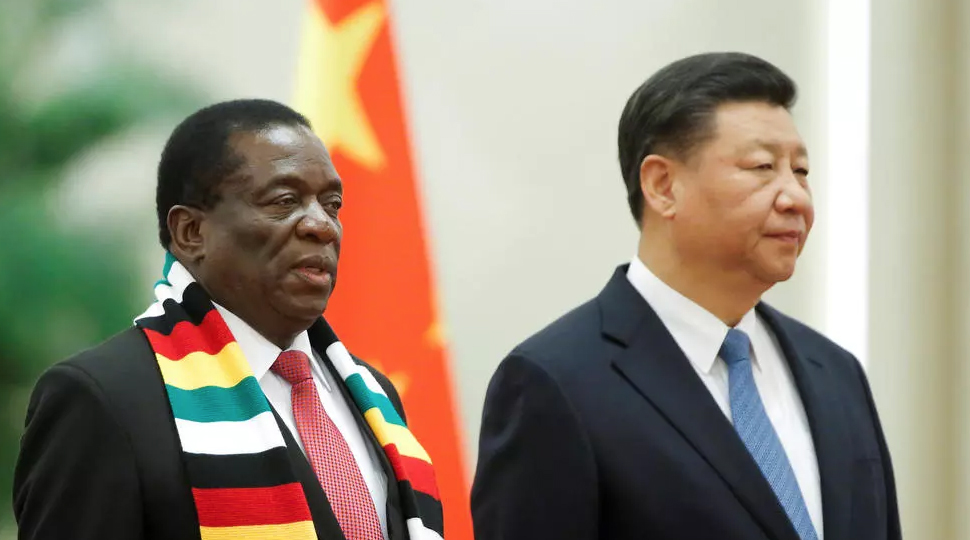
Zimbabwe’s Mnangagwa with Xi Jinping/Image by Reuters
In Kenya, private firms affiliated with the Kenya Chamber of Commerce & Industry, media agencies, and Kenya Law Society kept the public informed about the rampant corruption involved in the negotiations between Kenya and China Roads and Bridges Corporation to build the Mombasa-Nairobi Standard Gauge Railway, Kenya’s most expensive project since independence. In 2020, The Kenya Court of Appeals issued a landmark ruling declaring the contract for this project illegal, setting new future negotiation standards. In Ghana and Guinea, environmental activists introduced injunctions to halt multi-billion dollar projects in which Chinese firms will secure access to refined bauxite in exchange for infrastructure.
Ivan Musoke: To be fair, Western firms have also engaged in exploitative practices, right?
Paul Nantulya: Yes. And vigilance by citizens has always been critical in creating awareness and seeking redress in such cases. More broadly, Africans understand that a relationship as meaningful as the Africa/China one cannot be left to states alone. In recent years, independent platforms on Sino/Africa relations have mushroomed around the continent and overseas.
Most policy-oriented research on China in Africa in any given year comes from the Chinese in Africa and Africans in China Research (CAAC) Network, a large group with 1,000 members. There’s also the Black China Caucus, China Livity, and Black Voices on Greater China, which all promote global black voices on China and run a series of podcasts to get fresh ideas out. The China/Africa Reporting Project facilitates independent African policy perspectives on China.
Ivan Musoke: Obviously, there’s lots of space for you & I under this China and Africa tent, yes?
Paul Nantulya: Yes, and Yes. From its office in Vietnam, the China/Africa Project runs bi-weekly podcasts on China/Africa relations bringing thought leaders across Africa. The Annual Conference of the Johns Hopkins University’s China/Africa Research Institute (CARI) The Nairobi-based Annual Conference on China/Africa Relations gathers leading academics and policymakers to examine Africa/China relations and discuss policy options.
Recently, Ghanaian students launched an Afro- Sino Center of International Relations to promote Africa/China studies beyond state-to-state ties. In December 2020, the China/Africa Reporting Project partnered with South Africa’s Institute for Global Dialogue to develop a framework for an integrated African policy with greater nuance and diversity brought into the Afro-Sino space. This space is rapidly expanding beyond the government level. This will create more ownership and help catalyze new thinking on the continent’s agenda.
About Paul Nantulya
Paul Nantulya is a Research Associate at the Africa Center for Strategic Studies of the U.S. government. His expertise includes Afro-East Asian partnerships, China-Africa relations, and Chinese politics and foreign policy. He has researched and written widely on China’s soft and hard power engagements in Africa, the influence of traditional Chinese strategic culture on China’s military strategy, and China’s investments in professional military education in Africa.
Nantulya has testified before the U.S.-China Economic and Security Review Commission and has guest lectured on China at Johns Hopkins School of Advanced International Studies (SAIS) and the Edmund A Walsh School of Foreign Service at Georgetown University. He has been the principal researcher on several Chinese-related projects, including the Carnegie- Tsinghua Center for Global Policy, the National Bureau of Asia Research, the U.S. Army War College, and the University of Nairobi.
Nantulya sits on several China-related initiatives and working groups such as the Mc Cain Institute’s Great Power Working Group, the Annual Conference on China-Africa Relations at the University of Nairobi, the Chinese in Africa and Africans in China Research Network (CAAC), and the Annual Conference of the SAIS China Africa Research Initiative.
Nantulya has studied Japanese and Chinese and holds a Graduate Certificate in Japanese Language and Culture from the Japan Africa Interchange Institute in Nairobi, Kenya. He is also pursuing studies toward the Chinese Huikao proficiency examinations.
