
Editorial
Deal Breakers in the Digital Age
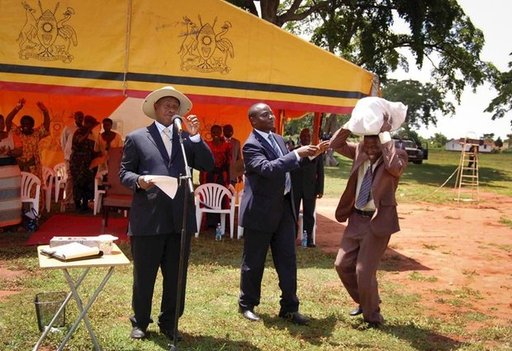
While the U.S. Federal Reserve prints the greenback with what some may refer to as feverish abandon; and much as this may, in negative extremity, lead to devaluation of the American currency, profligacy is, probably, the last thing on either Mr. Bernanke or Mr. Obama’s mind. But in this age of austerity; in an epoch where a country’s leaders must show some sort of moderation, Yoweri Museveni is, as a result of his latest public relations debacle, more synonymous with ‘generous’ monarchs than with the trappings of modern day presidency.
That Mr. Museveni could ‘donate’ 250 million Uganda shillings (US$100,000) to youth in the Eastern part of the country is not in question. Like the President’s Office says, the president’s donations are budgeted for and approved by Uganda’s parliament. But what should have been an ordinary event has sparked worldwide vituperation simply because of the way it was done: Stuffing bills into a white sack and giving it out at a public venue – in full view of world press – simply smirked of a past age where the ruling monarch gave to the people from his personal bounty.
In the digital age, this is simply a deal breaker: Uganda is in the global market for investors. It competes for the world’s attention against Kenya, Rwanda, Tanzania, Southern Sudan, Burundi, and other Great Lakes nations for the benefits of being part of a global community.
Uganda has incredible opportunities that many a Brazilian, Turkish, American or Chinese entrepreneur would like to take advantage of. Thus, with other countries offering all kinds of concessions and business friendly environments, Uganda does not need this kind of distraction. And this should not, under any circumstances, be viewed as unimportant. President Museveni’s donation to the youth in Eastern Uganda – however well intentioned – is as scandalous as the recent ‘Kill the Gays’ bill and the sensational YouTube video on Joseph Kony. What each of these two things managed to do is present Uganda in a negative light and worked, especially, to relegate Uganda to the dark days of Idi Amin, Milton Obote and the prevalence of HIV/AIDS.
The Habari Network has conducted extensive interviews with both Ugandans and a whole host of foreign individuals. The one thing that emerges, especially from the Ugandans, is a sense of shame. Collectively, all interviewees agreed that Uganda did not need this latest thing. Not only has Museveni’s gesture brought his long reign into question: The zeitgeist is, succinctly captured by Ugandan activist Jackie Asiimwe – Mwesige: ‘Which president walks around with kilograms of money?’ She asks. ‘It looks so pedestrian,’ she adds. ‘It doesn’t augur well for his stature.’
But contextually, Museveni has earned his place as Uganda’s “father of the nation”. He’s up there with Ghana’s Kwame Nkrumah, Kenya’s Jomo Kenyatta and Tanzania’s Julius Nyerere.
He has served longer than all of them and he has done some good things for the country. However, Arnold Ludwig’s King of the Mountain: The Nature of Political Leadership has an invaluable nugget: The longer one stays in power, the more they are prone to insularity.
