
Editorial
Can We Be Blunt About Africa
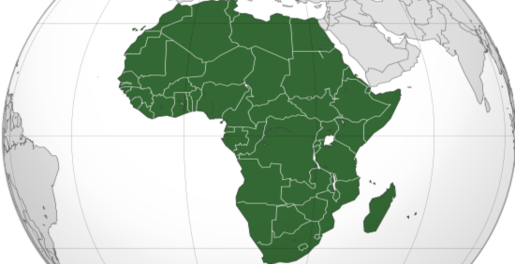
In this age of social media, commercial diplomacy, YouTube videos of kittens and the capacity to send money to one’s mother via her mobile phone thousands of miles away, John Donne is, once again, spot on: No man is an island. But as a significant piece of this continental planet; an integral part of this earth – can Africans who purportedly occupy the Fourth Estate, be prophylactically-cautious enough to neither make nor be the news but to report it? Surely, can we be blunt about Africa without bringing the pain on ourselves? After all, many of Africa’s 54 countries still grapple with what PriceWaterhouseCoopers suggests, are time immemorial issues of hard infrastructure, soft infrastructure and ‘the inability of regulators and policymakers to [effectively manage] a larger and more complex economic system as growth proceeds.’
In fact, just as we propagate the next generation of middle class families, we may, at the same time, be mounting a large credit bubble that could manifest itself in the kind of embarrassing circumstances that Ghana is, for instance, currently undergoing. That one of Africa’s most stable countries must seek to renegotiate its debt and even ask for debt forgiveness – like we are back in the 1990s – has to frustrate the gray haired men that fought the good fight for independence. Writing in The Economist, Richard Walker reports that with interest rates in much of the developed world near all-time lows, and with the sheer amount of money in both institutional and private lenders’ hands, Africa borrowed over $ 15 billion dollars in 2013. For 2014, Africa bond issues probably garnered upwards of $ 20 billion from world financial markets – including private and sovereign bonds.
Well: Good on Africa! This is a remarkable achievement since we were only able to raise $ 5 billion in 2009. But Mr. Walker’s imprecation is that of a ‘coming African debt crisis’ as a result of rising interest rates and long-term bond yields in developed economies, compelling private lenders to ‘look on Africa less benignly.’
So, we must return to this thing about not making the news: After all, who are we – we who sleep in feathered beds in Western Capitals – to make comments on the state of Africa? Is it an oxymoron that our continent can only survive this debt crisis if African governments keep their finances as healthy as possible? What do we know of what got Ghana and Tanzania to run deficits of over 10% of their respective GDPs? Invariably, can we take our hats off to Zimbabwe’s chief tax collector because he called for a cut in salaries across the board? That he called for Robert Mugabe’s government to stop creating too many non-productive entities that are draining the already strained Treasury may seem like a brave thing – but what happened to Nigeria’s Central Bank governor? Won’t people question our loyalties when we opine on Uganda’s plans to spend 185 trillion shillings – about 74 billion dollars to become a middle-income economy by 2020? Of course, while the $ 24 billion economy collects approximately $ 2.8 billion – as per 2012/2013 financial years – there’s an upcoming windfall from refining the oil Uganda has within its pride lands.
In the end, since we work closely with many of these very African governments on a regular basis, are we diminishing them by saying the kind of things that, as Mr. Donne suggests, could come back to bite us? After all, as we seek to report the news – tolling bells, so to speak – we may be making the news by pronouncing our own reportage demise.
The Habari Network Editorial Board
February 23, 2015
