
Editorial
Bravo, Haiti!
While we neither have an issue with the Santo Domingo-based government of the Dominican Republic, nor disagree with international trade, much less the regional kind, we couldn’t be more thrilled with the recent activities of the Haitian government of President Michel Hartelly! That they banned Dominican polyethylene, chicken and eggs to stave off pollution, rubbish, and even bird flu could be debated. However, merits or demerits aside, we applaud a polity that, ostensibly, seeks to protect her local industry.
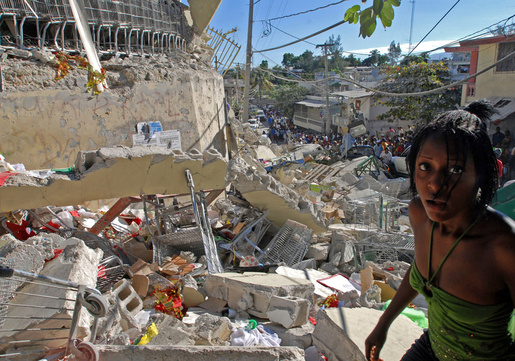
In a move The Economist delicately refers to as a ‘risky experiment with industrial policy,’ the Dominicans seem to be taking the recent ban of their products with a pinch of salt – expecting a settlement. Nonetheless, this Haitian attempt at import-substitution may force the country’s business class to roll up their sleeves and help the poorest country in the Western Hemisphere emerge from the rubble that still largely remains following the January 2010 earthquake.
Secondly, Martelly must be lauded for leveraging his current popularity to push through something, anything. In a “Third World” that seems to be caving to attributes like the European Union’s economic partnership agreements (EPAs), Haiti may just provide countries like Kenya inkling into protecting local entrepreneurs and working to generate some semblance of a functional economy. Granted that Kenya is a non-LDC, the fact that Haiti seems to be holding its own in the face of pressure may be a sign that the country fights for the majority and for the future – and not just for the interests of those keen to protect their export markets and clientele like Kenya’s flower exporters.
Thirdly, while juxtaposing Haiti and Kenya may not be apt, Wilson Laleau’s recent yet-to-be passed budget is another indication that the Haitian government means business. Seeking to radically raise taxes on food imports such as chicken and fish, the finance minister may doom more than 1.5 million Haitians to malnutrition. But perhaps the cause and effect scenario will not come to pass. Local industries like pharmaceuticals and the garment industry may stand to grow, perhaps, even taking advantage of the duty-free provisions of the various U.S. Generalized System of Preferences (GSP) provisions. Whatever the result, it seems as though the Britons and Vietnamese, amongst a whole slew of potential investors, are beating a path to this tiny island nation: The Union Jack will fly, once again, at an embassy after almost half century of inactivity, and the Vietnamese are there to do textiles and cooperate on textiles.
It helps that a little digging last year in Haitian hills discovered a treasure trove of precious metals worth over US$20 billion. Juxtaposed with 15-year tax holidays offered to foreign investors, one can understand why the foreign aid meme is rapidly being replaced with the prospects of investment less than 100 kilometers off the U.S. coast – with the American economy set to lead the world into happy days and glory once again.
Naysayers may suggest that our sanguine endorsement of these Haitian things is much too rash and even ill-advised. But let’s look at the alternative: We could sit here and simply criticize Haiti for failing to emerge from its cruel hand of fate following lousy management under past leaders, and not properly channelling the boatloads of donor aid from the rest of the world. We could even say Britain is more motivated by a humanitarian need to help the still homeless victims of the 2010 catastrophe. But we would be wrong.
In these dog days of summer, any progress from least developed countries (LDCs) needs to be celebrated. Martelly and Laleau are making positive moves – consequences aside.
