
Editorial
Bordering on Boundlessness
By Papiso Matsau
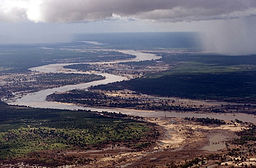
The idea of borders has always intrigued me. Having grown up near the Caledon River in Lesotho, where you could walk down the road and across the river it was considered Lesotho and further down the same road it was considered South Africa, borders have always been arbitrary to me.
The importance of borders was further diminished to me when in my early twenties when I was back packing with my best friend and as we stood at the Livingstone border control in Zambia waiting to cross over into Botswana we watched a hippopotamus travel from Zambia, rest in Botswana then cross over to Namibia seamlessly. She was having an early dinner and we were hungry.
However, just because I find the notion of borders unnecessary it does not mean I am oblivious to the effects and how being considered a foreigner can greatly impact ones experience in any given country. Living in the United States for almost three years, my status as an immigrant has influenced everything from being able to lease out certain properties, attaining financial assistance for school to finding employment. One’s immigrant status hinders a person from being able to fully have access the resources that can help one achieve the “American dream”.
But, what is the “American dream”? It can be defined simply as having equal opportunities to participate in the biggest economy in the world. The basis of this dream is that America is the land of milk and honey, that there is enough for all of us regardless of where you come from.
What is problematic about the United States current immigration reform is that it seems to reflect a sense of amnesia; this country was founded and built by immigrants. However, it now appears that one of the most prominent resources (immigrant labor) that made the United States the power that it is today, is being marginalized.
Within the Global village we all find ourselves living in; is it necessary to be in the United States to achieve the “American dream”? Perhaps the importance of borders has fallen away. One might argue that, unlike in earlier history, it is no longer imperative to be in the country in order to guarantee access to or maximize economic, educational, technical and social expansions that America finds itself the pinnacle of.
If one wishes to contribute directly to the “American Dream” then being able to stay in the States is pivotal. Perhaps if the United States focused on investing more in developing countries and making allowances for the people they train (via higher education) to fluidly progress into the labor market, then it would foster a mutually beneficial relationship. If, however, your goal is to remain in the United States to share ones skills set and contribute to its economic growth, it would behoove you keep your pulse to the ever-changing Immigration policies.
