
Opinion
Africa’s Repair Culture Could Power Its Industrial Future
Fixing things out of necessity is not a sign of backwardness. Handled well, it is the first rung on an industrial ladder.

By Raymond Chimhandamba
The ambassador’s Volvo was approaching the sort of mileage at which engines begin to complain. Her driver, the author’s uncle, mentioned this one day in Harare, and suggested that within a few years the engine would need an overhaul. It was ordinary forward planning. An engine wears, is opened, is assessed and is given a second life.
The ambassador saw it differently. When the engine reached that point, she replied, it would simply be replaced and the old one thrown away.
Neither misunderstood the mechanics. They differed over what should happen to a valuable asset when it begins to fail. That gap explains much about the repair economy that stretches across Africa, and about what it could become.
Rational on Both Sides
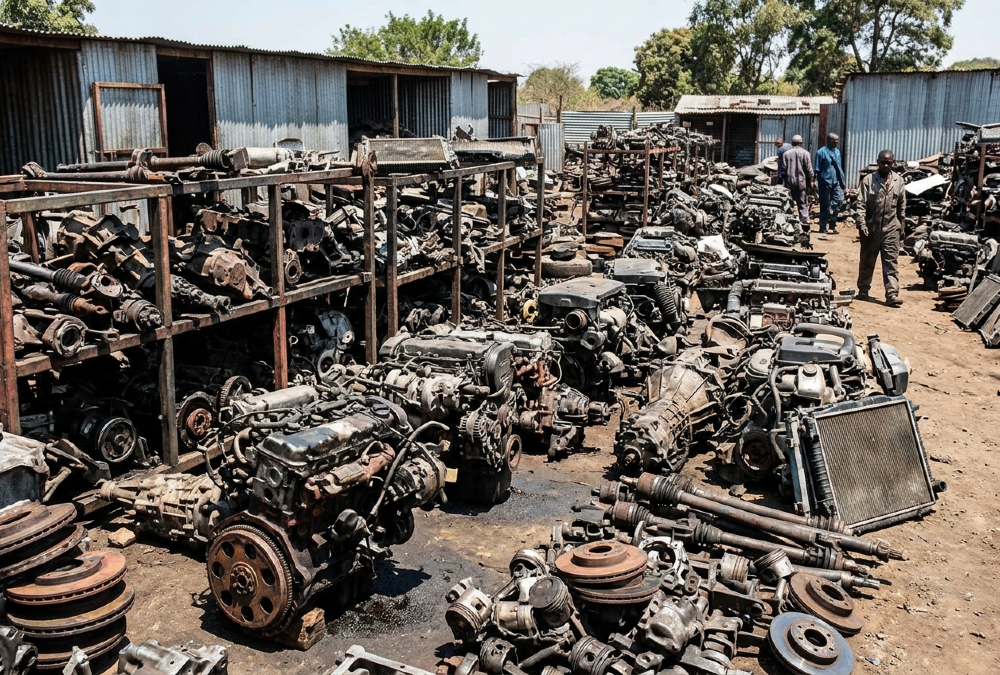
The conventional explanation is poverty, and it is partly right. Incomes are constrained, imports are dear, foreign currency is scarce and credit for a replacement is often unavailable. But the arithmetic is more interesting than the sentiment. Where capital is cheap, servicing is dependable and downtime is costly, scrapping an engine can be sensible. Where a replacement must be imported, its price can shift between quotation and delivery, and shipping, duties and delays add to the bill, repair wins. Skilled labor is nearby, and the old machine still holds plenty of value.
Repair, in short, is often a rational response to the relative cost of capital, labor and time. Outsiders tend to judge it by the assumptions of a richer market. A workshop full of dismantled engines looks like evidence of what a country cannot afford. Few ask what its mechanics have learned.
Proven Beats New
Some of that knowledge is counterintuitive. In markets awash with counterfeit parts and unverifiable brands, a genuine used engine from Toyota, Nissan, Isuzu or Mercedes-Benz can be more trustworthy than a shiny new part of uncertain origin. It has already survived real roads. Buyers are not always choosing cheap over good. They are choosing proven over unproven.
The same logic turns wrecks into warehouses. A car hit from behind may still have a sound engine and front end. One crushed in the front may keep its doors, seats and rear assemblies. The repairer sees what the word “waste” hides: a vehicle is not one asset but a bundle of components with different remaining lives. Circular-economy advocates call this component reuse and value retention. African workshops were doing it long before the term was fashionable.
They are not doing all of it well. Once the valuable parts are gone, the oils, batteries, tires, plastics and contaminated residues remain, and they are often poorly handled. Africa is good at recovering value from vehicles and much worse at managing what is left. The aim should be to build on what works while improving traceability, safety and environmental standards, not to preserve informality as it is.
The Ecosystem is the Product
Consider the Peugeot 404 station wagon, which long outlived its production line and remained a familiar sight in Harare. It was a tough car, but toughness alone does not explain its longevity. Around it grew an ecosystem of mechanics who knew its quirks, dealers who traded its parts and owners who knew where to go when it failed. Each surviving car gave mechanics a reason to keep their knowledge. Each skilled mechanic made it worthwhile to keep another car running.
The lesson is that durability lives not only in the product but in the network of knowledge, parts and services around it. Manufacturers entering African markets should take note. A brand is judged on whether its product can still be supported in year ten, and in towns far from the biggest cities.
A School With no Classrooms
That knowledge is passed on in workshops, not classrooms. An apprentice watches a master listen to an engine, read its smoke and trace a failure to its cause. The system has weaknesses: patchy safety practice, limited diagnostic tools and little certification. But a classroom explains how a machine is meant to work. A busy workshop shows how it actually breaks. Policy should strengthen this system, through recognition of prior learning, modular courses, safety certification and partnerships with manufacturers, instead of trying to replace it.
The same is true of factories. Plants across the continent run machinery that its makers consider obsolete, kept alive by technicians who rebuild motors, fabricate worn parts and adapt controls. Some of this ingenuity is dangerous, and it is important not to confuse the two. But a plant’s stated capacity assumes its equipment runs. Installed machinery is not industrial capacity unless someone can keep it running. Maintenance is not an afterthought to investment but part of it.
From Fixing to Making
The most striking step comes when repairers become manufacturers. In the recycling industry, people trained in motor mechanics now build baling machines. Their edge was not software or a gleaming factory. It was an intimate understanding of how machines fail, and of the dust, uneven loads and punishing schedules in which theirs must work. Each machine taught lessons that went into the next. Frames were strengthened, access for maintenance improved and hydraulics refined. Some of these firms now supply heavy balers to large recyclers, at a fraction of the price of established foreign brands.
This is no longer a repair story but a manufacturing story. The mechanic stops asking how to restore a machine and starts asking how to build it better.
Manufacturers should pay attention. Technicians in Harare, Lagos, Nairobi and Douala see how products cope with heat, dust, bad roads and unstable power. That is field intelligence of great commercial value. Firms could offer tiered accreditation, genuine parts, training and diagnostic tools, and use repair data to improve their designs.
Bankable Knowledge
The next rung is remanufacturing. Repair fixes one product. Remanufacturing collects, strips, cleans, tests and restores products to a defined standard, turning scattered know-how into repeatable industry. Engines, alternators, pumps, motors, gearboxes and batteries are candidates.
Investors should look beyond the individual roadside mechanic, who is too small to finance. The opportunity lies in the organizing layer: shared testing centers, certified remanufacturing plants, spare-parts platforms, equipment finance, maintenance clusters, end-of-life vehicle systems and electronics take-back.
Not everything deserves rescue. Unsafe, polluting or structurally damaged vehicles should retire, and Africa must not become the dumping ground for products other markets have rightly condemned. Telling the difference needs stronger standards and better testing, not less repair.
The Point
The ambassador’s engine was an engine. But the conversation was about two economic systems. One discards and moves on. The other opens, understands and restores, and in doing so passes knowledge between generations. Africa should neither romanticize the scarcity that makes repair necessary nor ignore the capability it has created. Repair becomes diagnosis, diagnosis becomes design and design becomes manufacturing.
Africa should not preserve old products just because it can fix them. It should industrialize the knowledge it gains by fixing them.
Raymond Chimhandamba is a Johannesburg-based consultant, writer, and speaker specializing in African industrial development, manufacturing value chains, and investment opportunities. He is director of Handas Consulting and founder of Kunakisa Recycling, with expertise in market entry, manufacturing localization, due diligence, absorbent hygiene products, nonwovens, recycling, and the commercial use of agricultural waste. He has contributed more than 40 articles to Nonwovens Industry Magazine and writes for International Fiber Journal. He also speaks at international industry events organized by INDA and EDANA. Raymond is currently writing Asymmetric Africa, a book examining overlooked opportunities in African markets.
