
Editorial
Africa and the West – Talking Past Each Other
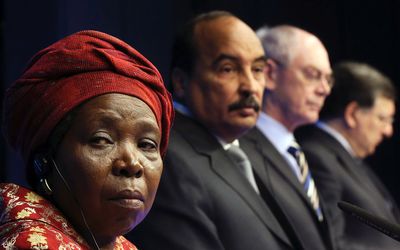
AU Commission chairwoman Nkosazana Dlamini-Zuma, AU Chairman Mohamed Ould Abdel Aziz, European Council president Herman Van Rompuy and European Commission president José Manuel Barroso at the AU – EU summit. PHOTO/Reuters
Brussels, Belgium | On the sidelines of the recently concluded summit between the European Union and various African countries, a high-ranking diplomat came away angry. ‘I am tired of these white people talking at us,’ he said. Apparently, a European Union Trade Negotiator had, essentially, told him that African countries must sign their (European) economic partnership agreements (EPAs) by October 2014 or else lose “whatever benefits the Europe sends to Africa”.
Ultimately, this same diplomat vowed not to return to the European Union. He was neither going to be lectured nor taught how to manage his country’s affairs.
On the other side of the room, Ugandan and Nigerian diplomats were still being berated for their countries positions on homosexuality, openly gay ministers from Nordic countries – were also vehemently opposed to the 2 countries’ presence at the annual event.
The Habari Network has suggested that, perhaps, Africa ought to get its collective act together and simply stop depending on the West for help. Our diplomat agreed and said that aid was not necessarily the issue. It was the fact that the Europeans and Westerners believed that because they doled out morsels to prop up certain elements of African economies, they had a right to tell others what to do.
Invariably, the conversation turned to what Africa had to do to wean itself off International aid and the sorts of things that came with the ‘beggar-my-neighbor’ sentiment involved here. The solution, the diplomat suggested, does not lie in being equal or being stronger than the other. In simple terms, the binary of East or West; US versus Them, is no longer applicable in a lot of situation. This is a much more multilateral world than anything else. Not only is China keen to do business with Africa. Japan has stepped up – and then there’s Brazil, Turkey and a whole slew of aggressive businesses in Thailand, Malaysia and Vietnam. The confident populace of Africa are ready to do business and so much dependence cannot be put on the European Union and the West, especially if both parties will not mutually benefit from the transactions. The frustration of this diplomat was that he felt the African partners were essentially demeaned and arrogantly talked at by their supposed partners – the Europeans.
So we were curious to know, why then do Africans continue to attend this summit. Well, the response went, “we must continue to engage with our former colonial masters”. But what we must not continue to do is let them talk at us. The diplomat suddenly paused and said we do not actually communicate since they do not care to know what we really think and feel. This in-turn simply makes us suspicious of their real motives.
There is another dynamic to all this, we were told. If you have too much power centered in the hands of only a few people, you will have people coming to tell you how to run your lives – and you will not be able to handle the situation as best as you ought to. Suggestively, these sort of things will continue to happen if the West does not have enough information and the Africans – or whichever economy is on the receiving end – do not really have the wherewithal to resist things that they do not necessarily agree with.
