
Opinion
Africa’s Dance with the Dragon – How Strategy Pays Off with China

By Jacqueléne Coetzer
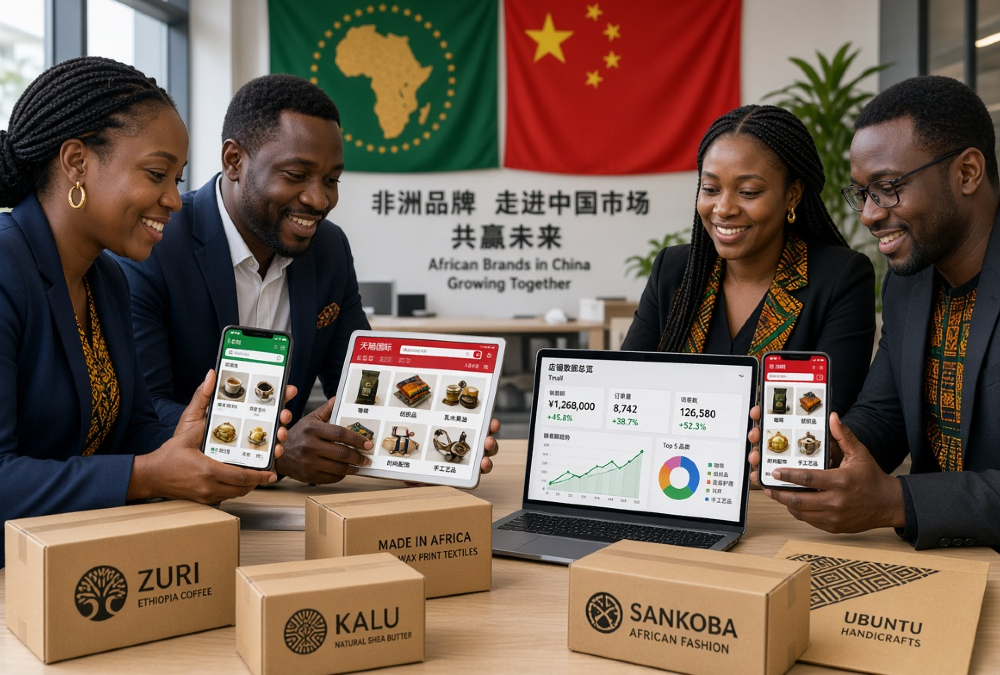
China has become one of Africa’s most strategically important trading partners, yet it remains a market that many African businesses approach with either excessive caution or excessive optimism. Both approaches can be costly. China is not simply a vast consumer market waiting for African products. It is a highly structured, policy-driven commercial ecosystem in which regulation, regional specialization, digital platforms, relationships, cultural understanding and long-term commitment all influence whether a foreign company succeeds.
China-Africa trade exceeded US$280 billion in 2024, making China Africa’s largest trading partner for 15 consecutive years. For African exporters, the opportunity extends well beyond traditional commodities.
Natural ingredients and botanicals, cocoa, coffee, speciality teas, premium foods, wellness products, medical technology, cosmetics, industrial minerals and other specialized African products all have potential applications within the Chinese market and its enormous manufacturing and consumer ecosystem.
A Country of Many Markets, Not One
The critical mistake, however, is to view China as one market. It is better understood as a collection of highly specialized commercial ecosystems.
Guangdong, for example, is a major center for electronics, consumer technology, fashion, beauty, cosmetics and e-commerce fulfilment, while Jiangsu has considerable strength in medical technology, robotics, pharmaceuticals and high-tech manufacturing.
Shanghai is particularly important for premium retail, international imports, luxury goods, high-end food and beverages, while Fujian has strong links to tea, food processing and packaging. Beijing and Tianjin are particularly relevant for government relations, corporate buyers, healthcare, education and B2B partnerships.
This regional specialization creates an important lesson for African businesses – the question is not simply how to enter China, but where and through which commercial ecosystem to enter China. A producer of natural cosmetics ingredients may require a very different strategy from a coffee exporter, medical-device manufacturer or premium food producer. The appropriate province, city, distributor, platform and consumer segment may all be different.
Digital Platforms and the Limits of Technology
Consumer behavior is equally diverse. China contains sophisticated urban consumers seeking premium international products alongside highly price-sensitive markets where established brands and value remain important.
E-commerce and digital platforms such as WeChat, Douyin, Xiaohongshu, Tmall, JD.com and Taobao have fundamentally changed how products are discovered, marketed and sold. Influencers, digital storytelling, sampling and localized content can be important components of a successful market-entry strategy.
But technology does not replace relationships.
Culture, Trust and Compliance
Chinese business culture places considerable emphasis on trust, reputation and long-term relationships. Concepts such as guanxi and mianzi are not superficial cultural curiosities; they influence how relationships are developed and how business is conducted.
Patience, consistency, humility and respect matter. Language and localisation matter. Even seemingly small details – from correctly pronouncing a person’s name to understanding the significance of colors, numbers and business-card etiquette – can influence how a foreign company and you in particular are perceived.
Compliance is equally non-negotiable. Depending on the product, market entry may involve Chinese regulatory registration, customs requirements, Chinese-language packaging, local representation and product-specific approvals.
Intellectual-property protection is particularly important – international trademark protection does not automatically provide the protection a company needs in China. Grey-market routes may appear attractive as a shortcut, but they can create serious risks for intellectual property, regulatory compliance and long-term scalability.
A Measured Path to Market Entry
I would therefore advocate a controlled approach to market entry. Rather than attempting an immediate national rollout, companies should establish proof of demand through actual sales, repeat orders, pilot programmes, sell-through data, distributor competition and genuine inbound interest. A limited product range and carefully selected geographical or channel pilot can provide considerably more useful information than a large and expensive launch.
There is also a significant opportunity in the other direction. China is not merely a destination for African exports. Chinese companies increasingly participate in African manufacturing, processing, infrastructure and sourcing. Many African businesses may therefore find greater value not simply in selling finished products into China, but in becoming suppliers of high-quality agricultural products, natural ingredients, minerals and other inputs into Chinese manufacturing and consumer ecosystems.
China rewards those prepared to play the long game. African businesses should not enter expecting rapid sales, relying on a single agent or assuming that a strategy successful in Europe or North America will work unchanged in China. Localization, regulatory compliance, intellectual-property protection, appropriate partnerships and sustained relationship-building are fundamental to success.
China can therefore be intimidating, but it should not be dismissed as inaccessible. For African companies with a genuinely competitive product, the right market positioning and the willingness to invest in understanding the country, China offers one of the most significant commercial opportunities in the global trading system.
The real question is not whether China is too difficult for African businesses – it is whether African businesses are prepared to approach China strategically enough to succeed.
Jacqueléne Coetzer is a strategic trade and market analyst specialising in African and emerging markets. Her work focuses on structuring cross-border commercial relationships, connecting buyers and sellers, and facilitating trade across key sectors including commodities, diagnostics, and premium agricultural products. Her writing explores the realities behind global trade architecture, BRICS, and African economic development – not from a theoretical lens, but from active market engagement and transaction-level insight.
