
Opinion
The Last Mile Begins at the Factory Gate
The distance between an efficient factory and an accessible product is measured in more than kilometers. It is shaped by product mix, pack sizes, transport economics, working capital, payment collection and the realities of fragmented demand.

By Raymond Chimhandamba
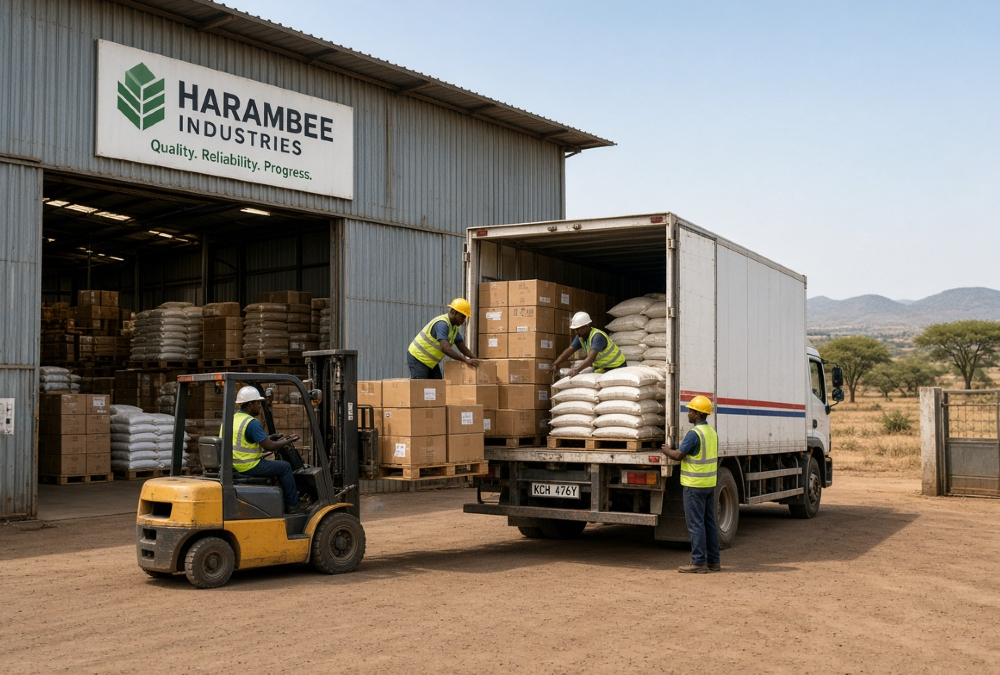
Ask a logistics executive about “the last mile” and you will usually hear about a delivery van stuck in city traffic or a motorbike threading a parcel through a crowded market. In much of Africa, that picture is too small. The last mile does not begin at the edge of town or the door of a regional warehouse. It begins at the factory gate, and sometimes before the first pallet is wrapped.
Consider the mismatch at the heart of African manufacturing. A factory thinks in metric tons, production runs and full truckloads, because scale lowers unit costs. Its customers think in pieces. A distributor orders what its working capital can carry. A wholesaler assembles mixed cases. A kiosk owner buys a few cartons, and an informal trader may buy one and sell it unit by unit to shoppers spending whatever cash they have that day. None of them is behaving irrationally. Each is solving a different constraint. A product made in a market is not necessarily made for it.
A Truck Carries Economics, Not Just Goods
Take a manufacturer of tissue, sanitary pads, baby diapers and adult incontinence products. These leave the same factory but travel very differently. Tissue is bulky and cheap, so a truck loaded with it “cubes out” long before it reaches its weight limit, and the freight bill lands on a low-value cargo. Sanitary pads are compact and valuable, and travel well. A shipment with a sensible mix of the two spreads transport costs far more kindly than one dominated by either.
Customers rarely see this. They know what sells, not how cubic volume, container utilization and product mix shape landed cost. The manufacturer, which can see the whole portfolio, has a duty to say so. Advising a customer to rebalance an order is not an attempt to offload stock. It is how a supply relationship survives. A buyer who repeatedly receives shipments whose freight eats the margin will eventually stop buying. Many manufacturers spend months shaving a few cents from a bill of materials, then lose far more through badly configured cartons, pallet patterns and loads.
Packaging is Distribution Infrastructure
Packaging is usually discussed as branding and protection. In fragmented markets it is also infrastructure. A large economy pack may offer the lowest price per diaper yet demand more cash than a household can spare at once. A smaller pack costs more per unit and sells more easily, because it matches the buyer’s cash flow.
The same logic applies up the chain. Can a small retailer afford a full case? Can a wholesaler open it without exposing the remaining stock to dust and damp? Will labels survive the removal of outer packaging, or a tumble from a handcart? When traders sell detergent “by the cup,” they are not changing the formula. They are changing the unit of affordability. Repeated bulk-breaking by the market is a signal that production efficiency and purchasing reality have drifted apart.
Delivery is One Thing; Collection is Another
Multinationals with formidable logistics, from Unilever to Procter & Gamble, often still rely on distributors rather than serving every outlet themselves. The reason is not incapacity. Delivering to hundreds of small retailers is the easy half. Collecting from them, consistently and on time, is harder. Informal outlets vary enormously in record-keeping, cash flow and creditworthiness, and trust is often personal, built over years.
An intermediary who owns those relationships knows whom to trust, how much credit to extend and when to chase. It may also consolidate goods from several manufacturers, making each trip cheaper. From a distance, another layer simply looks like another margin. Up close, it may supply payment security, market knowledge and continuity. So the question is not “how do we remove the middleman?” It is which intermediaries add cost without value, and which perform functions the formal system cannot yet perform economically. A distributor who guarantees collection and carries credit risk is not merely moving boxes. It is providing financial infrastructure, and deserves to be paid for it.
The Last Mile is Measured in Days of Credit
Many apparent distribution failures are really working-capital failures. Goods flow down the chain quickly; cash flows back slowly. Someone must finance every gap: the manufacturer funds production, the distributor funds inventory and receivables, the wholesaler carries stock for smaller buyers, and the retailer funds the stretch between buying a case and selling its last unit. Product moves only as fast as the weakest balance sheet allows.
This explains a familiar puzzle: strong consumer demand but weak factory orders. The problem gets misdiagnosed as poor sales or poor marketing when the route to market is simply undercapitalized. Trade finance, distributor credit, receivables facilities and inventory funding may do more to lift factory utilization than another production line. Financing new capacity without asking who will finance the resulting stock risks building plants the market cannot absorb, not because people do not want the goods but because the chain cannot carry them.
Formal and Informal are One System
It is tempting to draw a clean line between formal and informal commerce. In practice, goods from the same factory reach a supermarket shelf and a roadside kiosk by different routes. Each layer may break bulk, hold stock, extend credit or reach customers modern retail never will. Some layers do add pointless cost. But a shorter chain that cannot collect payment, reach small retailers or keep shelves stocked is not more efficient than a longer one in which every participant earns its keep. Efficiency cannot be judged by counting steps.
Local Production is Not Local Access
Governments rightly celebrate new factories for the jobs, skills and foreign-exchange savings they bring. But proximity is not penetration. A locally made product can stay concentrated in the capital, bypass the outlets where target consumers shop, arrive in pack sizes no one can afford, or even cost more than an import riding an established trading network. Import substitution at the factory can coexist with distribution dependence in the market.
Hence a harder standard of due diligence. Beyond machinery, raw materials and headline demand, investors should ask who holds the inventory, how distributors finance it, which channels the product will enter, who breaks bulk, who bears credit risk, how often retailers are restocked, what happens beyond the big cities and, above all, who collects the money.
Design the Route First
Africa needs more factories. But it needs investments designed around the whole journey, with logistics, sales, finance, packaging and distribution teams at the table before capacity decisions are final. That may mean regional warehouses, mixed-load planning, smaller depots, distributor-development programs, digital ordering, inventory finance, or partnerships with wholesalers who already understand informal markets. The model will vary by product and place.
What should not vary is the principle. A product has created no economic value while it sits in a warehouse. Value arrives when it reaches the right outlet, in the right quantity, at a price the consumer can afford, and when the money finds its way reliably back. The last mile is not a delivery problem. It is the entire commercial system that turns factory-scale production into market-scale access, and it begins at the factory gate.
Raymond Chimhandamba is a Johannesburg-based consultant, writer, and speaker specializing in African industrial development, manufacturing value chains, and investment opportunities. He is director of Handas Consulting and founder of Kunakisa Recycling, with expertise in market entry, manufacturing localization, due diligence, absorbent hygiene products, nonwovens, recycling, and the commercial use of agricultural waste. He has contributed more than 40 articles to Nonwovens Industry Magazine and writes for International Fiber Journal. He also speaks at international industry events organized by INDA and EDANA. Raymond is currently writing Asymmetric Africa, a book examining overlooked opportunities in African markets.
