
Zina’s Youth View on Africa
Eastern DR Congo Conflict: Togo Steps In as Mediator Amidst Growing Instability

By Godfred Zina
Since January 2025, the eastern Democratic Republic of Congo (DR Congo) has been engulfed in a devastating conflict that has claimed approximately 7,000 lives and displaced millions. Despite numerous mediation attempts and mounting calls for the withdrawal of the M23 rebel group from the region, peace remains elusive.
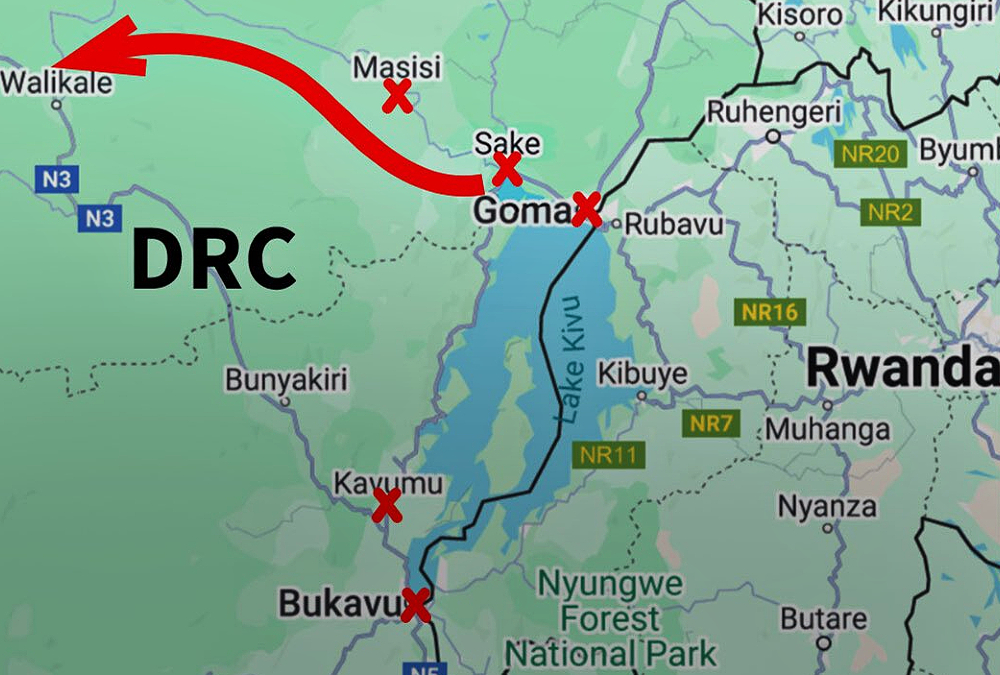
The situation took a turn for the worse in early March 2025 when M23 insurgents seized Walikale, a mineral-rich town, despite the Congolese government’s offer of a US$5 million bounty for the capture of key rebel leaders.
However, recent developments have sparked cautious optimism. Peace talks between the DR Congo government and M23 rebels were held in Qatar from March 26 to 28, following a surge in violence.
These discussions have been described as “positive,” with M23 reportedly withdrawing from Walikale on April 4, as agreed during the Doha negotiations. Yet, skepticism lingers, as the group has previously reneged on similar commitments.
To build on these fragile gains, another round of talks is scheduled for April 9, 2025, with Qatar continuing its role as mediator.
In a significant shift, the African Union (AU) has appointed Togo’s President Faure Gnassingbé as the new mediator in the conflict, replacing Angola’s João Lourenço. This decision comes after Angola stepped back from its mediating role, citing the need for Lourenço to focus on his duties as AU chairperson.
Angola’s exit followed a failed attempt to broker direct talks between the Congolese government and M23 rebels in Luanda on March 18, which collapsed when M23 withdrew, citing EU sanctions against several of their senior leaders.
The AU Commission Chairperson, Mahmoud Ali Youssouf, lauded Gnassingbé’s appointment, emphasizing his commitment to advancing peace in the region. Gnassingbé will collaborate with a panel of five facilitators appointed by the Heads of State from the Southern African Development Community (SADC) and the East African Community (EAC), signaling a concerted regional effort to resolve the crisis.
A Fragile Path Forward: Navigating Parallel Peace Processes
While these diplomatic efforts are commendable, the coexistence of two parallel peace processes – one led by the AU and the other by Qatar – raises concerns about potential confusion and conflicting outcomes. For sustainable progress, it is imperative that these initiatives are harmonized to avoid undermining each other.
Coordination between the AU and Qatar will be crucial to ensure that both processes complement rather than complicate the path to peace.
Rwanda Under Scrutiny: A Diplomatic Crossroads
As peace negotiations gain momentum, Rwanda finds itself under growing international scrutiny over allegations of supporting the M23 rebels. Reports linking Kigali to the insurgency have fueled tensions and could jeopardize Rwanda’s standing in the region.
To mitigate diplomatic fallout, Rwanda must demonstrate a clear commitment to the peace process and distance itself from the rebels. By doing so, it can not only improve its regional image but also contribute meaningfully to ending the bloodshed in eastern DR Congo.
Failure to act decisively, however, could deepen the humanitarian crisis and further destabilize an already volatile region. The stakes are high, and the international community will be watching closely to see whether Rwanda chooses cooperation over confrontation.
What Lies Ahead?
The appointment of Togo as mediator and the upcoming talks in Doha represent critical steps toward resolving one of Africa’s most intractable conflicts. Yet, the road to lasting peace remains fraught with challenges.
The M23’s track record of broken promises, coupled with geopolitical complexities and competing peace initiatives, underscores the fragility of the current momentum.
For the people of eastern DR Congo, who have endured unimaginable suffering, the hope for stability hinges on the ability of regional and international actors to unite behind a coherent and coordinated strategy. The coming weeks will be pivotal in determining whether this latest diplomatic push can translate into tangible progress – or whether the cycle of violence will continue unchecked.
The question remains: Can the AU, Qatar, and regional stakeholders rise to the occasion and deliver the peace that millions so desperately need? The world is watching.
Godfred Zina is a freelance journalist and an associate with DefSEC Analytics Africa – a consulting agency specializing in the provision of accurate data and assessments on security, politics, investment, trade, and other risks within Africa. He is based in Accra, Ghana.
