
Zina’s Youth View on Africa
Ghana Pushes for a New Security Framework as Sahel Alliance Pulls Away

By Godfred Zina
The slow-motion unravelling of West Africa’s established security order has entered a critical new phase. The decision by the junta-led Alliance of Sahel States (AES) – Mali, Burkina Faso, and Niger – to withdraw from the Accra Initiative is more than a political snub; it is a tectonic shift that threatens to leave the entire region more vulnerable to the metastasising threat of violent extremism.
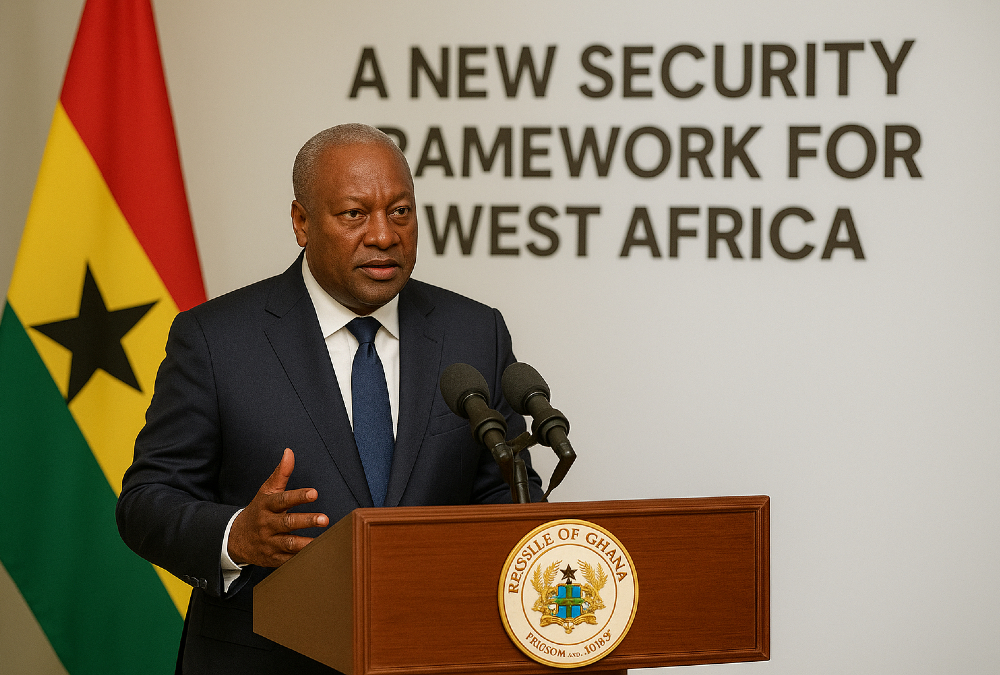
In response, Ghana’s President John Dramani Mahama is attempting a bold, if precarious, diplomatic gambit: the creation of a new security platform designed to bridge the continent’s deepening geopolitical fault lines.
The Accra Initiative, established in 2017, was always a preventative measure – a hedge by coastal states against the southward spread of Sahelian instability. It was built on a model of Western-aligned cooperation, with partners like Germany and the EU providing crucial support for intelligence-sharing and counterterrorism.
Its fracture was inevitable once the AES states, having torn up their constitutional rulebooks, also discarded the West’s security playbook. In its place, they have erected a new alliance founded on a doctrine of regional autonomy and open partnership with Russia, creating two antagonistic security blocs where one cohesive front is desperately needed.
The High Cost of Fragmentation
This divergence is not merely ideological; it is operationally catastrophic. As President Mahama rightly noted, violent extremism is a “cancer” that respects no borders.
The same groups that destabilize the Sahel are already probing the defences of coastal nations. The collapse of joint mechanisms for border surveillance, intelligence sharing, and military coordination is a gift to these militant groups, who thrive in the seams of regional discord.
The situation creates a dangerous paradox: the fight against a common, transnational threat is becoming more fragmented just as the threat itself becomes more integrated.
It is against this bleak backdrop that Ghana is stepping into the role of potential mediator. President Mahama’s proposal, unveiled during a state visit from Germany’s president – a key patron of the old framework – is strategically significant.
It positions Ghana as a rare interlocutor trusted by Western capitals and, crucially, still able to open channels to the AES juntas. The objective is not to resurrect the old order, but to forge a new, more inclusive one focused on “shared responsibility.”
The subtext is clear: isolation has failed; it is time for dialogue.
A Bridge Over Troubled Waters?
The ambition is laudable, but the path is strewn with obstacles. The proposal’s success hinges on convincing both sides to soften entrenched positions.
The Accra Initiative’s Western partners must acquiesce to a platform that gives a formal voice to regimes they sanction, while the AES juntas must demonstrate a willingness to re-engage with the very regional architecture they have publicly spurned. Furthermore, as with any initiative tied to a single leader, its survival beyond President Mahama’s tenure remains a serious question, potentially leaving any new framework in limbo.
Yet, the alternative – a permanently divided West Africa – is untenable. A successful Ghanaian mediation could begin to dismantle the walls of political mistrust, reviving the practical, life-saving cooperation that has lapsed.
Restoring even basic intelligence flows or coordinating patrols in border regions would be a monumental achievement.
Ghana’s outreach is a recognition that in today’s multipolar world, regional security cannot be outsourced to a single camp. The future of West African stability may well depend on building messy, pragmatic coalitions that can transcend geopolitical rivalries.
The task is Herculean, but the cost of inaction – a continent consumed by a fire it cannot collectively fight – is far greater.
Godfred Zina is a freelance journalist and an associate at DefSEC Analytics Africa, a consultancy specializing in data and risk assessments on security, politics, investment, and trade across Africa. He also serves as a contributing analyst for Riley Risk, which supports international commercial and humanitarian operations in high-risk environments. He is based in Accra, Ghana.
