
Zina’s Youth View on Africa
Is Mali Heading Toward Stability – or Sliding Into Authoritarianism?

By Godfred Zina
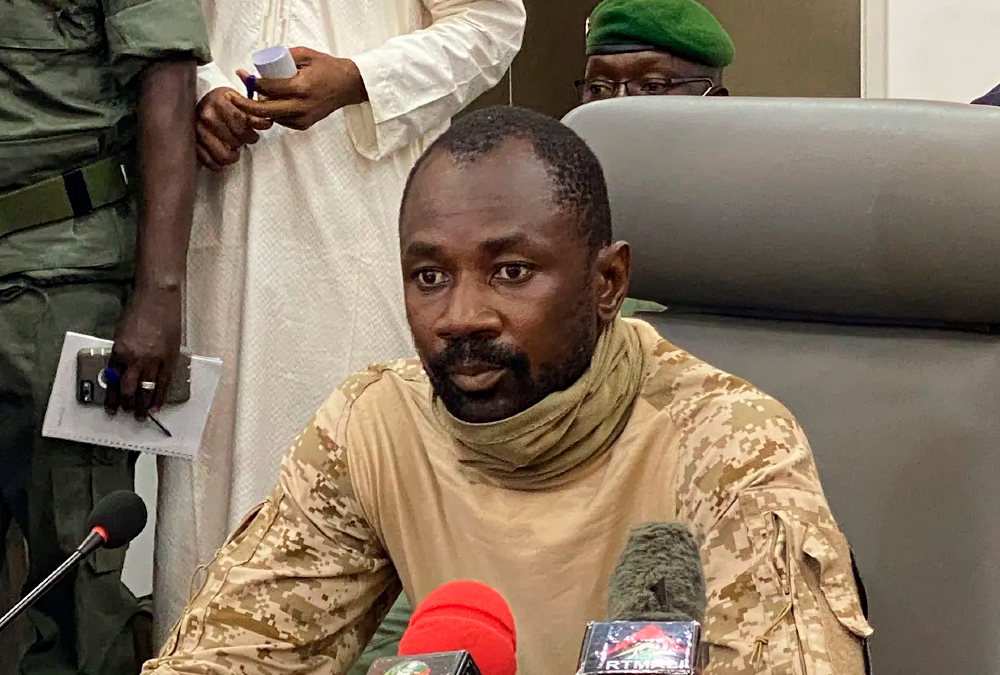
Mali is once again at a crossroads. In a recent decree citing concerns over public order, General Assimi Goïta – de facto leader of the West African nation – suspended all political activities indefinitely, following a pro-democracy rally that drew widespread attention.
The move came shortly after the ruling junta repealed a key law regulating the operations of political parties. Legal analysts have interpreted this as a potential prelude to the outright dissolution of such parties, raising alarms about the future of democratic governance in the country.
In response, a coalition made up of dozens of political groups has emerged, united in its call to end the military-led transition and restore constitutional rule. Despite the risks, hundreds of civilians took to the streets in rare demonstrations of dissent – marking one of the few public shows of resistance since the coup.
A Democratic Facade Erodes
When the military first seized power, it promised to restore stability, root out corruption, and pave the way for democratic renewal. But months of delayed elections, suppressed opposition, and now the suspension of political activity have led many to question whether the junta ever intended to relinquish control.
The implications are stark: by suspending political parties and civil associations, the regime is effectively dismantling the institutions that underpin democracy. Analysts warn that without these checks and balances, military rule will only deepen its grip on power.
While some citizens initially rallied behind the military’s promises of reform, growing frustration with the indefinite postponement of democracy and the silencing of critical voices has exposed a troubling trajectory – one that increasingly resembles authoritarian consolidation rather than transitional governance.
Power Consolidation in Plain Sight
Most recently, proposals to extend the transition period and install General Goïta as president for a renewable five-year term have further fueled suspicions that the junta seeks not just to lead, but to entrench itself in power for the long term.
As Mali stands at a pivotal moment, the world watches closely to see whether the country will return to democratic rule – or slip further into autocratic governance.
Godfred Zina is a freelance journalist and an associate with DefSEC Analytics Africa – a consulting agency specializing in the provision of accurate data and assessments on security, politics, investment, trade, and other risks within Africa. He is based in Accra, Ghana.
