
Zina’s Youth View on Africa
Sudan’s Silent Catastrophe: The World Cannot Afford to Look Away

By Godfred Zina
As global headlines remain fixated on the war in Ukraine and escalating tensions in the Middle East, a humanitarian and geopolitical disaster of staggering proportions is unfolding in Sudan – one that threatens regional stability, international security, and the very conscience of the global community.
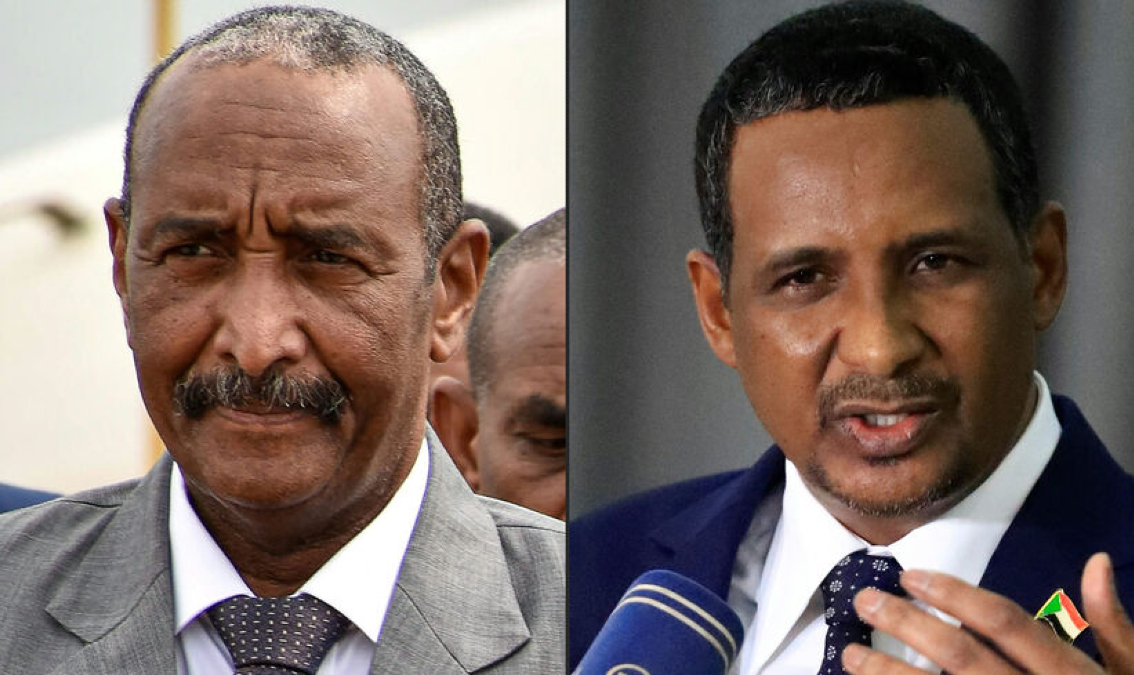
Since April 2023, Sudan has been engulfed in a brutal civil war between the Sudanese Armed Forces (SAF) and the paramilitary Rapid Support Forces (RSF). What began as a power struggle between military leaders has spiraled into a full-scale conflict that has devastated the country, displaced over 10 million people – the largest displacement crisis in the world today – and pushed more than 25 million Sudanese toward acute food insecurity.
Yet, amid this unfolding tragedy, the world is looking elsewhere.
A Humanitarian Crisis Weaponized
Sudan is now on the brink of the worst famine in decades. The number of regions facing emergency levels of hunger has more than doubled – from six to seventeen – according to the United Nations.
In Darfur, where ethnic cleansing tactics echo the horrors of the early 2000s, displaced civilians are being systematically targeted in their camps. Aid convoys are looted, hospitals bombed, and food supplies deliberately blocked.
This is not merely collateral damage. There is mounting evidence that starvation is being used as a weapon of war.
The RSF, in particular, has been accused of besieging communities, destroying agricultural infrastructure, and obstructing humanitarian access tactics that amount to war crimes under international law.
A Proxy War with Global Implications
The conflict is no longer confined to internal divisions. Sudan has become a battleground for regional and global powers pursuing their own strategic interests.
The United Arab Emirates, Russia’s Wagner Group (and its successor networks), Iran, and even foreign mercenaries reportedly from Colombia have inserted themselves into the fray – supplying arms, intelligence, and logistical support to warring factions.
These external actors are not seeking peace; they are fueling the conflict to expand influence, secure military footholds near the Red Sea, and gain access to Sudan’s vast natural resources. The result is a proxy war that entrenches violence and undermines any hope for a sovereign, democratic Sudan.
A State Fractured, a Region at Risk
Politically, Sudan is unraveling. The RSF has attempted to establish parallel governance structures in areas it controls, a move the United Nations has condemned as a direct threat to Sudan’s sovereignty and constitutional order.
Meanwhile, the legitimate government-in-exile and civilian institutions are left weakened, fragmented, and starved of international support.
Ordinary Sudanese citizens are caught in the crossfire – trapped between marauding militias, collapsing health systems, and an almost total absence of global intervention. Women and children make up the majority of the displaced, vulnerable to violence, trafficking, and disease.
And the consequences extend far beyond Sudan’s borders.
Neighboring countries – Chad, South Sudan, Egypt, and the Central African Republic – are already struggling to absorb waves of refugees. These nations, many already grappling with poverty and instability, now face increased pressure on resources, security, and social cohesion.
Worse still, a failed state in the heart of Africa could become a breeding ground for extremist organizations. Al-Shabaab, ISIS affiliates, and other militant groups could exploit the chaos, turning Sudan into a new hub for regional terrorism and illicit networks.
The Red Sea, a critical artery for global trade, would face heightened risks, affecting energy markets and supply chains worldwide.
The Cost of Silence
The international community’s inaction is not neutrality – it is complicity. Reduced media coverage has led to diminished humanitarian funding.
The UN’s 2024 aid appeal for Sudan remains less than 30 percent funded, leaving millions without food, water, or medical care. Diplomatic efforts are fragmented, and there is little coordinated pressure on the warring parties to cease hostilities or allow unfettered humanitarian access.
This silence reflects a broader failure of global leadership – a double standard in which some crises command round-the-clock attention while others, equally dire, are relegated to the margins.
But make no mistake: ignoring Sudan today will cost the world far more tomorrow. Delayed intervention means deeper instability, higher humanitarian costs, and greater security threats.
The price of prevention is always less than the price of recovery.
A Call for Urgent Action
The world must act – now. The G7, African Union, United Nations, and regional powers must:
- Boost humanitarian funding and ensure aid reaches all regions, especially conflict-affected zones in Darfur and Khartoum.
- Impose targeted sanctions on individuals and entities – both domestic and foreign – fueling the conflict or obstructing aid.
- Demand accountability through international mechanisms, including the International Criminal Court, for war crimes and crimes against humanity.
- Support inclusive peace efforts led by Sudanese civil society, not military actors or foreign powers with vested interests.
- Reinforce regional diplomacy, empowering the African Union and neighboring states to mediate and stabilize the crisis.
Sudan is not just another conflict zone. It is a test of our collective humanity and global responsibility.
If we allow this crisis to fester, we are not just failing the Sudanese people – we are endangering our shared future.
The world cannot afford to ignore Sudan any longer.
Godfred Zina is a freelance journalist and an associate at DefSEC Analytics Africa, a consultancy specializing in data and risk assessments on security, politics, investment, and trade across Africa. He also serves as a contributing analyst for Riley Risk, which supports international commercial and humanitarian operations in high-risk environments. He is based in Accra, Ghana.
