
Zina’s Youth View on Africa
Is Paul Biya’s Hold on Power in Cameroon Beginning to Crack Ahead of the 2025 Election?

By Godfred Zina
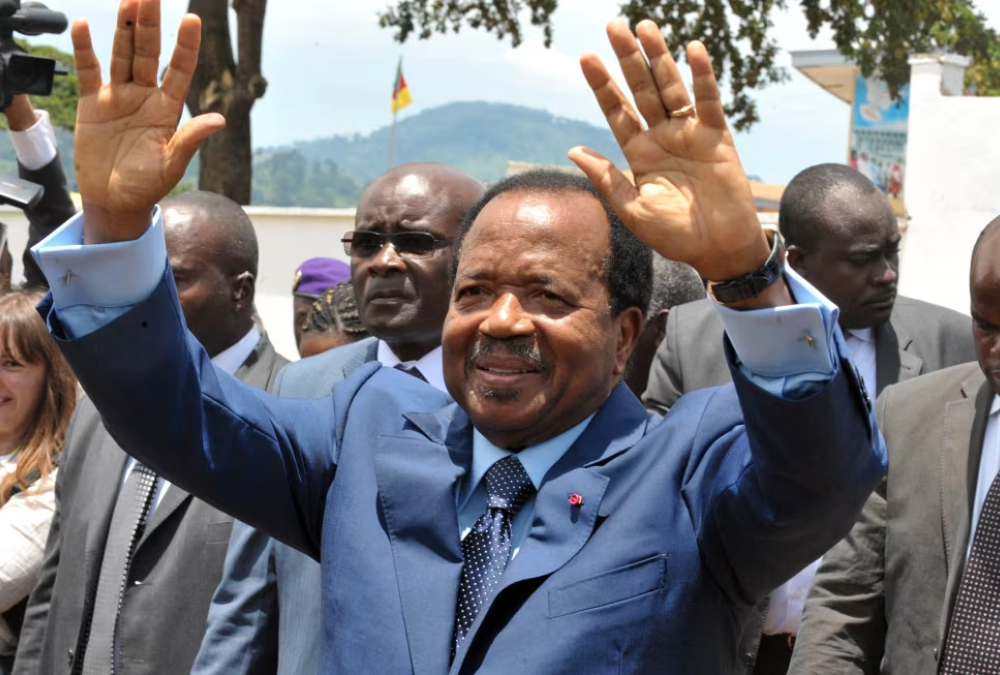
At 92 years old, Cameroon’s President Paul Biya – Africa’s second-longest-serving leader – remains silent as his ruling party, the Cameroon People’s Democratic Movement (CPDM), fractures under the weight of internal discord. With just months to go before the October 2025 elections, the CPDM faces what many are calling its most significant crisis in over four decades.
Once a symbol of centralized control and political dominance, the CPDM is now mired in deepening divisions, defections, and leadership uncertainty. These fractures have crippled the party’s ability to craft a coherent electoral strategy, exposing vulnerabilities that opposition forces are eager to exploit.
Biya’s continued silence on whether he will seek another term has only intensified speculation. His absence from public discourse has not only fueled uncertainty but also highlighted the party’s lack of a clear succession plan – a glaring weakness in a system built around his personal authority.
For years, the CPDM has relied on Biya’s centralized rule to maintain cohesion. But with strategic alliances fraying and internal unity unraveling, the party finds itself ill-prepared for a post-Biya era.
The result is a leadership vacuum that threatens both the party’s electoral prospects and the country’s broader political stability.
What Does This Mean for Cameroon?
The growing instability within the CPDM has created an unpredictable political climate, increasing the risk of elite infighting, erratic decision-making, and a potential succession crisis. Some analysts suggest that Biya may feel compelled to run again – not out of strength, but necessity – despite concerns about his health and capacity to govern.
Yet this moment also represents a historic opportunity for the opposition. For the first time in more than 40 years, fragmented opposition groups see a real chance to unite, mobilize public sentiment, and challenge the CPDM’s long-standing monopoly on power.
While repression remains a concern, the cracks in the ruling party offer a rare opening to reshape Cameroon’s political narrative.
Regional Risks and National Consequences
However, the stakes extend beyond partisan politics. Without a clear leadership transition plan, regional tensions – particularly in the restive Anglophone regions and the Far North – could escalate into full-blown crises.
The CPDM’s internal collapse could either pave the way for democratic renewal or plunge the country into deeper instability.
Cameroon stands at a crossroads. The 2025 elections may mark either the end of an era or the entrenchment of a faltering status quo. Either way, the world should be watching closely.
Final Thoughts
As the October deadline looms, the pressure is mounting on all sides. If Biya and his party fail to address the growing unrest within their ranks, the consequences could reverberate far beyond the ballot box.
The coming months will test not only the resilience of Cameroon’s institutions but also the durability of its democracy.
Without timely and inclusive political engagement, the nation risks sliding from fragile authoritarianism into a regional hotspot of conflict and instability. The question is no longer if Biya can hold on – but rather, how much longer he – and Cameroon – can afford to wait.
Godfred Zina is a freelance journalist and an associate at DefSEC Analytics Africa, a consultancy specializing in data and risk assessments on security, politics, investment, and trade across Africa. He also serves as a contributing analyst for Riley Risk, which supports international commercial and humanitarian operations in high-risk environments. He is based in Accra, Ghana.
