
Zina’s Youth View on Africa
Somalia – Ethiopia deal and its implications

By Godfred Zina
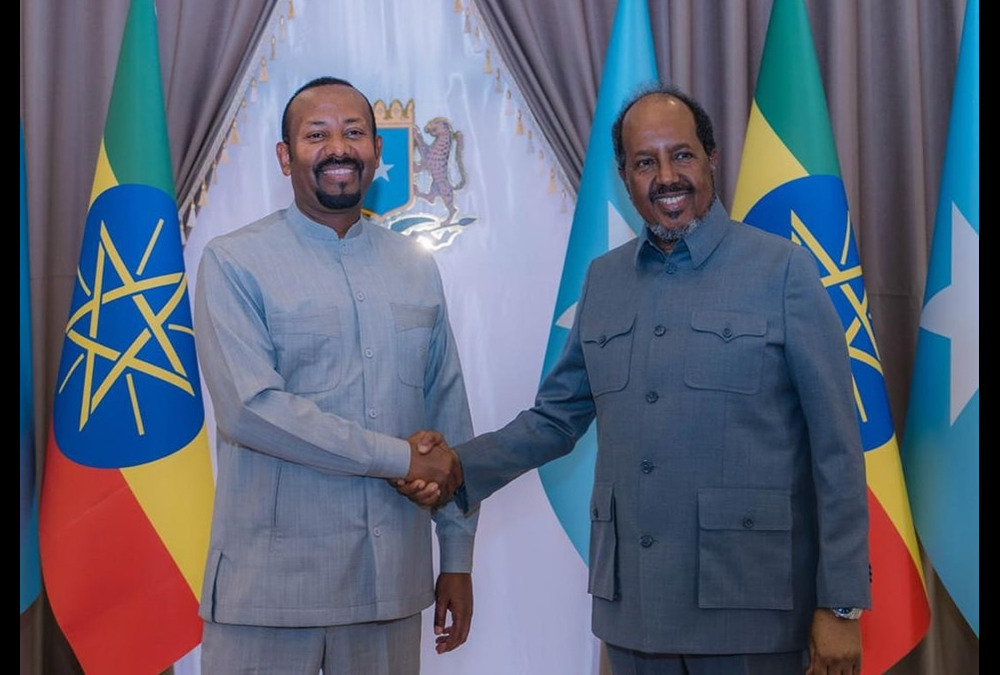
The diplomatic landscape in the Horn of Africa is shifting following Türkiye’s successful mediation between Somalia and Ethiopia over a contentious naval deal involving the self-declared independent region of Somaliland. Ethiopia’s Prime Minister’s visit to Somalia, signals a thaw in relations after tensions peaked in January 2024 over Ethiopia’s bid for sea access.
The Ankara Declaration: A Step Toward Stability
Facilitated by Türkiye, the Ankara Declaration saw both Ethiopia and Somalia reaffirm their mutual respect for sovereignty, territorial integrity, and independence – principles rooted in international law, the UN Charter, and the African Union (AU) Constitutive Act. The agreement underscores commitments to shared prosperity, recognition of historical sacrifices, and finalization of Ethiopia’s secured access to the sea through a formalized process.
While the agreement has eased tensions between Ethiopia and Somalia, it has drawn criticism from Eritrea. Labeling the Turkish-brokered deal as “rushed and ambiguous,” Eritrea has hinted at severing diplomatic ties with Somalia.
Regional Responses and Geopolitical Ramifications
This development raises concerns about potential shifts in regional alliances and heightened instability in the Horn of Africa.
Meanwhile, Egypt, Somalia, and Eritrea – nations with historically strained relations with Ethiopia – held a meeting in Asmara in October, reinforcing their ties and pledging to safeguard their sovereignty.
This trilateral engagement signals a recalibration of regional dynamics, potentially challenging Ethiopia’s strategic ambitions.
Security Implications: Ethiopia’s Military Presence in Somalia
Ethiopia currently maintains approximately 10,000 troops in Somalia under the AU peacekeeping mission, a critical force in countering the al-Qaeda-affiliated militant group al-Shabaab. Earlier threats from Mogadishu to expel Ethiopian forces – should Ethiopia proceed with its Somaliland agreement – raised fears of a security vacuum that could embolden al-Shabaab and destabilize Somalia.
However, with the recent diplomatic breakthrough, Ethiopian troops are now expected to remain, ensuring continued stability and security cooperation.
What Comes Next?
The visit by Prime Minister Abiy underscores a growing détente and could strengthen military and diplomatic ties between the two nations. This renewed engagement is essential for sustaining security operations against al-Shabaab and fostering long-term regional peace efforts.
However, Eritrea’s opposition to the Ethiopia-Somalia agreement presents a potential flashpoint that could disrupt regional stability. If Eritrea follows through on its threat to sever ties with Somalia, new geopolitical realignments could emerge, increasing the influence of external actors in the region.
As the situation unfolds, Ethiopia and Somalia must navigate these complex diplomatic waters carefully. While the Ankara Declaration has laid the groundwork for cooperation, its long-term success will depend on sustained dialogue, mutual trust, and effective implementation of the agreed-upon terms.
The Horn of Africa remains a region of strategic importance, where every diplomatic move carries significant implications for peace, security, and economic development.
Godfred Zina is a freelance journalist and an associate with DefSEC Analytics Africa – a consulting agency specializing in the provision of accurate data and assessments on security, politics, investment, trade, and other risks within Africa. He is based in Accra, Ghana.
