
Zina’s Youth View on Africa
Ethiopia’s Mega Projects: A New Dawn of Power, Promise, and Peril

By Godfred Zina
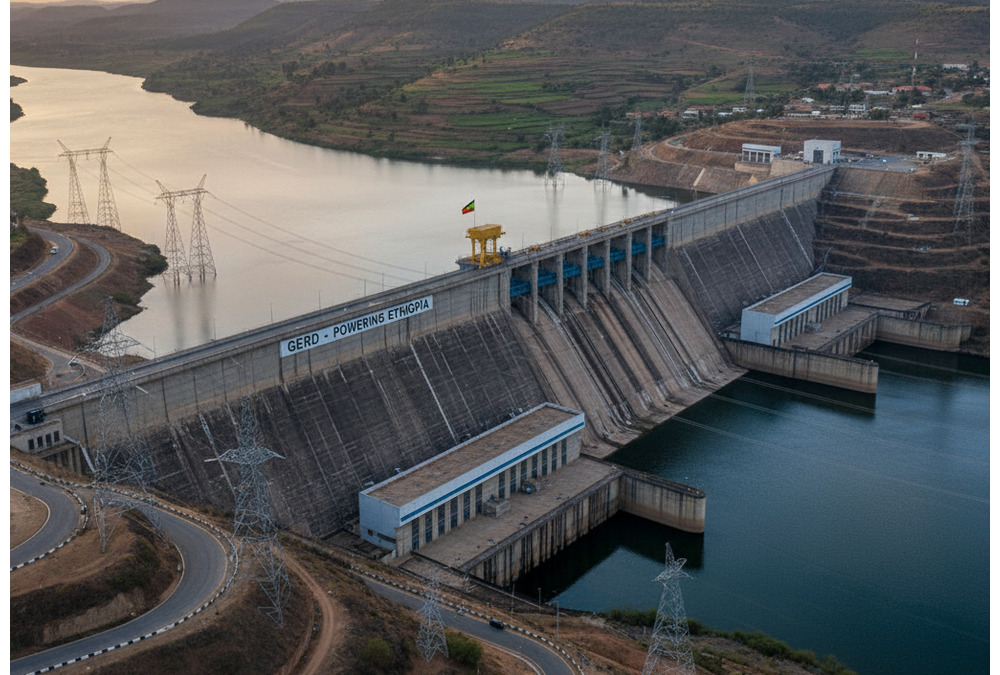
Ethiopia is undergoing one of the most ambitious infrastructure transformations on the African continent. With the official inauguration of the Grand Ethiopian Renaissance Dam (GERD) on September 9, 2025, the nation has not only unlocked a new era of energy independence but also reshaped its geopolitical standing in the Horn of Africa.
The completion of the GERD – Africa’s largest hydroelectric project – marks a historic milestone. Constructed on the Blue Nile since 2011, the dam is now fully operational, capable of generating over 5,000 megawatts of electricity.
This achievement comes despite years of regional tensions, diplomatic standoffs, and external interventions, including reported U.S. mediation attempts – claims Ethiopian officials have consistently rejected. For Ethiopia, the dam is more than an engineering marvel; it is a symbol of national sovereignty, self-reliance, and developmental ambition.
But the GERD is just one piece of a broader transformation sweeping across the country.
In Addis Ababa, a wave of urban renewal is redefining the capital’s landscape. Major road and transit projects – including the Piassa-Arat Kilo corridor, the Mexico-Sar Bet expansion, Bole Road upgrades, the Anbesa Garage to Goro Square route, and the critical ICC-Goro-VIP Airport link – are improving connectivity and easing chronic congestion.
These developments are part of a larger vision to position Ethiopia’s capital as a modern, livable, and investment-ready metropolis.
Complementing these efforts is the Beautifying Sheger Project, launched by Prime Minister Abiy Ahmed in October 2019. This flagship urban regeneration initiative aims to transform 56 kilometers (35 miles) of Addis Ababa’s river corridors into green public spaces, pedestrian walkways, and ecologically restored waterways.
The recently unveiled fifth corridor – stretching from Southgate to Meskel Square – not only enhances mobility but also promotes environmental sustainability and urban resilience.
So, What Does This Mean for Ethiopia?
The implications are both profound and multifaceted.
Geopolitically, the GERD strengthens Ethiopia’s leverage in regional negotiations. With increased energy capacity, Ethiopia can expand power exports to neighboring countries like Sudan, Kenya, and Djibouti, positioning itself as a clean energy hub.
However, the dam continues to strain relations with Egypt, which views any upstream diversion of Nile waters as an existential threat. While Ethiopia insists the project is for peaceful, developmental purposes, the potential for renewed diplomatic friction remains high – especially as the second and third phases of reservoir filling proceed.
Economically, these mega-projects could catalyze long-term growth. Improved infrastructure attracts foreign direct investment, boosts tourism, and stimulates domestic industries.
Addis Ababa is increasingly seen as a rising business and logistics hub in East Africa. Yet, the rapid pace of redevelopment raises urgent social concerns.
Urban renewal has already led to the displacement of low-income communities, with critics warning of gentrification and inadequate compensation. Sustainable development must balance progress with equity.
Financially, the scale of investment is staggering. While many projects are funded through a mix of government financing, diaspora bonds, and Chinese loans, rising construction costs and currency fluctuations have widened fiscal gaps.
Public debt remains a concern, particularly as Ethiopia continues to recover from recent conflict and economic shocks.
Security and stability remain the most pressing wildcards. Ongoing conflicts in the Amhara, Oromia, and Tigray regions threaten to undermine infrastructure gains.
Without lasting peace and inclusive governance, even the most impressive projects risk becoming isolated symbols of progress in a fractured nation.
A Nation at a Crossroads
Ethiopia stands at a pivotal moment. The completion of the GERD and other transformative projects signals a bold leap toward modernization and regional leadership.
But infrastructure alone cannot guarantee prosperity.
To truly harness the benefits of these investments, Ethiopia must address governance challenges, ensure transparent project financing, protect vulnerable populations, and prioritize peacebuilding. The dream of becoming a trade and energy hub in the Horn of Africa is within reach – but only if development is inclusive, sustainable, and resilient.
As the lights of the Renaissance Dam illuminate homes across Ethiopia, the nation must also illuminate the path to equitable progress. The world is watching.
Godfred Zina is a freelance journalist and an associate at DefSEC Analytics Africa, a consultancy specializing in data and risk assessments on security, politics, investment, and trade across Africa. He also serves as a contributing analyst for Riley Risk, which supports international commercial and humanitarian operations in high-risk environments. He is based in Accra, Ghana.
