
Zina’s Youth View on Africa
Rwanda and DR Congo Peace Accord: A Step Toward Stability – or Another Fragile Truce?

By Godfred Zina
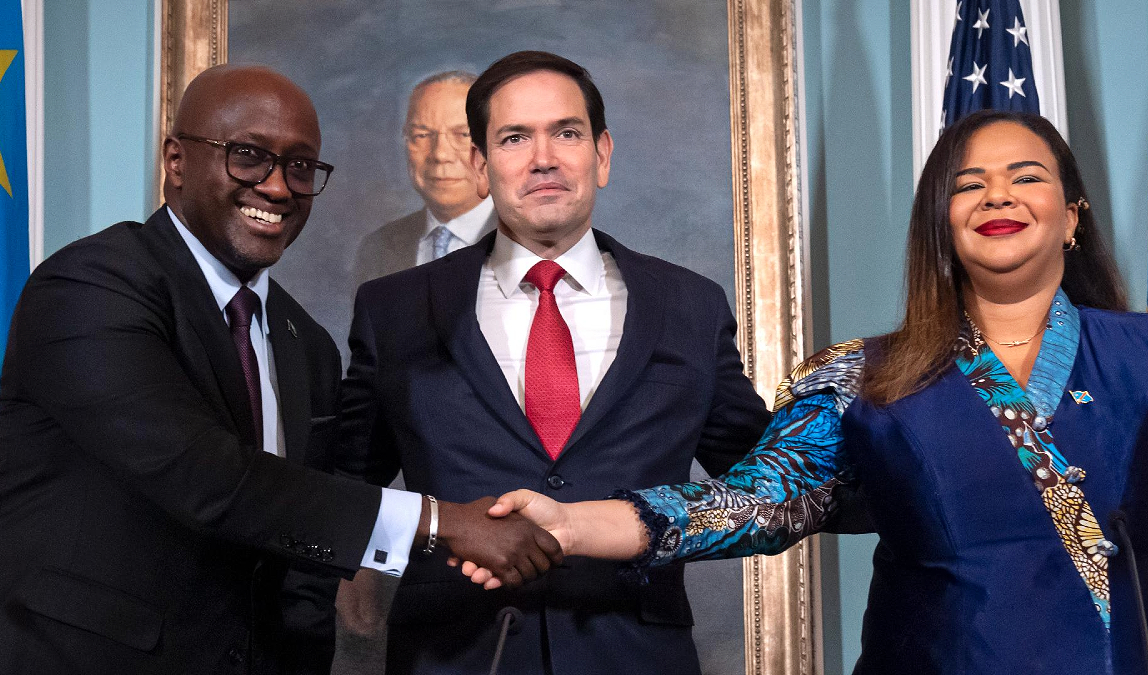
On June 7, 2025, Rwanda and the Democratic Republic of the Congo (DR Congo) inked a U.S.-mediated peace agreement aimed at ending years of violent instability in eastern Congo. While the accord marks a significant diplomatic milestone, critical questions remain about its implementation – particularly given the notable absence of the M23 rebel group from the negotiations.
The M23, which continues to wage armed conflict in the region, has rejected any obligation to abide by the agreement. This refusal casts a shadow over the deal’s long-term viability, especially since the rebels remain a central actor in the ongoing conflict.
Meanwhile, the DR Congo government has shown little interest in direct negotiations with M23, viewing the group as a Rwandan proxy seeking regime change – a perception that could complicate parallel talks currently underway in Doha.
The Washington-brokered agreement includes provisions for the withdrawal of Rwandan troops and the disarmament of armed groups, but critics point out that these measures lack enforceable timelines or mechanisms for accountability. Without clear benchmarks and consequences for non-compliance, the risk of backsliding remains high.
U.S. and Qatari diplomacy played a pivotal role in brokering the peace, but sustaining momentum will require deeper engagement from African Union (AU) institutions. Unfortunately, internal divisions among AU member states have so far hindered a unified regional response, weakening the potential for coordinated oversight and support.
The Real Test: Political Will and Regional Cooperation
For this peace deal to endure, Rwanda must cut off military backing to the M23, while Kinshasa must find a way to reintegrate lower-ranking rebels into society without granting impunity to their leaders.
These steps are essential not only for reconciliation but also for restoring public trust in the peace process.
Moreover, the inclusion of clauses related to mineral trade raises concerns that DR Congo could become further exploited by external actors. If international corporations gain outsized control over mineral supply chains, local communities may see little benefit – an outcome that would undermine both economic equity and long-term stability.
Ultimately, the success of this agreement hinges on more than just signatures – it demands sustained political will, regional cooperation, and robust international oversight. All parties must abandon zero-sum thinking and commit to addressing the root causes of conflict, including ethnic marginalization, resource competition, and the proliferation of proxy militias.
Without comprehensive demobilization, inclusive dialogue, and genuine reforms, the path to lasting peace in the Great Lakes region remains perilously uncertain.
Godfred Zina is a freelance journalist and an associate at DefSEC Analytics Africa, a consultancy specializing in data and risk assessments on security, politics, investment, and trade across Africa. He also serves as a contributing analyst for Riley Risk, which supports international commercial and humanitarian operations in high-risk environments. He is based in Accra, Ghana.
