
Zina’s Youth View on Africa
Can Ghana’s President Foster The Return of Junta leaders to ECOWAS?

By Godfred Zina
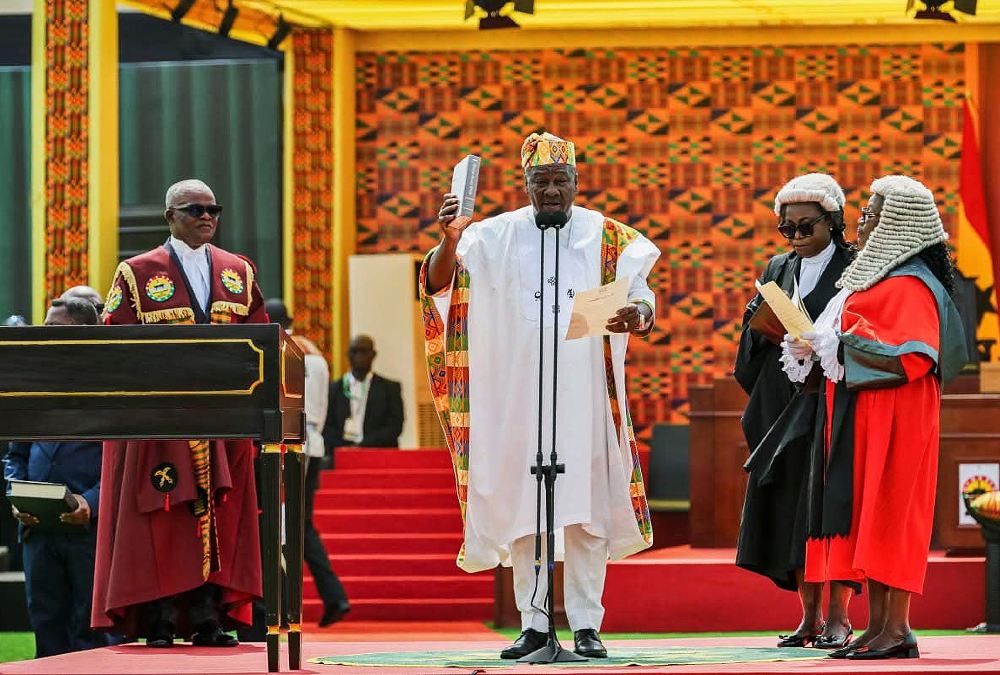
Despite ongoing diplomatic tensions in Africa, 17 heads of state, including Nigerian President and Economic Community of West African States (ECOWAS) Chair Bola Tinubu, as well as Burkina Faso’s junta leader Ibrahim Traoré, attended the inauguration of John Mahama in Accra. The high-profile gathering has sparked speculation about Ghana’s potential role in mediating a reconciliation between ECOWAS and the Alliance of Sahel States (AES).
ECOWAS recently approved the withdrawal of Mali, Burkina Faso, and Niger from the bloc, providing a six-month grace period for the military-ruled nations to reconsider their decision. This move followed a series of military coups in the region, which led to strained relations with ECOWAS and the formation of AES, a coalition prioritizing defense, economic collaboration, and political sovereignty.
Efforts to restore unity within ECOWAS have gained momentum, particularly after Senegal elected Bashirou Diomaye Faye as its youngest leader in March 2024. At ECOWAS’s 65th ordinary session in Abuja, Faye was appointed as a special mediator tasked with persuading the AES nations to rejoin the bloc.
However, the three countries, all founding ECOWAS members, have yet to reverse their decision, citing the need for greater security and regional integration under AES.
The geopolitical landscape remains fraught with tension. AES leaders have explicitly rejected ECOWAS’s authority, citing sovereignty concerns and forming a common defense organization to resist potential military interventions.
Relations have been further complicated by allegations, including former Ghanaian President Akufo-Addo’s 2022 claim that Burkina Faso harbored Russian mercenaries.
Given these challenges, Ghana and Senegal could play a pivotal role in facilitating dialogue during the six-month grace period. The presence of Burkina Faso’s junta leader in Accra may signal a willingness to strengthen diplomatic relations and explore avenues for compromise.
Successful mediation will require significant concessions from both ECOWAS and AES leaders. A resolution must address the economic and security implications of AES’s withdrawal, including the rise of militant jihadist insurgencies threatening coastal West African states.
Reintegrating AES nations into ECOWAS could bolster regional stability and foster greater economic and political cohesion. However, the window for constructive dialogue is narrow, and the stakes for all parties involved remain high.
Godfred Zina is a freelance journalist and an associate with DefSEC Analytics Africa – a consulting agency specializing in the provision of accurate data and assessments on security, politics, investment, trade, and other risks within Africa. He is based in Accra, Ghana.
