
Zina’s Youth View on Africa
Sahel-Russia Strategic Ties: A New Chapter in Regional Alliances

By Godfred Zina
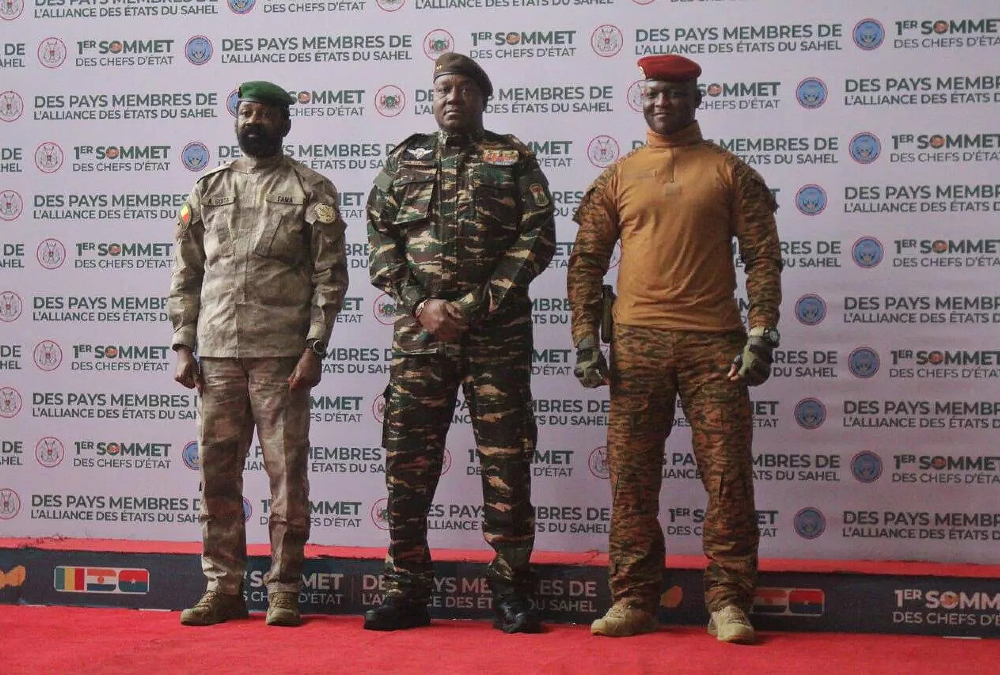
The political upheavals in West Africa’s Sahel region have sparked a dramatic realignment of international alliances. In the wake of successive coups, the Alliance of Sahel States (AES) – comprising Mali, Burkina Faso, and Niger – has increasingly turned toward Russia as a strategic partner.
For the first time since the formation of the AES in 2024, the foreign ministers of all three member states were scheduled to visit Moscow on April 3–4 for high-level consultations with their Russian counterpart. This diplomatic engagement signals a growing commitment to deepening bilateral ties.
Following the expulsion of French and U.S. military forces, the AES has embraced Russia and its affiliated Africa Corps mercenary group to provide political and military backing in the fight against jihadist insurgencies. In a further bid to assert independence, the bloc has withdrawn from its regional economic union, introduced reduced tariffs, and unveiled a shared flag and passport – symbols of a deliberate shift away from Western influence.
Russia, primarily through its Wagner-linked operations, already commands a significant security presence in the region. This latest diplomatic move is expected to strengthen Moscow’s foothold and expand its influence further.
The AES states view this partnership as a strategic step toward reinforcing sovereignty, enhancing defense capabilities, and pursuing mutual interests through pragmatic cooperation with Russia.
So, what does this mean for the region?
While the growing Russian presence may offer short-term gains in counterinsurgency operations, it carries the risk of long-term dependency. Critics warn that mercenary forces often prioritize access to natural resources over sustained efforts to neutralize insurgent threats.
If Russia’s engagement fails to deliver meaningful security improvements, the region could face worsening instability, with broader implications for governance, human rights, and humanitarian conditions.
Moreover, the pivot from Western alliances to Russian support reflects a broader geopolitical reshuffling – one that may ignite intensified competition for influence across Africa. European nations, in particular, may need to reassess their strategies and renew their engagement if they hope to remain relevant in this shifting landscape.
Godfred Zina is a freelance journalist and an associate with DefSEC Analytics Africa – a consulting agency specializing in the provision of accurate data and assessments on security, politics, investment, trade, and other risks within Africa. He is based in Accra, Ghana.
