
A Diaspora View of Africa
Setting the example on democratization

By Gregory Simpkins
During the African democratization wave in the early 1990s, I was privileged to be part of the U.S. effort to encourage the move away from authoritarianism and toward democratic governance. I believe that I was successful in my trainings for two reasons: first, I never tried to push those I trained to copy the American model but instead suggested adapting the general principles of democracy to their circumstances and second, I could refer to the way Americans generally handled elections.
Unfortunately, over the last couple of decades, our political process has moved away from what I was able to share in my training. I had encouraged losing parties to examine what went wrong and make corrections for the next elections and urged civil society organizations to assess accurately and fairly what had happened. In our country, we have moved toward refusal to accept losses, which delegitimizes the electoral process.
As I repeatedly emphasized during my training sessions, America did not invent democracy. While modern democracy was originated in Greece, a form of democracy was practiced in Africa long before that, especially at the village level. America is not the largest democracy either. That would be India.
However, America stood out as a defender of democracy because since the Civil War of the 1860s, the major blemish in our practice of democracy has been the discrimination against women and people of color, and that has largely been addressed. In fact, our Civil Rights Movement was an example for African countries helped to accelerate acceptance of integration in America.
As a non-colonial democracy, America carried less political baggage than the Europeans. Our efforts to encourage democratization hid no neo-colonial schemes to surreptitiously continue colonial influence. The training we provided was practical and (at least what I taught) was aimed at effectively enabling the organization of political parties and election observation efforts, as well as promoting democratic principles among civil society organizations. At the time, it seemed to be successful. Unfortunately, acceptance of difference in political thought has gradually evaporated in this country.
Washington Post motto: Democracy dies in darkness
America the Democratic exemplar
Those of us in the democratization effort well understood how important the U.S. example has been. Unfortunately, elected officials and bureaucrats have not. Increasingly, the struggle for political power overcame the effort to provide a healthy political example for those whose democracies we were assisting. In fact, over the years, U.S. government actions such as continuing threats of U.S. government shutdowns apparently were made without realization of how they were seen by foreign governments, especially in developing countries who depended on U.S. assistance.
The United States has long criticized coups in whatever form they took. It has become a standard that has upset relations with countries such as those in West Africa who felt they were breaking the shackles of neocolonialism. But what has happened with the Democrat nomination in 2024 has been classified by some as a silent coup.
U.S. president Joe Biden has been a loyal party official for more than half a century. When the party needed him to provide foreign policy gravitas to Barack Obama’s presidential bid, he signed on. When Obama’s two terms came to an end, he thought it would be his turn to run, but Obama decided to endorse Hillary Clinton, and Biden presented a rationale about why he wasn’t running.
When the 2020 race kicked off in 2019, many Democrats, including Obama, initially tried to dissuade Biden from running. However, with Bernie Sanders emerging as the only candidate with a significant base of support, party leaders ultimately turned to Biden as a candidate who could be positioned as a moderate alternative.
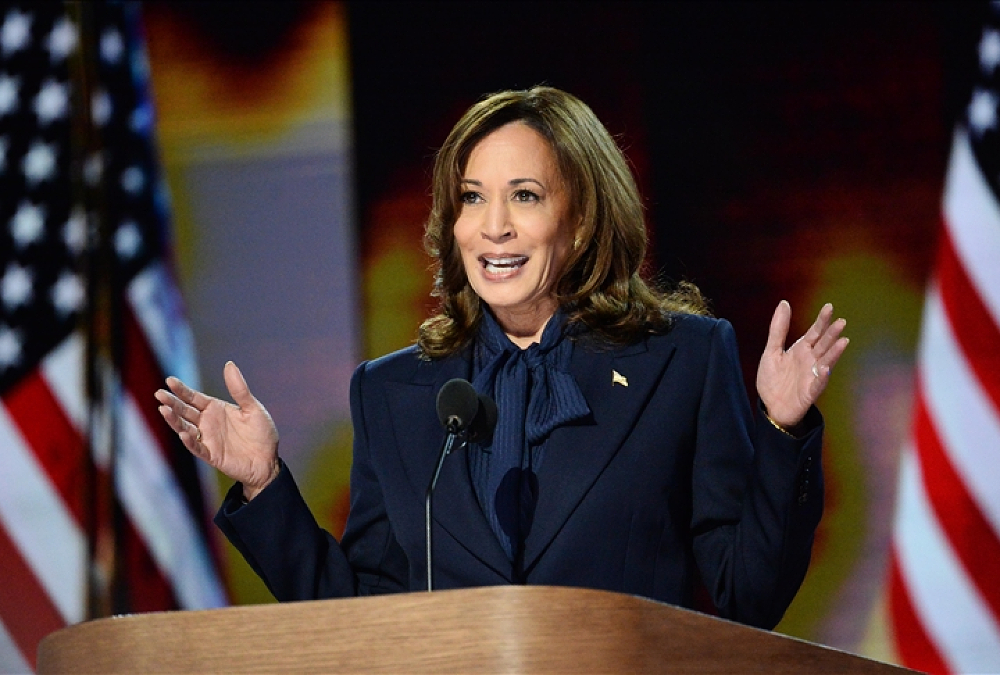
Over time, concerns about Biden’s cognitive abilities have grown. However, party leaders largely ignored these issues until his debate with Donald Trump, where his decline became more apparent to viewers. Despite this, Democratic voters in the 2024 primaries chose Biden without contest, trusting the party’s assurances about his health. However, weeks before the nominating convention, party leaders withdrew Biden from the race and arranged for delegates to endorse Vice President Kamala Harris as the candidate.
This decision, made without allowing voters to choose their nominee, was criticized by groups like Black Lives Matter for “anointing” Harris without primary votes. Originally, there were plans for an open convention where delegates would openly select Biden’s replacement, but a decision was made behind closed doors to go with Harris without invoking the 25th Amendment to make her Acting President.
This maneuvering goes against liberal thought on democracy, such as embodied in the Washington Post motto: Democracy dies in darkness.
Meanwhile, Republican candidate Donald Trump has been mired in court cases seeking to jail him – the first time a former U.S. president has been prosecuted post-office. There have been court-rejected efforts to remove his name from the ballot – a first in U.S. politics for a prominent presidential candidate. Trump and his supporters say the Biden administration has used what they call “lawfare” or legal warfare to prevent him from running in 2024 and to bankrupt him. Various courts have postponed such hearings or sentencing in the New York felony convictions during the presidential race. Still, these legal impediments remain, leading to questions about what will happen following the November elections.
Whatever the accuracy of his claim, the United States has often criticized foreign governments from using the law to frustrate those who oppose the established political order. Most recently, Tunisian authorities have prosecuted, convicted or imprisoned at least eight prospective presidential candidates since July, excluding almost all contenders from the upcoming October 6 presidential race. In past times, the United States would be one of the most vocal in criticizing such a tactic. But how can that be credible under the current circumstances?
Certainly, the United States has overestimated its reputation by using its economic and political weight to force African and other developing countries to accept its alliances and reject its enemies. This increasingly has caused ill feelings and more. The use of sanctions and the use of the dollar – currently the world’s reserve currency – to punish those who refused to accept U.S. positions has led to the ouster of U.S. forces from countries such as Niger and sparked the growing de-dollarization effort to unseat the current global reserve currency.
The world is evolving into a multipolar circumstance that has its advantages in terms of allowing more freedom for developing countries to create their own diplomatic paths. Of course, it also creates a vacuum in terms of the source of useful advice. China and Russia have transactional relations with African countries – not that the U.S. and Europe do not – but at least the latter countries do provide government support and humanitarian assistance in significant quantities without requiring the surrender of national assets.
In this new multipolar world, there likely will be some measure of economic and political chaos until the situation settles down. One can only hope that no irreparable damage to developing countries is done during the settling in period.
Gregory Simpkins, a longtime specialist in African policy development, is the Principal of 21st Century Solutions. He consults with organizations on African policy issues generally, especially in relating to the U.S. Government. He further acts as a consultant to the African Merchants Association, where he advises the Association in its efforts to stimulate an increase in trade between several hundred African Diaspora small and medium enterprises and their African partners.
