
Opinion
Let Africa Drill: Western Energy Hypocrisy Threatens 600 Million
Telling Africa to keep its hydrocarbons in the ground is easy from a café in Brussels. Living with the consequences is not.

By NJ Ayuk
It is easy to tell Africa to leave its oil and gas in the ground when you are sipping a US$9 oat-milk matcha latte in a climate-controlled café in Brussels or San Francisco. When your gravest grid anxiety is whether the electric SUV will finish charging before Pilates, wind and solar sound like poetry. In the humid twilight of energy poverty, where a mother cooks over smoky firewood and a surgeon operates by the glow of a cell phone, the same sermon sounds like a life sentence.
Consider the map of electricity access on the continent. Along the Mediterranean rim, in Algeria, Egypt and Tunisia, access exceeds 99 percent. At the southern tip, South Africa, for all its load-shedding woes, reaches roughly 94 percent. Between them lies a vast, sun-drenched region where the lights mostly stay off. In Chad, the Central African Republic, the Democratic Republic of Congo and South Sudan, access is measured in single or low double digits, depending on the source. Millions navigate the night by the flicker of kerosene and tallow.
The aggregate numbers are starker still. According to the African Energy Chamber’s State of African Energy outlook, some 600 million Africans have no electricity, and more than 900 million lack clean cooking fuels. Both figures are indictments, and neither is a rounding error.
The Arithmetic of Fairness
Africa is home to about 19 percent of the world’s people yet accounts for less than 5 percent of global energy-related emissions. Whatever the planet’s carbon budget requires, it does not require that the continent that contributed least to the problem should forgo the tools that every wealthy nation used to escape poverty. Europe built its prosperity on coal, then gas. America did the same with oil. Asking Africa to leapfrog directly to a fully renewable grid, without the baseload, the capital or the transmission networks that make one possible, is not climate leadership. It is a form of moral outsourcing.
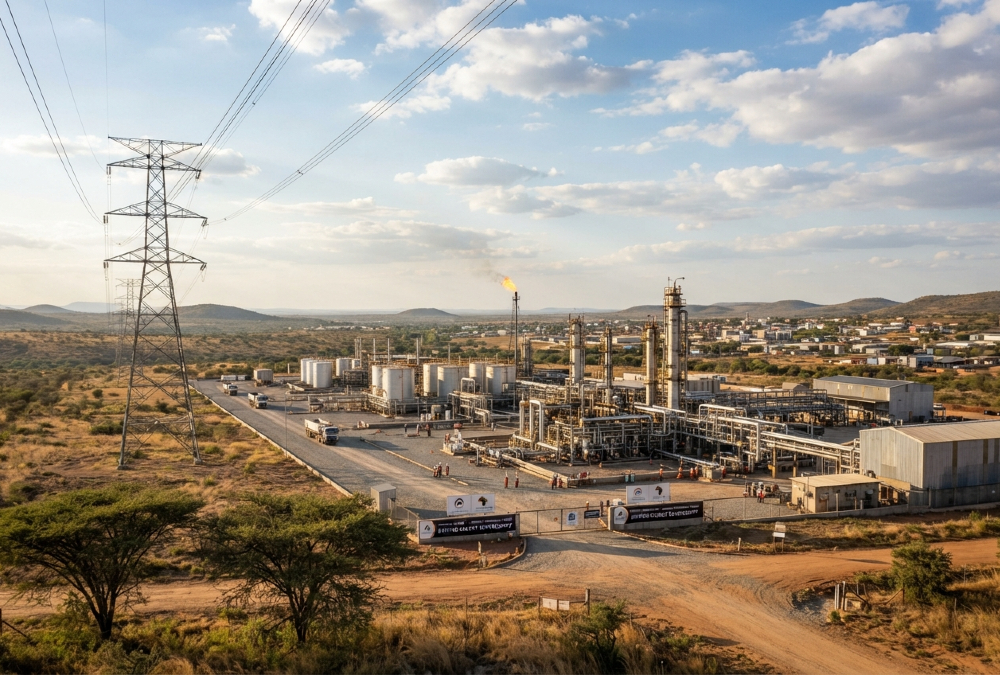
The industry’s own numbers point to what is at stake. Africa’s upstream sector attracts roughly US$40 billion in investment a year. Continental output is projected to climb toward 11 million barrels of oil equivalent per day in 2027 and 12.5 million by 2030. Demand for refined products is expected to double by 2050. Yet the continent still exports much of its crude raw and imports expensive refined fuel, bleeding foreign exchange and surrendering the value that refining, petrochemicals and fertilizer production would keep at home.
Electricity Has No Ideology
A steel mill cannot run on intermittent breezes. A hospital’s intensive-care unit cannot depend on whether the afternoon is cloudy. Fertilizer plants, cement kilns, cold chains and data centers all demand firm, affordable, round-the-clock power. Solar panels and wind turbines are part of the answer, and across much of the continent they are already the cheapest way to add capacity. But a grid that adds only intermittent generation, without storage, backup or the transmission to move power across borders, will keep the continent’s factories idle and its clinics dark.
The honest framing is addition, not subtraction. Africa needs more of everything: more solar, more hydropower, more geothermal, more storage and, for decades yet, more natural gas. Gas in particular can displace the diesel generators that already clatter in the backyards of millions of businesses, and the charcoal and firewood that kill an estimated hundreds of thousands of Africans a year through indoor air pollution. Liquefied petroleum gas for cooking is not a threat to the climate. For a woman who spends her mornings gathering wood, it is a liberation.
The Real Obstacle is Finance
The fight is not really about fuels. It is about capital. Many Western lenders and development banks have pulled back from financing African oil and gas, even as gas-hungry economies elsewhere continue to expand production. African governments that borrow to build power plants face interest rates several times higher than those paid by rich countries, and green projects are no exception. The result is a double standard in which the world’s wealthiest economies keep their own options open while closing the continent’s.
None of this means that Africa should ignore the climate. The continent is acutely exposed to drought, flooding and heat, and its long-term interest lies in a cleaner energy system. Nor does it excuse the corruption, opaque contracts and flaring that have squandered petroleum wealth in too many countries. A credible African energy agenda must pair development of hydrocarbons with transparent governance, local refining, methane-leak controls and honest plans to scale renewables as quickly as finance allows. The aim is a transition that Africans design and own, at a pace their economies can bear.
Thrive, Then Decarbonize
Africa is not asking for charity, and it has no intention of becoming the world’s carbon museum, preserved in darkness for the comfort of others. It wants the same thing every industrializing region has wanted: reliable, affordable power, delivered now. Those who want to help can fund the pipelines, the power plants, the transmission lines and the clean-cooking programs, rather than lecturing the continent on what it should not burn.
The kindest thing the rich world can do for the climate and for Africa is to stop romanticizing delay. Let the lights come on first. The decarbonizing can follow.
NJ Ayuk is the Executive Chairman of the African Energy Chamber.
