
A Diaspora View of Africa
Lack of Faith in Governments Plagues African Nations

By Gregory Simpkins
Recently, I wrote about the violence and conflict within Africa endangering the progress that has been achieved thus far. However, the current instability on the continent goes much deeper to the causes of conflict.
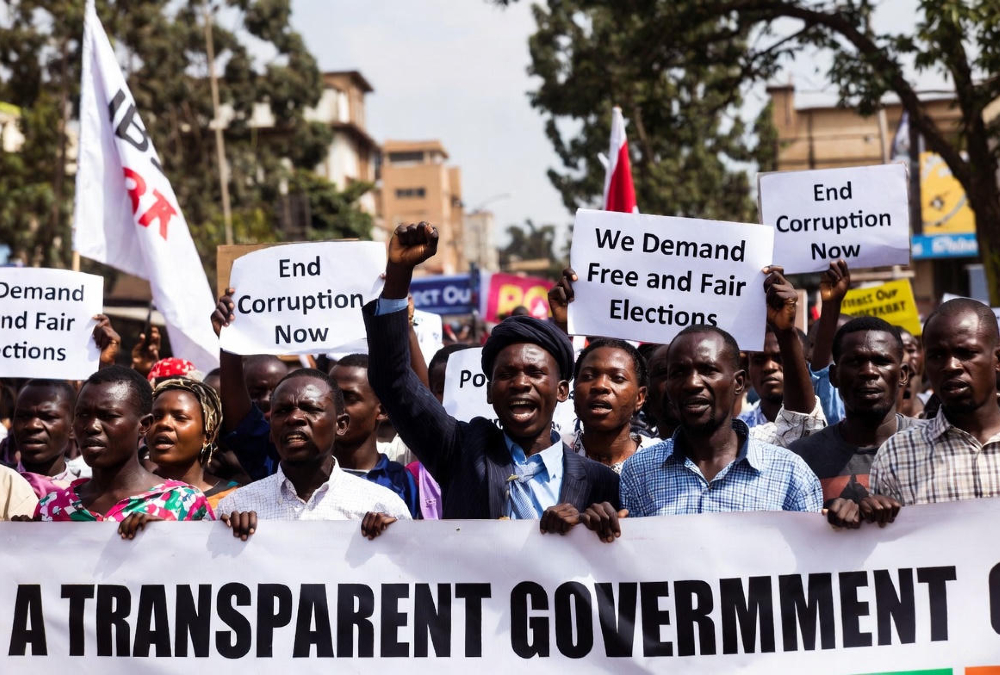
The recent coup attempt in Benin shows how the lack of faith in government honesty and effectiveness tempts parties to overthrow elected structures.
Economic Mismanagement and Systemic Corruption
According to the United Nations Human Development Index, at least half of Africa’s countries are among the 30 least developed countries in the world. So, ongoing mismanagement of African economies is certainly one reason given for overthrowing sitting governments.
The most recent African regional average from Transparency International is 33 out of 100, indicating a low level of confidence on corruption prevention. This score is based on the 2024 Corruption Perceptions Index (CPI), which ranks countries by their perceived levels of public sector corruption by citizens.
Again, corruption in government is a reason suggested for not wanting such governments to continue.
Democratic Backsliding and Elite Capture
Questionable elections, as was the case in Gabon and most recently Tanzania, certainly make many in these countries feel democracy offers no protection against predatory governments determined to stay in power. As my colleague Henrietta Uwera, coordinator of Watch Democracy Grow, once pointed out, former Gabon President Omar Bongo had 70 bank accounts, as well as 39 apartments, a Bugatti, two Ferraris, three Porches and six Mercedes Benz autos in France.
If you were a citizen in one of the world’s poorest countries, how would you feel about your leader profiting to such an obscene extent while you suffered just trying to survive with limited social services and infrastructure?
Military Justifications and Shifting Alliances
Militaries, as is the case in Niger, accuse governments of mismanaging the war against terrorism. Outside forces such as French troops are blamed for the failure to make headway in the war against violent extremist groups.
As the Washington Post reported on August 30 2023, the coups in Mali and Burkina Faso saw their governments replaced by juntas that are hostile to ex-colonial power France, which had led the fight against extremism in the region for a decade. Mali and Burkina Faso kicked out French troops and hired mercenaries from the Kremlin-linked Wagner Group (now the Africa Corps).
Whatever limited military advantage this has provided has come at the high cost of civilian casualties and human rights violations.
When coups are “treated as isolated rather than interconnected,” and when the international community offers responses that are “weak, delayed or inconsistent,” more will likely follow.
Fidel Amakye Owusu, an international relations and security analyst and regular contributor to The Habari Network, has said that in the case of the Sahel, the excuse of “insecurity” has been used by the military to takeover power from governments who had not committed many of the “sins” of Bongo and Conde of Gabon and Guinea.
“As some of us have always mentioned that, people are never ‘free’ under military rule,” he wrote in a piece on The Habari Network. “The opposition sees a delay in the transition as promised by the junta immediately after it took power. With no capacity to use coercive force, protests have been its weapon – the military will have none of that.”
The Cascading Crisis: From Libya to the Sahel
Following the collapse of Libya’s Gaddafi regime in 2011 after NATO’s intervention, a significant stockpile of weapons was looted and dispersed across the Sahel, said world news newsletter Proximities. Members of Mali’s Tuareg group who had fought in Libya returned with fighting experience, seeking an autonomous state in northern Mali.
The rebels aligned themselves with multiple Islamist jihadist groups and began capturing territory. The conflict quickly spread from Mali into neighboring Burkina Faso and Niger.
Their tri-border region in the western Sahel, known as the Liptako-Gourma, “allows the biggest of the rebel groups to engage in a war with three governments at once.”
Failed Deterrence and Regional Contagion
When Malian soldiers ousted Mali’s President Ibrahim Boubacar Keïta in 2020, it “marked the beginning of a broader wave of military takeovers”, said The Conversation. Soldiers “toppled governments” in Chad and Guinea in 2021, Burkina Faso in 2022 (twice), and Gabon and Niger in 2023.
At the eastern end of the Sahel, Sudan “descended into a devastating civil war” after its coup in 2021.
Analysts point to weak governance and corruption, growing Islamist terrorist insurgencies and the destabilizing effects of the climate crisis, as well as rising anti-Western (particularly French) sentiment.
Military governments in the former French colonies Mali, Burkina Faso and Niger have “played up” this populist “resentment of France” and accusations of “neocolonial tendencies”, said Al Jazeera. They pressured Western forces to leave and have turned towards Russia for “strategic support”.
Hundreds of mercenaries from the Wagner group (“rebranded as Africa Corps, and operating as a part of the Russian government”) are now “on the front lines”.
“Sahelian countries are in danger of swapping one kind of imperialism for another”, said the Financial Times. In Mali, Russian mercenaries promised protection for the military junta and “defeat of a dogged Islamist insurgency.”
Today, with al-Qaida-affiliated fighters encircling the capital with a “crushing fuel blockade,” and with talk of another coup, “it is clear the Russians have brought neither peace nor stability.”
Experts also blame the Economic Community of West African States (ECOWAS). They say the regional bloc “was not firm enough after the first coup in Mali and did not immediately react with punishment strong enough to deter others,” said Al Jazeera.
“The lack of coherent and consistent response by ECOWAS emboldened the coup-makers to act with impunity,” Festus Kofi Aubyn, a Ghana-based researcher with the West Africa Network for Peacebuilding, told the news platform.
“Almost without the world noticing, the Sahel has become the epicenter of global terrorism,” said the Financial Times. More than half of all terrorism-related deaths last year occurred there, according to the Global Terrorism Index. “The fear among more prosperous coastal states is that militant Islam will spread south.”
Countries including Benin, Ivory Coast, Senegal and Ghana are “rightly jittery.” Nigeria, also troubled by Islamist militants, is also “fearful of infection” from neighboring Niger.
“The final lesson is clear,” said Hammou on The Conversation. When coups are “treated as isolated rather than interconnected,” and when the international community offers responses that are “weak, delayed or inconsistent,” more will likely follow.
A Continent at a Crossroads
Unfortunately, such instability is not limited to West Africa or the Sahel region. The recent troubled elections in Tanzania has created a crisis in a heretofore peaceful country, despite previous allegations of corruption.
In the disputed October 29 elections, President Samia Suluhu Hassan won with around 98 percent of the vote after main opponents were blocked from contesting. Opposition leaders and rights groups report hundreds of protesters were killed, though the government has not released official figures.
The European Union and a group of Western diplomatic missions have called on Tanzanian authorities to urgently release the bodies of those killed in post-election violence and free all political prisoners.
Security expert and political analyst, Amb. Abayomi Mumuni, criticized the performance of African leaders at the United Nations General Assembly (UNGA) in September, describing their participation as lackluster and disconnected from the continent’s urgent diplomatic priorities. In a statement by his media aide, Rasheed Abubakar, Mumuni expressed disappointment that African leaders failed to collectively advocate for reforms in global governance, particularly Africa’s representation at the UN Security Council.
“Africa is the second-largest continent in the world, yet we remain sidelined when it comes to permanent membership or decision-making influence on the Security Council.
“Only Nigeria’s Vice President Kashim Shettima and President William Ruto of Kenya raised this issue meaningfully. Other African leaders missed the opportunity to rally around that call, which is highly condemnable.”
The Ibrahim Index of African Governance, a major program of the Mo Ibrahim Foundation, since 2007 has given the Ibrahim Prize for Achievement in African Leadership after examining the record of potential recipients of the award in four categories: safety and rule of law, participation and human rights, sustainable economic opportunity and human development.
These four categories are then divided into 14 sub-categories, consisting of more than 100 indicators. Unfortunately, in eight of the first fourteen years it had been offered, no leader was found worthy of the award. No winner has been selected since Niger’s Mahamadou Issoufou in 2020, and there may be no winner again this year given the widespread unrest and chaos on the continent.
Gregory Simpkins, a longtime specialist in African policy development, is the Principal of 21st Century Solutions. He consults with organizations on African policy issues generally, especially in relating to the U.S. Government. He further acts as a consultant to the African Merchants Association, where he advises the Association in its efforts to stimulate an increase in trade between several hundred African Diaspora small and medium enterprises and their African partners.
