
A Diaspora View of Africa
Has the Era of Afro-Pessimism truly ended?
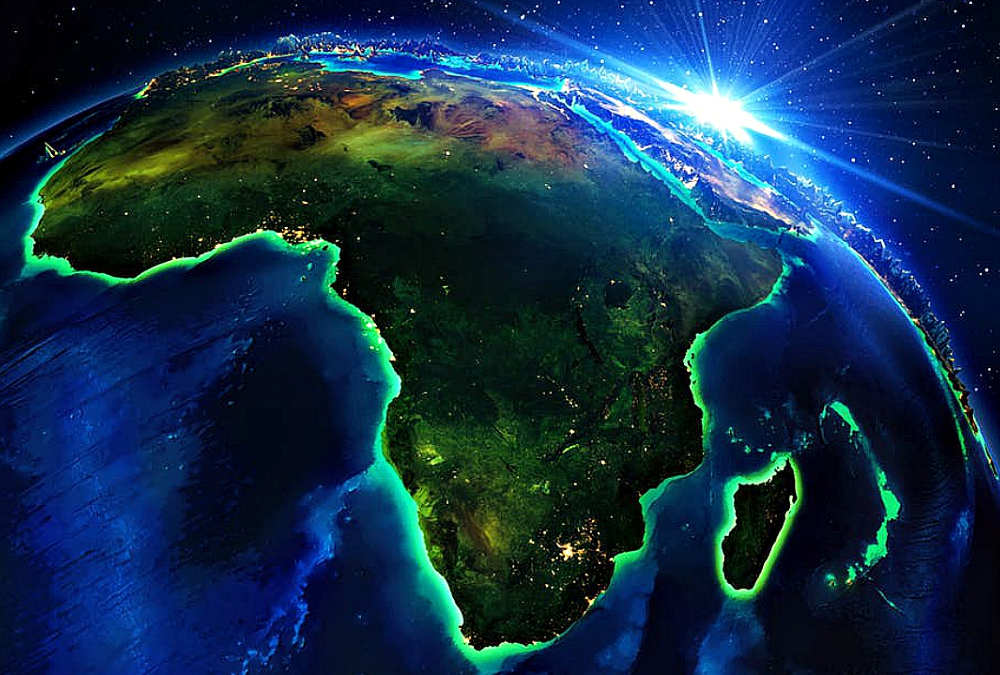

By Gregory Simpkins
In a May 2000 issue with a lead article headlined “Africa: The Hopeless Continent”, The Economist magazine unleashed a flood of discussions about Africa’s present and future being bleak. This hopelessness tag described Africa as “as a region too riddled with problems for good governance and economic development.” This view seeped into college courses on Africa and influenced broad assessments of what was possible on the continent as compared with other regions of the world. The well of public opinion among those considered Africanists was, therefore, poisoned and affected developed country policies toward Africa.
A fall 2011 article from the Institute of African Studies at Carleton University in Ottawa, Canada, described the breadth of this Afro-pessimism:
“Afro-pessimism is largely studied by scholars of African literature, sociologists, anthropologists and media studies, not economists. Literature exploring any possible correlation between Africa’s negative image in developed countries and the continent’s development pace are scarce,” it stated.
Then, 11 years later, The Economist reversed course with a new cover: “Africa Rising”, predicting a more optimistic view of the continent. The magazine’s lead editorial concluded that “Africa is at last getting a taste of peace and decent government.” A three-page article ended with a rosy assessment: “Autocracy, corruption and strife will not disappear overnight. But at a dark time for the world economy, Africa’s progress is a reminder of the transformative promise of growth.”
Of course, whether Afro-pessimist or Afro-optimist, The Economist is not the end-all, be-all view of Africa’s prospects. For several years now, various measurements of economic growth have placed several African countries among the top 10 slots. There remained doubts about African progress, though. Some said it only reflected recovery from a low base and did not demonstrate genuine advances in African development. If you start at rock bottom, these pessimists said, any progress seems greater than it really is. Still, measurements continued to show growth among African economies.
Significant African Growth Predicted
According to Adam Elhiraika, Director of the Macroeconomics and Governance Division at the Economic Commission for Africa, Africa was the fastest-growing region in the developing world after East and South Asia in 2023. His report shows that the continent is expected to grow from 2.8 percent in 2023 to 3.5 percent in 2024 and reach 4.1 percent in 2025, mainly underpinned by net exports, private consumption and gross fixed investment. Niger, Senegal, Ivory Coast, Democratic Republic of the Congo (DR Congo), and Rwanda are expected to emerge as the most notable growth drivers in Africa for the year 2024.
The report outlined the reasons for growth in each country:
- Niger and Senegal are expected to experience huge economic growth, primarily driven by the expansion of hydrocarbon production and exports.
- Growth in Niger also will be fueled by the revival of agricultural production although it is vulnerable to unfavorable weather conditions, and a rise in crude oil production. However, recent military coups, coupled with sanctions from regional blocs, have disrupted economic activity and imposed significant social costs.
- Senegal’s growth will be fueled by increasing private and infrastructure projects.
- The DR Congo is expected to experience growth driven by the extractive sector, particularly with the opening of new oilfields.
- Meanwhile, Rwanda’s growth will be fueled by private consumption and investment.
Elhiraika’s report added that the ongoing climate catastrophes and extreme weather occurrences will continue to negatively impact agriculture and tourism, while geopolitical instability will continue to adversely affect certain subregions in Africa.
African governments are beginning to exercise their agency more effectively than in the past. For example, this past January’s World Economic Forum saw the launch of the Private Sector Action Plan, an innovative initiative between the Forum and the African Continental Free Trade Area (AfCFTA) Secretariat involving projects in four priority sectors: automotive, agriculture and agro processing, pharmaceuticals, and transport and logistics, which have a combined worth of US$130 billion. The initiative is comprised of 40 global companies.
Despite its deficits in infrastructure, including roads and power, as well as ongoing conflicts and other obstacles, Africa appears to be emerging from its Afro-pessimism period as investors worldwide see greater opportunities than challenges in Africa.
The announcement came after the launch of Timbuktoo, a start-up fund with an initial US$1 billion target to leverage Africa’s youth and dynamism – spearheaded by Rwandan President Paul Kagame and Ghanaian President Nana Akufo-Addo, together with the United Nations Development Fund. It is expected to provide financial support to innovative and dynamic startups, spurring economic growth, job creation and technological advancements across the continent. By encouraging entrepreneurship, the Timbuktoo initiative aims to contribute to the development and empowerment of Africa’s youth in the rapidly evolving global economic landscape.
Innovation
Innovation has firmly taken root in African countries, driven in large part by educated, imaginative young African entrepreneurs. Africa – innovator or imitator?, a November 2022 nine country survey demonstrated advances being made across the continent.
“Local innovations have transformed how Africans do business, and how African governments interact with citizens through e-government platforms and services such as the Kenya Open Data Initiative and the Beninese online public service portal,” the report pointed out. “African digital health solutions such as LifeBank in Nigeria and the Pharmacy Dispensing Unit in South Africa have also contributed significantly towards improving the quality of healthcare on the continent. The prospects and opportunities of going cashless continue to revolutionize the digital payment landscape across the continent. In 2021, Africa accounted for 70 percent of the total value of mobile money transactions globally.”
Innovation in Africa has sparked increased global interest in investment there. “The continent appears to be leading the way in fintech, which is proving to be the main driver of investment in African innovation, with 109 fintech start-ups having raised a total of US$1,111,570,000 in 2022,” the report continued. “Between January and June 2022, no other region came close to matching the continent’s innovation funding growth.”
In fact, the Gulf states are in a scramble for investment on the continent. In its 24 March 2024 issue, The Economist reported that in November 2023, Saudi Arabia held its first Africa summit, at which it announced billions of dollars of investment. Even that is dwarfed by the UAE, which in 2022 made investment pledges in Africa worth seven times those of American firms. In the previous ten years it was the fourth-largest foreign direct investor in Africa, behind China, the European Union (EU) and the United States.
The magazine cited DP World, a Dubai-based firm, which manages ports in nine African countries, and Masdar, a renewables firm that says it will splurge US$10 billion in Africa. Dubai, with its secure property rights and light (some would say lax) financial regulation, is home to more than 26,000 African businesses. Clearly, fear of doing business in Africa or with African businesses is disappearing as the tag of “hopeless” no longer appears to apply.
Despite its deficits in infrastructure, including roads and power, as well as ongoing conflicts and other obstacles, Africa appears to be emerging from its Afro-pessimism period as investors worldwide see greater opportunities than challenges in Africa. Increases in good governance and the realization of the power of their own agency point to a more productive future for countries on the continent and the prospect of taking their rightful place in the global economy.
Gregory Simpkins, a longtime specialist in African policy development, is the Principal of 21st Century Solutions. He consults with organizations on African policy issues generally, especially in relating to the U.S. Government. He further acts as a consultant to the African Merchants Association, where he advises the Association in its efforts to stimulate an increase in trade between several hundred African Diaspora small and medium enterprises and their African partners.
