
A Diaspora View of Africa
Enhancing the benefits of AGOA

By Gregory Simpkins
I was blessed to have been involved with the African Growth and Opportunity Act (AGOA) from when it was a legislative proposal while working for the House of Representatives floor leader, Rep. Ed Royce, to achieve the success of the bill in the House and later the Senate. I subsequently taught African and American businesspeople and government officials about accessing the benefits of AGOA.
I do not say this to blow my own horn. Rather, I say this to show that I have been intimately involved with this program from its inception. Consequently, I have always been a staunch advocate of this trade program. Unfortunately, it has not fully fulfilled its promise for numerous reasons.
One is that too many American government officials charged with promoting AGOA did not have faith that it could work. Then it becomes a self-fulfilling prophecy in which this lack of faith limits their efforts to help the program succeed.
I recall being in Bamako, Mali, teaching about AGOA under a government contract, and when the session was over, my colleagues and I met with the government official who was our government liaison. She said she had no faith that it could work. As proof of her disinterest in promoting AGOA, she told us that she had tried unsuccessfully to connect an American cosmetic company with producers of shea butter.
An hour later, we were back at our hotel meeting with businesspeople who had been part of the training, one of whom was a major producer of shea butter. Why couldn’t the U.S. official have found this person? Because she wasn’t interested enough to try harder.
Another major problem is that African governments and their private sectors have failed to take full advantage of the quota-free, duty-free benefits of AGOA, which offers the opportunity to overcome challenges that makes their exports much less competitive. At least two dozen African countries have AGOA implementation plans, but for the most part, those plans remain on paper only.
I recently spoke with the head of an African trade association who told me that AGOA does not work and should be discontinued. However, like too many on the continent, he couldn’t explain specifically what was wrong. Like the American official I mentioned earlier, this skepticism becomes a self-fulfilling prophecy in which your lack of faith prevents you from fully researching the opportunity of AGOA and doing what is necessary to be successful at employing it.
AGOA is a trade mechanism, not a political mechanism. When the United States experiences tensions or disagreements with certain African countries, it is tempting to treat AGOA as a “stick” we can use for leverage
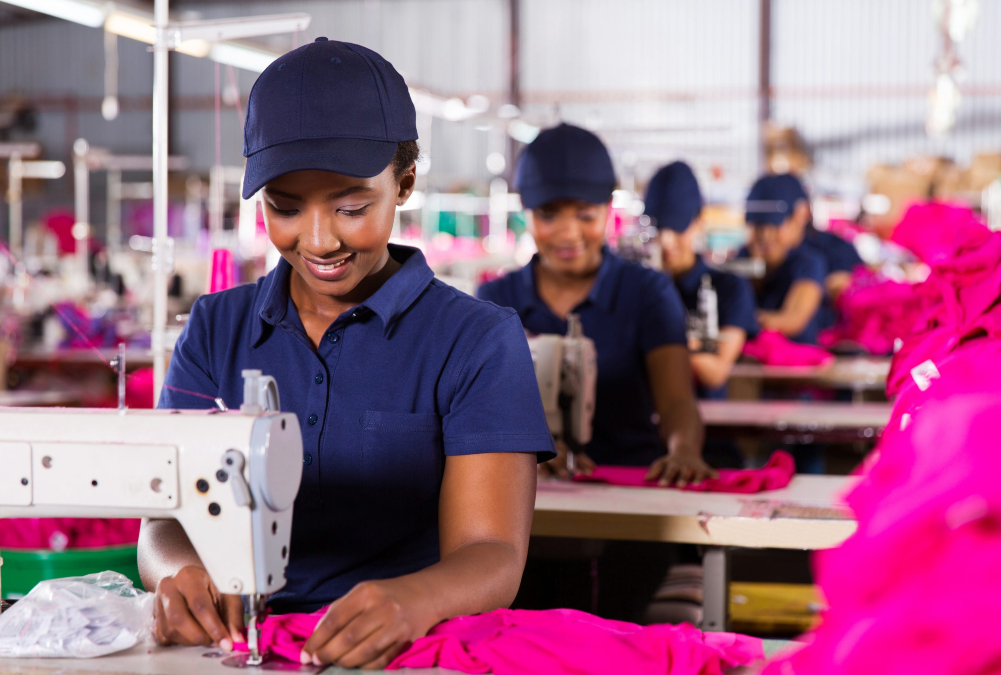
Testimony by Daniel Runde, Senior Vice President and Schreyer Chair in Global Analysis at the Center for Strategic and International Studies during a June 12 2024 House Trade Subcommittee showed that at least to some extent, AGOA has been successful. From 2010 to 2020, textile and apparel exports under AGOA grew by approximately 64 percent.
Textile and apparel exports grew to more than US$1.4 billion in 2021 – double the amount pre-2000. AGOA non-oil imports were US$5.7 billion in 2022 – a record amount and quadruple that of 2001. Several non-oil sectors experienced sizable increases during this period beyond textiles and apparel, including transportation equipment, agricultural products, minerals and metals and jewelry and precious stones.
As positive as those numbers are on the surface, they mask a reality that likely causes some of the African skepticism about AGOA. When I was on the secretariat of the Prosper Africa program, the initial objective was to promote both the increase of the dollar value of U.S.-Africa trade as well as the creation of jobs in Africa and the United States. However, many within the Prosper Africa council representing the 17 agencies involved in the program agreed with the notion that it was more beneficial to promote the dollar value of trade than the creation of jobs.
The increased dollar value creates a positive picture of U.S.-Africa trade that allows for such trade programs to gain political support. While that is a reasonable goal, it ignores the fact that jobs are not created by the multinational corporations whose activities “move the needle” on trade statistics.
Small and medium enterprises (SMEs) the world over are the ones who create jobs, but many of these Prosper Africa representatives believed it was too much trouble to focus on smaller businesses. The popular saying within the group was: it takes as much time and effort to work on a US$100,000 deal as a US$100,000,000 deal. Certainly, I do not object to facilitating big deals, but neglecting the SMEs that create jobs is short-sighted.
Another limitation in this regard is the fact the almost the entire U.S. government structure is focused on promoting and facilitating exports to Africa rather than receiving and processing imports from Africa, which is contrary to the goals of AGOA. For the most part, only the U.S. Agency for International Development has a focus on facilitating Africa imports. Of course, American exports do create jobs in manufacturing, transportation, warehousing, etc., in this country. Perhaps this overshadows the lack of job creation in Africa.
Reforming the AGOA process
At the House hearing, calls for reform of AGOA were expressed by witnesses. Indeed, there are significant changes that could make AGOA more effective and boost U.S. policy toward Africa.
At the forefront of such reforms, I would suggest finding a way to exempt African companies from the loss of AGOA benefits when a government has been suspended from the program, provided they are not involved in the circumstances that led to the AGOA suspension.
The current situation is the result of AGOA being looked upon as a government-to-government program rather than a business-to-business matter. During the 2011 AGOA Forum in Zambia, I met with Zimbabwe businesses who had U.S. contracts prior to AGOA but lost them once Zimbabwe was excluded from AGOA because they were now uncompetitive in comparison to AGOA beneficiaries. As a result, they relocated to Zambia.
Runde’s testimony agrees with a change in how AGOA is viewed by the U.S. government.
“AGOA is a trade mechanism, not a political mechanism. When the United States experiences tensions or disagreements with certain African countries, it is tempting to treat AGOA as a ‘stick’ we can use for leverage. If there is a coup, that understandably ends eligibility, but when looking at case studies like South Africa, we should employ a variety of political tools to address political disputes,” he testified.
Allowing companies not guilty of human rights violations to remain in AGOA lessens the negative impact of this U.S. sanction. Surely, such moves will be necessary when elected governments are overthrown as the African Union also agrees should be taken. Yet if you punish businesses for the sins of government, you create greater support for the view that the United States is behaving as a bully.
Another reform I strongly support would be a preferential section for women. In Africa, more than two thirds of most economies are informal, and of that, an estimated two-thirds are composed of businesses run by women. Now this would involve market women but has to include the elite African businesswomen who create jobs. In addition to job creation and a better chance to expand their operations, these women not only create family wealth; they also build their communities. So in addition to having a purely economic benefit, these businesses have a broader developmental impact.
Another reform would be to find a way to incorporate the input of civil society organizations in analyzing the economic activity in African countries. African think tanks from Ghana to Nigeria to Kenya to South Africa provide excellent analysis, not only on the economic issues but also the societal concerns that reveal the likelihood of developmental success. This should mean greater U.S. government support for the AGOA Civil Society Forum and regular consultations with civil society groups involving U.S. and African government officials and African and American businesses and trade associations as well.
Every company operating in Africa is not as astute as the DTRT Apparel Group. I have been to their factory in Ghana and seen firsthand their operation that made them one of the premier apparel exporters to the United States. In his testimony at the House hearing, Skip Richmond, Founder and Co-CEO of DTRT, indicated what his company was looking for that would be made easier with input from African civil society.
“After our experience with the coup in Madagascar, establishing operations in a stable democracy was of utmost importance to us. We certainly feel we got that right with Ghana,” Richmond testified. “In addition to its stable democracy and shipping proximity to the US, Ghana boasts strong investment protections, a supportive government and a large English-speaking workforce. West Africa is also the world’s 2nd largest cotton producing region in the world, led by Ghana’s neighbors in Benin, Burkina Faso, Cote d’Ivoire and Mali.”
Finally, at the House hearing, Marggie Peters Muhika, Deputy Regional Program Director at the Africa Solidarity Center, pointed out the necessity of support for labor movements in Africa to create more conducive environments for businesses.
“Jobs in the informal economy have the potential to provide productive economic activity for a growing demographic, but the sector remains highly unregulated, with insufficient legal protections for informal economy workers and notable violations of their rights,” Muhika testified. “In many cases, these jobs are characterized by wages below the minimum living wage (7 of the 20 countries in the world with the lowest minimum wage are African), long hours, and lack of access to social protection. Gaps in legal coverage of informal economy workers leave them vulnerable to worker rights violations, including wage theft, unlawful termination, denial of leave and/or health coverage, and exposure to sexual harassment and other forms of gender-based violence at the workplace.”
AGOA has not been as successful as it could have been, but after nearly 25 years, no one can legitimately call it a failure. Moderate reforms and an overall adjustment in the view of African businesses can enhance the positive impact of this trade program.
Gregory Simpkins, a longtime specialist in African policy development, is the Principal of 21st Century Solutions. He consults with organizations on African policy issues generally, especially in relating to the U.S. Government. He further acts as a consultant to the African Merchants Association, where he advises the Association in its efforts to stimulate an increase in trade between several hundred African Diaspora small and medium enterprises and their African partners.
