
Life
Clinical research program led by Howard and Georgetown Universities awarded $27 million
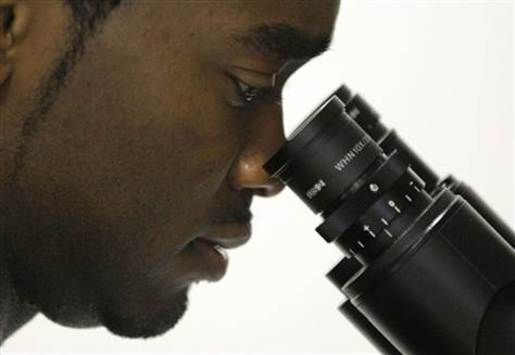
A large clinical research program led by Howard and Georgetown universities, facilitating the participation of more than 4 million Washington-area residents in clinical trials, has received a US$27 million dollar grant from the National Institutes of Health (NIH).
The NIH’s National Center for Advancing Translational Sciences awarded a 5-year renewal of the prestigious Clinical and Translational Science Award (CTSA) to Georgetown University and Howard University on August 28.
The award allows those institutions, as well as the MedStar Health Research Institute and the Washington DC VA Medical Center to continue its broad support of clinical and translational research – improving health care by developing and testing targeted, next generation treatments for all human diseases.
The first CTSA grant for US$38 million was awarded in 2010 to both universities. This seeded the formation of the Georgetown-Howard Universities Center for Clinical and Translational Science (GHUCCTS).
“Our mission is not only to stimulate clinical research in the area, but also to encourage the participation of underserved populations and their communities in that research,” said Thomas Mellman, MD, Howard’s principal investigator for the CTSA. “The award is also intended to foster the development of the next generation of clinical researchers.” In addition, the grant allows clinical researchers to continue their collaborations with scientists at the Oak Ridge National Laboratory to analyze large volumes of dynamic biomedical data with increasing levels of speed and efficiency.
“This collaboration represents one of the largest integrated clinical trials networks in the United States,” says Joseph Verbalis, MD, Georgetown’s principal investigator for the grant. “That matters because it directly impacts patient care.” There are 62 other federally funded CTSA programs in the U.S.
Congresswoman Eleanor Holmes Norton (D-DC), said the Georgetown-Howard Universities Center for Clinical and Translational program has become an outstanding partnership whose work together is showing that scientific investment on a national level can directly impact patient care.
“In a very short period of time, this program has demonstrated the benefits of coordinated community outreach on increasing access to advanced clinical care. Over time, this will change the health of our citizens. Not only are the scientists and doctors at the forefront of medical discoveries, but now, so are our residents.”
“We will be even more productive during our next phase – we have laid down a solid foundation for GHUCCTS and we will now build on it,” Mellman said. “There have been many accomplishments during our first five years.”
During the first 5 years of funding, more than 440 studies that benefited from GHUCCTS support were published: from pilot grants, to bioinformatics and biostatistical advice, to use of core laboratories across all five GHUCCTS institutions.
