
Life
Harmattan Season: Unveiling Africa’s Unspoken Wounds – and Awakens Its Future

By Farhia Noor
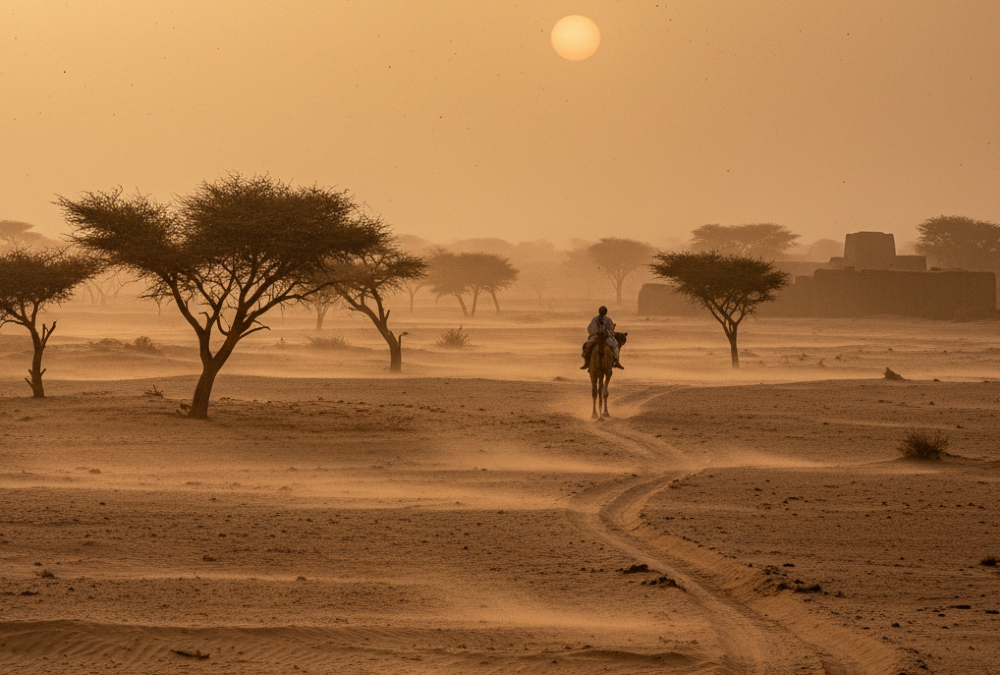
In African cosmology, the Harmattan is more than a seasonal wind – it is a revealer. It strips away illusion with its dry, dust-laden breath, exposing truths long buried beneath convenience, silence, or denial.
Tochi Onyebuchi’s Harmattan Season does precisely that – not through polemic, but through searing fiction that reads like a reckoning.
This is not just another postcolonial novel. It is a surgical strike on collective amnesia.
Set in a fictional West African nation still shackled by the invisible architecture of French colonial rule, Harmattan Season confronts what many dare not name: that the ghosts of empire are not relics of the past, but active negotiators of our present – and our future.
Foreign hands still chart the flow of our minerals. External capitals still dictate the terms of our sovereignty.
And yet, amid the suffocating weight of imposed order, Onyebuchi centers the quiet, unyielding resilience of ordinary Africans – those who endure, resist, and ultimately redefine what freedom means.
Africa Is No Longer Speaking in Code
The timing of this novel could not be more urgent. Across the Sahel and beyond – from Niger to Mali, Burkina Faso to the Democratic Republic of Congo – a new political consciousness is rising.
Citizens are rejecting the theater of “partnership” that masks extraction. Military coups, popular uprisings, and calls for genuine autonomy are not signs of chaos, but of a continent refusing to be managed by distant bureaucracies.
Onyebuchi captures this shift with poetic precision. Harmattan Season is both warning and prophecy: silence imposed breeds revolution. History denied returns – not as memory, but as fire.
A Mirror, Not a Metaphor
What makes this book essential reading for African leaders, thinkers, investors, and global policymakers alike is its unflinching core question: Who truly owns Africa’s future?
Is it those who live on the land – the farmers, traders, students, and mothers who build nations with calloused hands? Or is it those who profit from them – through opaque contracts, strategic alliances, and the quiet continuation of neocolonial logic?
Onyebuchi offers no easy answers. But he does something more valuable: he forces the question into the open. In doing so, he reminds us of three immutable truths:
- Sovereignty is never granted – it is claimed.
- Identity cannot be outsourced or compromised.
- Power, when reclaimed, transforms not just nations – but narratives.
More Than a Story – An Awakening
I am African. And when a work of art dares to tear open our silent wounds with honesty and literary power, I do not just read it – I listen.
Harmattan Season does not seek to entertain. It refuses the comfort of allegory.
Instead, it places a mirror before the continent – and the world – and demands we look without blinking.
Read it if you want to understand the tension beneath Africa’s optimism. Read it if you are weary of diplomatic euphemisms that mask economic subjugation.
Read it if you believe fiction can be a frontline in the fight for self-determination. Because this book doesn’t just tell a story. It awakens a consciousness.
Farhia Noor is a seasoned business consultant based in Dar es Salaam, Tanzania. With a proven track record in developing enterprises and executing turnkey projects across both government and private sectors, she brings deep expertise to the table. Farhia is also a committed advocate for community-led development and is passionate about advancing sustainable, intra-African growth.
