
A Diaspora View of Africa
Black Americans Ignore International Connections
By Gregory Simpkins
Many of us are familiar with Africa as a concept, though not necessarily as distinguishable, individual nations nor Caribbean nations as more than celebrated vacation spots. To a large extent, this is because of the neglect of the history of the African Diaspora. Additionally, since the United States was never a colonial power, Americans in general don’t feel a significant historical connection to these nations.
There are, however, two Diaspora countries that the United States does have a history with but that black Americans still don’t appear to have that sense of connection toward them: Liberia and Haiti.
According to the Congressional Research Service, the United States and Liberia established diplomatic relations in 1864, nearly two decades after Liberia declared independence from the American Colonization Society, a U.S. organization that resettled freed slaves and freeborn African-Americans in Liberia. This was the only organized “back to Africa” movement from the United States.
A small elite dominated by “Americo-Liberians,” descendants of this settler population, held a monopoly on state power until a 1980 military coup d’état. Under President Samuel Doe, economic mismanagement, corruption, and repression along ethnic lines characterized much of the ensuing decade.
In 1989, Charles Taylor, a Liberian former civil servant who had fled to the United States after falling out with Doe, launched a rebellion from neighboring Côte d’Ivoire. Factional violence soon engulfed the country. Hundreds of thousands died and “virtually all” Liberians fled their homes at some point during Liberia’s first civil war.
Throughout the chaos that ensued, Liberians – whether in the country or in the United States – begged for American intervention. In moderating Liberian forums, interviewing Liberian officials or just speaking with Liberian citizens in the United States and in Liberia, it was very clear that Liberians consider themselves to be related to America, even though it was never officially a colony.
In fact, I found it sad that this loyalty was unrequited. The Liberian flag was modeled after the U.S. flag, cities such as Monrovia and Buchanan were named after U.S. presidents. They even have a dish called “Maryland fried chicken.” Yet how they see themselves is not how Americans, including most black Americans, see them.
The immigration status of more than 80,000 Liberian nationals residing in the United States was a topic of debate within the U.S. government decades ago, but there was surprisingly little effort among black Americans not considered Africanists to press for their status even during the conflicts in that country.
There are tens of thousands of Liberians who are citizens here in states such as Minnesota, Pennsylvania and New Jersey. As I often tell people when discussing Liberians in America, they have Americanized names, often speak with very little accent and hold jobs such as lawyers, dentists and accountants. Perhaps because they blend in so well, many Americans don’t think of them as African and thus don’t see their country’s plight as being of a direct foreign policy concern to the United States.
Fortunately, Liberian Diaspora organizations such as The Liberian View have taken it upon themselves to promote solutions to Liberia’s problems, including conducting voter education and election monitoring training before last year’s elections and advocating for the less fortunate and fundraising and providing school materials, farming tools and educational and training needs for the less fortunate, especially the blind, disabled and at-risk women, children and men. However, few non-Liberians joined in any effort to provide for the needs of people in the country or to advance Liberian interests generally.
In any event, if the African Diaspora is to become the global force many believe it can become, it has to cease being a collection of individual country groups and work together to advance the interests of the Diaspora as a whole.
From Idol to Pariah
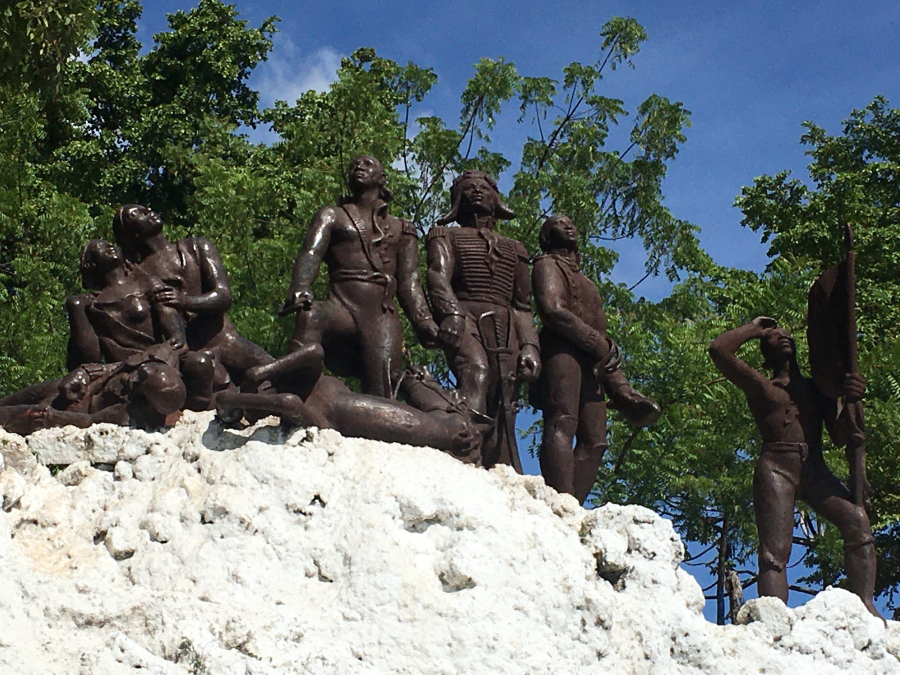
Another foreign country with ties to the United States is Haiti. Some leading American officials supported Toussaint L’Overture’s revolt against France in the early 1800s, and then U.S. Treasury Secretary Alexander Hamilton’s suggestions became part of Haiti’s first constitution. Nevertheless, America has had a troubled relationship with Haiti. Over the early years of Haitian independence, U.S. presidents refused to recognize Haiti until Abraham Lincoln, who appointed abolitionist leader Frederick Douglass as the first envoy.
In his 2019 book The Black Republic: African Americans and the Fate of Haiti, Brandon Byrd described African Americans as seeing Haiti as a symbol of Black freedom and equality. Still, there hasn’t been as large a groundswell on behalf of Haiti as there was say on behalf of Abyssinia (Ethiopia) in the 1930s when thousands of black Americans and others protested the Italian invasion of that country. Perhaps it was just easier to protest another country’s intervention in a Diaspora-led country than to oppose U.S. policy.
The U.S. tried to establish a military base in Haiti and invaded. It withdrew in 1934 but continued to intervene in Haiti during subsequent decades. According to historian Hans Schmidt, the US Navy sent ships to Haiti 19 times between 1857 and 1913 to “protect American lives and property” until the United States finally occupied Haiti in 1915. From 1915 to 1934 the US Marines occupied Haiti.
Prior to the occupation, the US military had taken control of the banks and collected US$500,000 to hold in New York. The Haitian constitution was written in a manner that prevented foreign entities from owning land or operating in Haiti. However, as a result of the occupation, the US had influenced the Haitian government to rewrite the constitution to repeal an 1804 provision that forbade foreigners from owning land in Haiti.
The occupation impacted the nation’s economy as well as the people’s self-image and independence. Ultimately, Haitians united in resistance of the US occupation, and US forces left in 1934. Left behind was a newly trained Haitian Army, the Garde, with mostly black soldiers and mulatto officers, who dominated political office until 1947.
From 1957 to 1971, François Duvalier governed Haiti under a repressive dictatorship. Some argue the US tolerated the regime because it was staunchly anti-communist and a counterbalance to communist Cuba during the Cold War. When Duvalier died, his son, Jean-Claude (“Baby Doc”) took over and maintained many of his father’s policies. The Reagan administration forced Baby Doc to leave in 1986, and when a repressive military dictatorship arose, Reagan suspended aid. The George H.W. Bush administration also embargoed and then blockaded Haiti, suspending all but humanitarian aid.
After the fall of the Duvalier family and other military regimes, priest Jean-Bertrand Aristide was elected in 1990, but he was removed in a coup seven months later. In 1993, the Clinton administration began to impose an economic blockade, which further impoverished the already-poor country, and in 1994, it eventually intervened militarily to restore Aristide to power. US support for Aristide waned following concerns about his corruption, and a February 2004 armed rebellion led to his exile.
For decades, Haiti – one of the poorest countries in the world – has suffered from natural and man-made disasters. The country now faces the prospect of a complete breakdown in law and order. In recent weeks, a mass prison break led to gang dominance in the country, especially the capital with gang demands for Prime Minister Ariel Henry to step down, threatening “civil war” if he didn’t. He agreed to do so once a transitional council and an interim prime minister are appointed. Currently, there is neither a president nor a legislature, and criminals who control as much as 80 percent of the capital are demanding to be part of any transitional government.
Because of the United States’ troubled history in Haiti, it would have been problematic to put U.S. forces on ground, so Washington prevailed upon Kenya to send law enforcement forces. Prime Minister Henry and Kenyan President William Ruto agreed to the deployment, but the gang situation may make such a move impossible now.
Approximately 1.1 million people in the United States were either born in or trace their ancestry to Haiti, according to the U.S. Census Bureau’s American Community survey, and violence, political strife and poverty have driven many more Haitians out in the past year: About 138,000 Haitians have sought protection in the U.S. in the 12 months through January 2024 via the Biden administration’s humanitarian parole program for Cubans, Haitians, Nicaraguans and Venezuelans.
But if adjustments are made on the migrant policy, how will this affect the Haitians population?
Like the Liberian Diaspora, the Haitian Diaspora has been a lifeline to Haiti during its troubles, but neither Diaspora group has been able to rally black Americans to their cause. Perhaps the decline in Diaspora action organizations explains why there is little said or done in the black American community, but perhaps American education has neglected to such an extent that the connection of Black Americans to the rest of the Diaspora has not been properly taught.
In any event, if the African Diaspora is to become the global force many believe it can become, it has to cease being a collection of individual country groups and work together to advance the interests of the Diaspora as a whole.
Gregory Simpkins, a longtime specialist in African policy development, is the Principal of 21st Century Solutions. He consults with organizations on African policy issues generally, especially in relating to the U.S. Government. He further acts as a consultant to the African Merchants Association, where he advises the Association in its efforts to stimulate an increase in trade between several hundred African Diaspora small and medium enterprises and their African partners.
