
A Diaspora View of Africa
African-Caribbean Cooperation on Environment

By Gregory Simpkins
African and Caribbean nations and organizations are increasing collaborating. For example, the African Export-Import Bank has opened a Caribbean office in Barbados. The first CARICOM-Africa Summit was held in Barbados in September 2021, followed one year later by the first AfriCaribbean Trade and Investment Forum. The collaboration between the two regions is growing, but one area in dire need of their collaboration is their mutual environments, including the cause of hurricanes and the development of early warning systems.
Developed nations are still arguing about climate change versus global warming, and the climate alarmists seem more interested in defending their climate ideology than in figuring out a way to help ease the environmental burden of hurricanes on the Caribbean region.
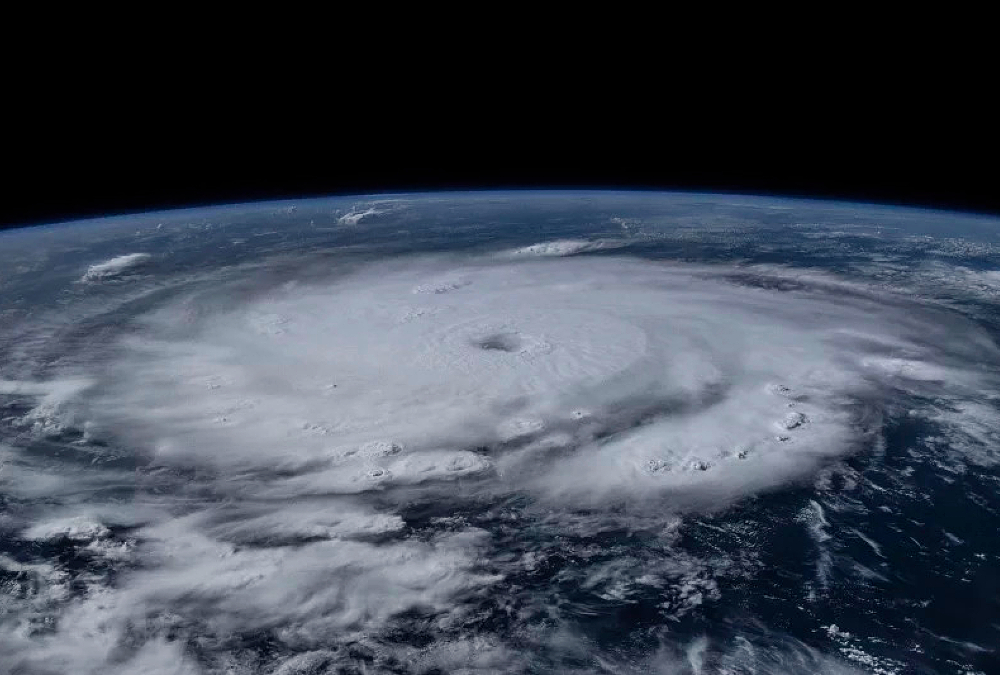
Currently, Hurricane Beryl has had a devastating impact on the Caribbean region and threatens to hit Texas and other southern U.S. states after causing massive flooding in Florida. Hurricane Beryl made its way through the Caribbean, causing significant damage in the windward Islands and making landfall on Grenada’s Carriacou Island as a Category 4 storm.
Beryl, the second named storm of the 2024 Atlantic hurricane season, follows Tropical Storm Alberto, which lashed the Gulf Coast of Texas with flooding rain and storm surge last month.
Breaking records after intensifying to a Category 5 storm, Beryl is the most powerful storm to develop this early during the Atlantic hurricane season and subsequently hit Jamaica and the Cayman Islands. The Center for Disaster Philanthropy considers it likely to be a precursor to what’s to come. According to CDP, recovery from a hazard like Hurricane Beryl is particularly difficult in an island setting and is made worse by the marginalization of the people who live in these places.
According to the United Nations Development Programme (UNDP), for countries in the Caribbean, the challenge of strengthening resilience is particularly acute as nations suffer recurrent extreme weather-related events. Countries are continuously struggling to rebuild in the wake of the economic, social, and environmental damages inflicted by frequent exogenous shocks, such as tropical storms, which climate scientists have warned are only getting wilder and more dangerous due to global warming.
This makes the probability of distribution over intensity of shocks one with “thicker tails” that in turn makes insurance more complex and expensive. UNDP quotes a 2018 International Monetary Fund report that found that, “natural disasters occur more frequently and cost more on average in the Caribbean than elsewhere – even in comparison to other small states.” Since 1950, 324 disasters have taken place in the Caribbean, inflicting a loss of over 250,000 lives and affecting more than 24 million people.
Because of the significant impact of the harmattan in Africa, the Caribbean, and elsewhere, it should require a joint African-Caribbean effort to study this phenomenon further.
UNDP reports that, on average over time, countries in the Caribbean suffer yearly losses due to storm damages equivalent to 17 percent of their GDP (for years that they were hit by storms). Of course, this varies greatly across nations both due to the severity of storms as well as the size of countries’ GDP – ranging from an average loss of 1 percent in Trinidad & Tobago to an average loss of 74 percent in Dominica.
Link between Harmattan winds and Hurricanes
In 2017 alone, Dominica lost the equivalent of 253 percent of its GDP (during Hurricane Maria). This was just two years after it lost the equivalent of 92 percent of its GDP (during Hurricane Erika). These losses are compounded by losses resulting from other extreme natural events, such as earthquakes, floods and droughts.
In the aforementioned March 2018 report International Monetary Fund report, Bracing for the Storm, the Caribbean’s vulnerability was said to be characteristic of small island states, but this region has typically suffered more damage than others. Average estimated disaster damage as a ratio to GDP was 4.5 times greater for small states than for larger ones, but six times higher for countries in the Caribbean. Moreover, the region is seven times more likely to be hit by natural disasters than larger states and twice as likely as other small states.
Given the catastrophic damage caused in the Caribbean hurricanes and the inability of governments in the region to recover on their own from the damage, wouldn’t it be prudent to determine contributors to these disastrous storms and devise strategies to minimize the damages?
Some have said that harmattans – cool dry winds that blow from the northeast or east in the western Sahara – carry large amounts of dust, which are transported hundreds of kilometers out over the Atlantic Ocean. The dust often interferes with aircraft operations and settles on the decks of ships. Harmattan season in West Africa occurs between the end of November and the middle of March. Temperatures can easily be as low as 9 °C (48 °F) all day, but sometimes in the afternoon the temperature can also soar to as high as 30 °C (86 °F), while the relative humidity drops under 5 percent.
It can also be hot in some regions, like in the Sahara. The air is particularly dry when the harmattan blows over the region, bringing desert-like weather conditions: it lowers the humidity, dissipates cloud cover, prevents rainfall formation and sometimes creates big clouds of dust which can result in dust storm. The wind can increase fire risk and cause severe crop damage.
A March 18 2024 study entitled “Dust and Death: Evidence from the West African Harmattan” in The Economic Journal found that dust carried by the Harmattan increases infant and child mortality, as well as has persistent adverse health impacts on surviving children. Humidity can drop lower than 15 percent, which can result in spontaneous nosebleeds for some people. Other health effects on humans may include conditions of the skin (dryness of the skin), dried or chapped lips, eyes, and respiratory system, including aggravation of asthma.
The Institute of Marine Affairs for the Government of Trinidad & Tobago is studying the impact of this dust cloud and says it does more than create runny noses, itchy eyes and sore throats. The Institute estimates that this Saharan dust transport across the Atlantic Ocean to South America, and beyond to the Caribbean Sea, is the largest transport of dust on the planet. Dust clouds from the Sahara Desert are often so big they can be seen from space. Space station crew members frequently report seeing Saharan dust masses as very widespread atmospheric haze, according to the U.S. National Aeronautics and Space Administration (NASA).
So does that mean there is a quantifiable connection between the harmattan and Atlantic Ocean hurricanes?
Saharan dust
The dust travels 2,500 km (1,553 miles) across the Atlantic Ocean, though some drops to the surface or is flushed from the sky by rain, the Trinidad institute finds. Near the eastern coast of South America, 132 million tons remain in the air, and 27.7 million tons – enough to fill 104,908 dump trucks – fall to the surface over the Amazon basin.
It is in the Amazon Basin that the Saharan dust serves one of its most important functions. Saharan dust is rich in phosphorus, a crucial nutrient for plant growth. Amazon soils lose as much as 90 percent of its phosphorus from rainfall, as rivers wash it out to sea regularly.
Decomposing leaves and plants help recycle some of the phosphorus already in the Amazon, but the dust provides a key outside source of the nutrient. Without this continuous source of phosphorus input from the Sahara, the biodiversity of the Amazon could experience adverse effects. However, Sahara dust does not stop there the institute says.
About 43 million tons of dust travel farther to settle out over the Caribbean Sea which affects the air that we breathe. The iron that gives Saharan dust its rich red color feeds the phytoplankton in the Caribbean and along the coast of the southeastern United States, which is important for oxygen produced by phytoplankton in the world’s oceans. Phytoplankton photosynthesis is responsible for production of half of the world’s oxygen and uptake of half of the carbon dioxide on the planet.
The Trinidad institute finds mixed results concerning the harmattan impact on Atlantic Ocean storms.
“Every three to five days during the summer months of the northern hemisphere dust storms leave the African coast forming a layer of hot, dusty air known as the Saharan Layer which can influence rainfall levels as far as California. As the dust storms move off northern Africa, it pulls moisture up into the atmosphere, the institute states.
“Dust storms have three main components that can suppress a hurricane. One of the key features is very dry air. Dry air in the middle parts of the atmosphere make it difficult for the formation of hurricanes to occur and this is exactly what the Saharan Air Layer has. Accompanying the Saharan dust storm is also an extraordinarily strong surge of air embedded within it, known as vertical wind shear, which can also hamper the development of storms. The third and final component of its storm fighting powers is of course, dust. Researchers believe that the dust itself suppresses the formation of clouds which in turn prevents tropical waves from intensifying.”
But if the harmattan does not necessarily impact hurricanes, it does impact rainfall, which can cause flooding.
Because of the significant impact of the harmattan in Africa, the Caribbean, and elsewhere, it should require a joint African-Caribbean effort to study this phenomenon further. There are numerous organizations ready to help pick up the pieces on hurricanes in this Caribbean, which after all, usually affect the United States, but what about the impact of the harmattan in Africa? Collaboration by governments and research institutes in Africa and the Caribbean have the most to gain from any studies of these phenomenon, especially any strategies to minimize or prevent damage on both sides of the Atlantic Ocean.
Gregory Simpkins, a longtime specialist in African policy development, is the Principal of 21st Century Solutions. He consults with organizations on African policy issues generally, especially in relating to the U.S. Government. He further acts as a consultant to the African Merchants Association, where he advises the Association in its efforts to stimulate an increase in trade between several hundred African Diaspora small and medium enterprises and their African partners.
