
Editorial
A Poor Editorial on Poverty
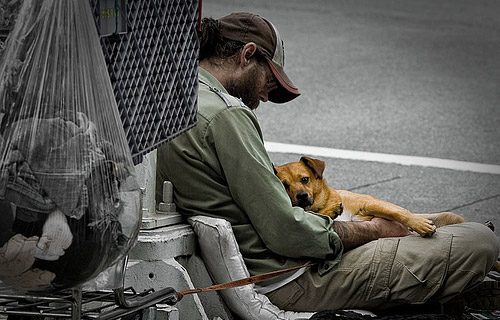
The overwhelming number of those we saw were people of color and the few white faces were saw were both statistically and figuratively insignificant. This is why although most of the food stamp recepients and those who overwhelmingly receive food supplements [same thing, by the way] in North America are white, we shall concentrate on the black impoverished.
The collegiality in poverty crosses seas and continents and poor black people in the United Kingdom look very much like the poor in Africa and in the U.S. and in the Caribbean.
Interestingly, the ‘miniscule’ differences between each cluster of poor black people in the different regions stems from the vicious cycle of poverty: Basically, the poor are beset by factors or events that apparently ensure that they remain poor unless there is outside intervention.
Africa’s poor – like those in Southern Sudan or in the various hotspots of Nigeria are surrounded by immense wealth [read: Natural resources], and yet they still succumb to disease or ingrained violent political, social or religious rivalries. The poor in the United Kingdom and even those in France seem to have better lives than those in other Western countries simply from the fact that the latter are welfare centric states. Poor black people in the Middle East or Maghreb can be said to be the wretched of the earth.
Thus, if a country or state has some kind of safety net, the poor might have an ‘easier’ time of breaking the cruel chains they are yoked to.
Seminally, we ought to transition to the factors that seemingly conspire to keep people poor: One of my colleagues, Ryan, has been ‘poor’ before. His poverty is being captioned because he was in a holding pattern for a short period of time: He was looking for a job, he had no place to stay and he had no money while he lived in a strange land. He was, fortunate to find a roof over his head in a Texas shelter and once in a while, he had money to eat.
We cannot, however, refer to him as authentically poor because he has a university education and was just on his way to the bigger and better things he finds himself in today.
