Editorial
A Poor Editorial on Poverty
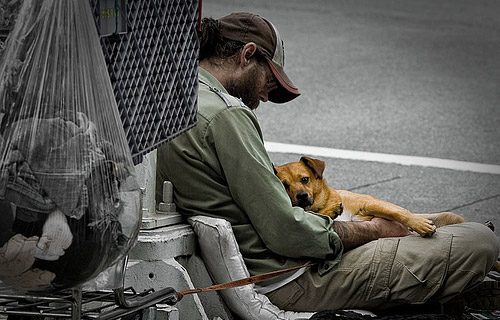

The man running to replace Barack Obama as America’s president in November 2012 is a very rich man. He looks, talks, acts, feels and even does rich things like hold bank accounts in Switzerland. Save for this last facet, Obama himself has all trappings of the rich, degrees of depth notwithstanding.
However, what differentiates these two men is their proxy to the common man who actually makes the bulk of America’s voting population. Additionally, though, Obama bears another distinct mark of direct correlation to the common: He has a bit of black carousing his veins and skin color.
This is his lifetime membership to a class of people who have, in North America, been associated with being the downtrodden, the underserved, the uncivilized – the poor. In political terms, Obama’s blackness is associated with what Reagan referred to as ‘Welfare Queens’ and what Bill Clinton ‘reformed’ in the 1990’s. For Obama, poverty is tied around his neck through vituperative terms like ‘food stamp president’ and ‘class warfare.’
Unfair or otherwise, these expressions hurled at the first African American leader of the free world have a way of making sense and thus sticking as appropriate labels as simply as guilt by association works.
Obama is black and so he must have something in him that predisposes him to poverty just like the poor in Africa, Europe and even the Caribbean. To those who frame Obama in these terms, poverty is one continuous black slate! Conversely, it could be said that there is a world of difference between being poor in America, for instance, and being impoverished in the Third World; in Africa or in the Caribbean. Some opine that the poverty in Africa goes straight to the born while the impoverished in the West are much better off.
But this is a specious argument to make; and this paper believes that poverty amongst the blacks in North America is exactly the same as in the Caribbean and in Africa, albeit the geographical differences. Of course, there are many poor white people in America, many living in conditions more deplorable than those the blacks are mired in.
To illustrate, when Hurricane Katrina hit New Orleans, the poor of the South were, literally and figuratively, washed out of their crevices for all the world to see. There were dead people floating in those waters and the live ones were stuck in such deplorable circumstances that it looked like a third world country had gone and invaded the U.S.
The overwhelming number of those we saw were people of color and the few white faces were saw were both statistically and figuratively insignificant. This is why although most of the food stamp recepients and those who overwhelmingly receive food supplements [same thing, by the way] in North America are white, we shall concentrate on the black impoverished.
The collegiality in poverty crosses seas and continents and poor black people in the United Kingdom look very much like the poor in Africa and in the U.S. and in the Caribbean.
Interestingly, the ‘miniscule’ differences between each cluster of poor black people in the different regions stems from the vicious cycle of poverty: Basically, the poor are beset by factors or events that apparently ensure that they remain poor unless there is outside intervention.
Africa’s poor – like those in Southern Sudan or in the various hotspots of Nigeria are surrounded by immense wealth [read: Natural resources], and yet they still succumb to disease or ingrained violent political, social or religious rivalries. The poor in the United Kingdom and even those in France seem to have better lives than those in other Western countries simply from the fact that the latter are welfare centric states. Poor black people in the Middle East or Maghreb can be said to be the wretched of the earth.
Thus, if a country or state has some kind of safety net, the poor might have an ‘easier’ time of breaking the cruel chains they are yoked to.
Seminally, we ought to transition to the factors that seemingly conspire to keep people poor: One of my colleagues, Ryan, has been ‘poor’ before. His poverty is being captioned because he was in a holding pattern for a short period of time: He was looking for a job, he had no place to stay and he had no money while he lived in a strange land. He was, fortunate to find a roof over his head in a Texas shelter and once in a while, he had money to eat.
We cannot, however, refer to him as authentically poor because he has a university education and was just on his way to the bigger and better things he finds himself in today.
But what about the black woman who was 6 months pregnant and had to sleep on the street towards the shelter our friend Ryan stayed in? Well – first, that pregnancy had real life consequences because a woman who could not even afford to feed herself was going to bring a child she could not afford to take care of. Is there a chance that the system in America would absorb the little mouth to feed? Yes. Does this solve the problem? No. Because she is on the street and because she is poor, that woman could as easily get pregnant and become the proverbial burden to the system. In simple terms, unless something drastic happens, this woman is spiraling further and further from a poverty cycle to a cyclone!
And that starts the second similarity between the poor in the West and those in the Third World: While the poor in the West are driven to the ground and even go through the safety net and keep digging till they are just a statistic, the poor in Africa dig for life and live to dig.
Many are subsistence farmers. However, these poor African subsistence farmers are much better off than their compadres in the West: They at least, have a factor of production – their land. Their fate is, however, sealed when many lose their access to the soil.
The massive rural urban migrations in African and Caribbean countries have made things worse for the poor. Unlike the safety net that caught my friend Ryan and would probably find respite for that pregnant woman – however ephemeral – are no existent or severely inadequate in the Third World.
The poor in Africa are considered the destitute. They are on the street. They are begging not just on the street corners but in the traffic and around the shops and around the mosques and churches.
They are everywhere.
On the other hand, because there are so many solutions to poverty and none really living up to their solutions potential, the cynics have resorted to looking out for themselves through corruption; the think tanks and the altruistic continue to wring their hands in helplessness; and those battle pressed black people in the West smile secretly to themselves and each other when they see a white man or woman begging on the street.
Dennis Matanda
Editor – editor@thehabarinetwork.com
Note: This editorial intentionally did not define the vicious cycle of poverty and neither were the different attributes of this cycle specifically highlighted.