
Opinion
Africa’s Megacities Are Growing – But Not Creating Enough Opportunity
Lagos, Cairo, and Kinshasa prove that size is not the same thing as opportunity.

By Caleb Maru
If Lagos were a sovereign nation, its economy would rank as the fourth-largest in Africa. Yet roughly 70 percent of the people who live there call a slum home. That contradiction is not a footnote to Africa’s urban story. It is the story.
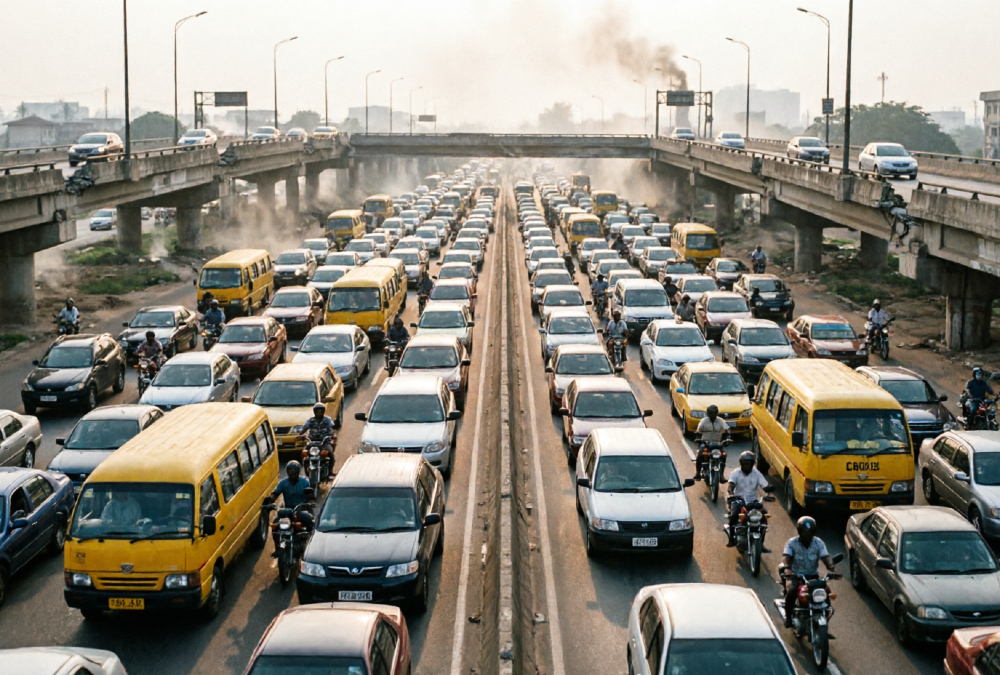
Africa’s cities are expanding at a pace with no historical precedent. Cairo now holds more than 20 million residents. Kinshasa has passed 17 million. Nairobi, Dar es Salaam, and Abidjan are all racing toward similar scale. By most measures, this should be cause for celebration: cities are supposed to be humanity’s greatest wealth-generating machines, the places where ideas, capital, and ambition collide to produce growth. Instead, Africa’s largest cities are becoming case studies in how urbanization can go wrong.
The Infrastructure Gap Nobody Can Ignore
The math is stark. Only 35 percent of metropolitan Lagos has access to the public water supply. About 65 percent of the city’s workforce – some 5.5 million people – earns a living in the informal economy, without the protections, benefits, or stability that formal employment provides.
In other words, the cities generating the most economic firepower on the continent cannot adequately house or employ their own residents. That is not a paradox. It is a warning.
In 2017, the World Bank put a name to the pattern: African cities, it concluded, are crowded, disconnected, and costly.
- Crowded, because migration keeps outpacing every attempt to plan for it.
- Disconnected, because these cities have sprawled into scattered neighborhoods with little connecting them – Lagos alone now covers twice the land area of London, its footprint having doubled in just two decades.
- Costly, because scarcity drives up the price of everything. Households across Sub-Saharan Africa pay 20 percent to 31 percent more for daily life than people at comparable income levels elsewhere in the world. Rent alone runs 55 percent higher.
The Hidden Cost: A Serendipity Tax
But there’s a cost to this dysfunction that rarely appears in any economic report, because no one has figured out how to put it in a spreadsheet: luck.
Cities build wealth through collisions – the stranger who becomes a co-founder, the conversation overheard at a roadside food stall, the job opportunity found at the local market. These unplanned encounters are not incidental to urban economies. They are, in large part, what urban economies are for.
Researchers have actually measured this effect, and the results are sobering. In a typical African city, a resident can reach far fewer people within a 10-kilometer radius of home than almost anywhere else in the developing world. Fewer reachable people means fewer chance encounters. Fewer chance encounters means less luck, in the economic sense of the word: fewer serendipitous connections that turn into jobs, partnerships, and businesses.
Call it the serendipity tax. It is levied quietly, and it is levied on everyone.
Africa’s megacities should be engines built to manufacture that kind of luck at scale. Instead, they charge the continent’s highest rent for its lowest odds of a lucky break.
Why the Next Chapter May Look Different
The implication is uncomfortable for anyone who has assumed that Africa’s urban future belongs, by default, to its biggest cities. If Lagos, Cairo, and Kinshasa are struggling to convert scale into opportunity, the next wave of growth may not come from doubling down on the megacities at all. It may come from secondary cities – places with room to build connective infrastructure before sprawl outruns it, and a chance to get the fundamentals right the first time.
Africa does not have an urbanization problem. It has a design problem. And design problems, unlike population growth, can actually be solved.
Caleb Maru is Founder and CEO of Tech Safari, Africa’s leading tech community and media company, specializing in tech innovation, market trends, and exclusive insights across the continent. Based in Nairobi, Kenya
