
Editorial
The Unbearably Painful Dynamic to Policing America’s Minority Populations
Obviously, such thoughts or feelings may, no doubt, be alien to our Caucasian neighbors
The Pungent Pong of Death
Children that came of age in Uganda of the 1980s will remember an acrid smell: the kind that only dead things could emit on the roadside as you walked to school. While it was mostly dead dogs and cats, you also—at a very young age—knew that the extra pungent pong meant that something bigger was decomposing, perhaps even a human being. But you walked on anyway, keeping your curiosity to your side of the road because the flies and stench dominated the other one. And the further you got away, the better prepared you were to see your friends. And if the school day was furtively canceled because something political had happened, you found another way home – specifically avoiding the dead thing you passed by earlier.
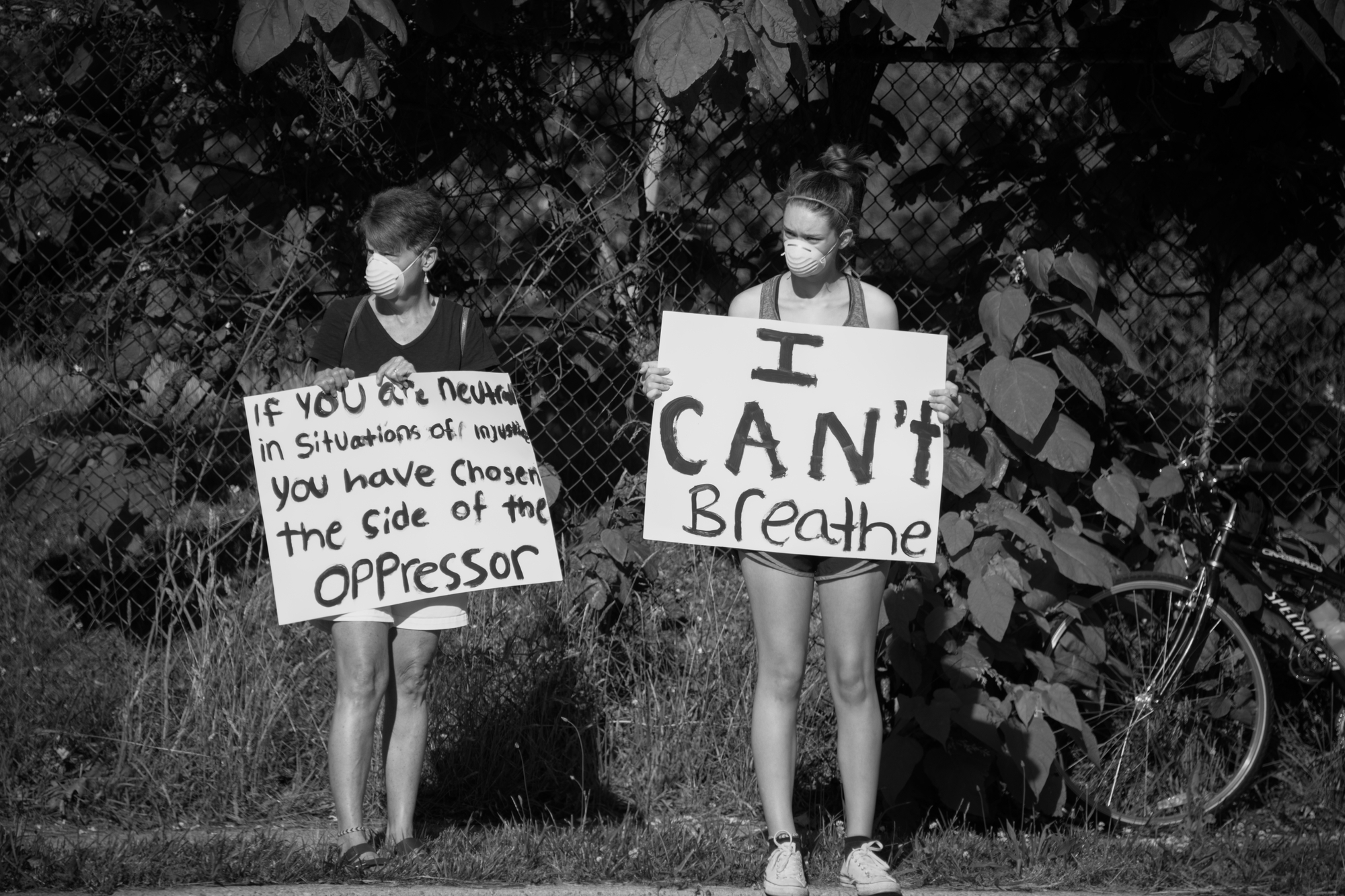
Those smells of death have been in our metaphysical air ever since the trial of the man that killed George Floyd begun and ended. Watching clips that immortalized a man’s final moments are not for the faint of heart. And for some reason, it feels as though there is no difference between ruffians in military fatigues in unstable African urban areas, and America’s law enforcement. Of course, this is a very unfair juxtaposition if you live in the sort of neighborhoods we live in. The police are courteous – even deferential to those people of color who have managed to break the mold to live in picket fence residences. But what about the others, those that are policed against their will? How do we describe impunity? The total disregard for life? The trigger-happiness when there’s dark skin in the path of the bullet? What about the swashbuckling when a police officer walks towards the parked car of a black driver? Do we really need to prove a point?
Pepper-Spraying & Unbearable Stabbing
And these past few weeks have, somewhat, been dystopian. Doesn’t the American public revere the military? If you have not seen the video of a Virginia police office pepper-spraying a young army officer during a traffic stop, please don’t. The dignified way with which the soldier bears the torture to his face is a credit to his parents. Obviously, they taught him not to run his mouth or do anything that may lead to a policeman’s bullet. Why aren’t Americans out on the street protesting against that treatment? Is it because the young man was not killed? Why do we have to wait until another person is dead? Then there’s the thing with the accidental shooting of a 20-year-old in Minnesota. We will not say his name because he has become another hashtag. And the teenager that was killed in Ohio – with a knife in her hand. Aren’t tasers meant to be effective? That another person of color is killed in situations a Caucasian would not is almost unbearable. Is it really necessary to point anything lethal at someone that is trying to get away? What happened to ‘do no harm’? Of course, we completely understand that the young man could have caused further harm to others if he was escaping from the police. And that the young woman could have stabbed another to death. But did they need to die in the way they did? Again, what happened to the benefit of the doubt?
A Bloody-Minded Fatalistic Attitude
Death is something Africans deal with on a regular basis. It was almost a badge of honor if your father was jailed in the 1980s. Some of our friends’ parents never made it home. And we accepted that with the quiet pain of someone that understands the essence of ‘misery loves company.’ When the AIDS epidemic hit, we each lost a relative – a favorite uncle, perhaps – and we moved on. More recently, our friends and relatives have started to die from hypertension, pressure, and stroke. Being African, we accept things with a bloody-minded fatalistic attitude. We see that attitude here in America. Black families steel themselves every day. Black parents hold their kids a little longer every day. Black parents tell their children adult things before they are ready. And it just feels like they are no different than those living through the civil conflict in African urban areas.
Obviously, such thoughts or feelings may, no doubt, be alien to our Caucasian neighbors. Watching how certain cable television hosts interpret the deaths and subsequent protests is quite jarring. The nonchalant way they address death is jarring. The way they quickly pivot towards defending police actions is jarring. Jarring enough to make one feel quite helpless.
The Editorial Board
