
News
New nation alert: South Sudan becomes own country Saturday amid fears of conflict over split
JUBA, Sudan — The people of South Sudan finally get their own country on Saturday, an emotional independence celebration few thought possible during a half century of civil wars and oppression that left more than 2 million dead.
Military parades and…
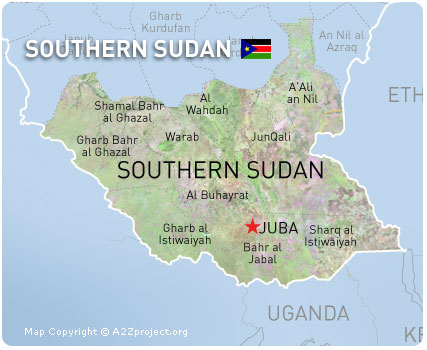
Despite the south’s oil wealth, the Texas-sized region has only about 30 miles (50 kilometers) of paved road. In an advisory sent out this week for the independence celebration, the government reminded incoming guests that Juba doesn’t have any credit card processing machines.
Lise Grande, who leads the U.N.’s humanitarian operations in South Sudan, says the region is “one of the most underdeveloped on the planet.” Only 15 percent of the population can read. Most live on a $1 a day. Education and health facilities are sorely underdeveloped.
“You don’t get the kind of statistics you have in Southern Sudan if you’re not dealing with years of marginalization,” Grande said. “It is their legacy. It is the price that these people have paid. Someone who could be my daughter has a higher chance of dying in childbirth than finishing school. That says everything you need to know about Southern Sudan.”
Still, Zach Vertin of the Brussels-based International Crisis Group says there is reason to be “cautiously optimistic” about the years ahead for the 6-year-old government.
It had just two employees when it started — the president and vice president — but now runs 32 ministries, 17 commissions and 10 state-level governments.
The young government faces the massive challenges of reforming its bloated and often predatory army, diversifying its solely oil-based economy, and deciding how political power will be distributed among the dozens of ethnic and military factions.
The government must also begin delivering basic services like education, health services, and water and electricity to its more than 8 million citizens.
Isaac Boyd with the American aid group Catholic Relief Services says that it will take decades for the new country to construct a road network that connects remote communities and allows them to participate in a market economy.
“Only a handful of secondary schools throughout the country serve a population where 51 percent is under the age of 18,” Boyd said. “Aid agencies will do what they can but the long-term solution rests with the people of Southern Sudan.”
Grande said the problems South Sudan faces are “bigger and harder than what any other country in Africa faced” when most nations on the continent gained independence from the colonial powers in the 1960s.
On top of that, the prospect for a return to all-out war between north and south seems higher than it’s ever been since the signing of the 2005 peace deal.
More than 100,000 people were displaced in May after the northern army seized the disputed border area of Abyei, and activists fear an ethnic cleansing of the black African Nuba people is under way in Southern Kordofan.
The hostilities dashed hopes that the two governments could reach a “divorce deal” over unresolved north-south issues related to the peace deal before Saturday, including oil-sharing arrangements and the final demarcation of the border.
A draft constitution was passed this week that lays the groundwork for the president and legislature, who were elected in April 2010, to serve out their five-year terms. The legislature’s few opposition legislators are unhappy with the draft, but it now serves as an interim constitution until the first multiparty elections are held.
In a sign of the internal political discord South Sudan faces, security forces arrested an opposition leader in Parliament and several others Thursday after they held a news conference in which they voiced opposition to the new draft constitution, said Lam Akol, chairman of the SPLM-Democratic Change party.
On Saturday at least, politics will be on the backburner. During times of celebration in the south — at weddings or on Martyr’s Day — gunshots ring out, symbolic of the history of violence and the fact many civilians own weapons.
The south’s information minister is predicting a less violent entry into statehood.
As the clock reaches midnight and the calendar turns to July 9 early Saturday, he said, the only thing to be heard will be “church bells ringing, the beating of drums and women ululating.”
Copyright 2011 The Associated Press.
