
News
New nation alert: South Sudan becomes own country Saturday amid fears of conflict over split
JUBA, Sudan — The people of South Sudan finally get their own country on Saturday, an emotional independence celebration few thought possible during a half century of civil wars and oppression that left more than 2 million dead.
Military parades and…
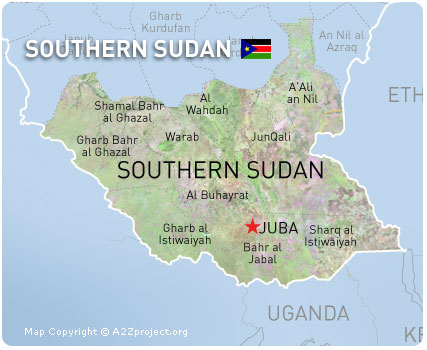
The people of South Sudan finally get their own country on Saturday, an emotional independence celebration few thought possible during a half century of civil wars and oppression that left more than 2 million dead.
Military parades and celebrations will burst forth Saturday in front of dozens of visiting world leaders. But when that party ends, South Sudan must face grim realities: It will be one of the most underdeveloped countries on the planet, only 15 percent of its citizens can read and fears of renewed conflict abound.
South Sudan’s successful independence drive was made possible by a 2005 peace deal between Sudan’s north and south. Last January, former guerrilla fighters shed tears as they cast votes to break away from the control of the Khartoum-based north.
Among those who cast ballots at special U.S. polling stations were some of the 3,800 war orphans known as the Lost Boys of Sudan, who ran away from war and were taken in by communities in the United States.
In the southern capital of Juba this week, the Republic of South Sudan’s new national anthem blared from cell phones.
“It took a combination of bullets and ballots to attain our hard-earned independence,” reads a new sign next to a main intersection here.
Albino Gaw, a member of a minority tribe who works for the government in Juba, said he’s excited about the south’s independence. The 30-year-old former child soldier said he’s pessimistic though about how much work lies ahead.
“The day will be good but people are expecting something more than we’ve gotten in the past five years,” he said. “A lot of work needs to be done by the government. Otherwise things will be like they were before.”
The world’s newest capital, the Nile River city of Juba, was war-ravaged ruins six years ago, when the 1983-2005 north-south civil war ended. It was the second war between the mostly Arab north and the south, where traditional African religions and Christianity are practiced.
Now the presidential motorcade is practicing its run through the city for Saturday afternoon, when world leaders will watch South Sudan President Salva Kiir host the country’s inauguration.
U.N. Secretary-General Ban Ki-moon will attend, as will former U.S. Secretary of State Colin Powell, U.S. Ambassador to the U.N. Susan Rice and Gen. Carter Ham, commander of the U.S. Africa Command. Sudan President Omar al-Bashir, a deeply unpopular man in Juba, is also expected to attend.
Despite the excitement, South Sudan is saddled with problems. Violence — from cattle raids and rebel battles — has killed nearly 2,400 people this year, the U.N. says. Seven different rebel militias operate in the south.
More ominously, troops from north and south Sudan are facing off in the contested region of Abyei. Fighting between the north and forces loyal to the south is raging in Southern Kordofan, a state that lies in the north.
A major undercurrent is fight for the oil that lies near the north-south border — oil that South Sudan gains and Khartoum loses, though for now the south’s crude can reach the world market only by moving through the north’s pipelines.
