
Opinion
India’s Africa Trade Boom Is Real. The Next Chapter Is About Precision
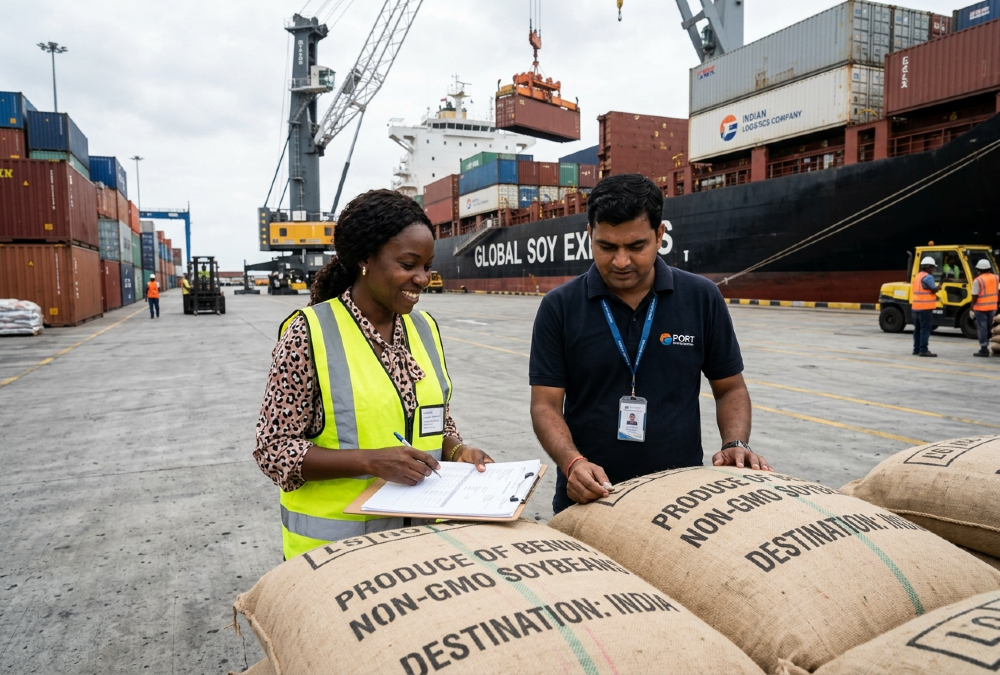
Africa remains a vital destination for Indian merchandise exports, with expanding opportunities across agriculture, engineering goods, pharmaceuticals, chemicals, textiles, and machinery.

By Ashish Muley
Africa is no longer a footnote in India’s export story – it is becoming one of its most dynamic chapters. Across agriculture, engineering goods, pharmaceuticals, chemicals, and textiles, Indian exporters are finding growing appetite for their products on the continent. But the more interesting story isn’t how much India is selling to Africa. It’s where, and why, that demand is shifting – and what it will take to capture it.
The Numbers Behind the Momentum
A look at India’s merchandise exports to African markets during 𝗔𝗽𝗿𝗶𝗹–𝗔𝘂𝗴𝘂𝘀𝘁 𝟮𝟬𝟮𝟱-𝟮𝟲 𝘃𝘀. 𝗔𝗽𝗿𝗶𝗹–𝗔𝘂𝗴𝘂𝘀𝘁 𝟮𝟬𝟮𝟲-𝟮𝟳 shows sharp growth across the five largest destinations:
- South Africa: US$3.05 billion → US$4.82 billion
- Tanzania: US$1.82 billion → US$4.18 billion
- Kenya: US$1.55 billion → US$3.17 billion
- Egypt: US$1.45 billion → US$2.43 billion
- Nigeria: US$1.19 billion → US$1.47 billion
Tanzania’s more than doubling is especially striking, and Kenya isn’t far behind. These aren’t rounding errors – they represent a meaningful reallocation of trade flows over the period.
What’s flowing through these corridors is telling. India’s export basket to Africa spans engineering goods (machinery, electrical equipment, vehicles, auto components, iron and steel), refined petroleum products, pharmaceuticals and bulk drugs, rice and agricultural commodities, organic and inorganic chemicals, textiles and cotton products, and processed food. It’s a portfolio, not a single product line – and that diversity is precisely why treating Africa as one homogenous market is a mistake.
Stop Asking Which Country Buys the Most
Here is where most trade analysis goes wrong. The instinctive question – which African country imports the most from India? – is the wrong one to ask. It flatters headline numbers but tells an exporter almost nothing about where to actually compete.
The better question is narrower and harder to answer: which African market has strong, growing demand for the specific products we can supply competitively?
Answering it requires digging past country-level trade totals into product-level demand, competing suppliers and their pricing, tariff structures and regulatory requirements, logistics and distribution networks, and the practical realities of market entry. This matters enormously for agricultural commodities and food products, where margins are thin and buyer requirements are exacting. Country-level export data is a starting point, not a strategy. The real opportunity sits at the intersection of trade data, buyer behavior, import sourcing patterns, regulation, and on-the-ground market conditions.
A Case Study: Could Africa Feed India’s Soybean Demand?
Nowhere is this more evident than in soybeans – a commodity where the India-Africa relationship may be quietly shifting.
India’s soybean market is entering an unsettled period. The U.S. Department of Agriculture’s Foreign Agricultural Service has revised its estimate for India’s 2026/27 soybean production downward, pointing to erratic monsoon rainfall and changing planting decisions among farmers. At the same time, the USDA has raised its forecast for India’s soybean imports – and named African supplies as one factor behind that upward revision.
That combination raises a genuine trade question: can African suppliers become a dependable source of soybeans for Indian buyers? The USDA has specifically flagged Benin, Niger, and Togo as African producers with exportable soybean surpluses that could reach India.
But production potential is not the same as commercial readiness. For an Indian buyer evaluating African soybean supply, the real due diligence checklist looks like this: How much soybean is actually available once domestic consumption is accounted for? Is there a genuine exportable surplus? Is the crop non-GMO where that’s required? Can the exporter meet quality specifications consistently, shipment after shipment? Is the product properly cleaned, graded, and stored? Can the exporter furnish the documentation Indian import regulations demand? What does the landed cost in India actually look like once freight, handling, and financing are factored in? And critically – can the exporter deliver reliably and repeatedly, not just once?
This is the gap that trade facilitation exists to close. Africa’s soybean opportunity isn’t a continental story; it’s a country-by-country one, and it will be won or lost on execution rather than production statistics alone.
The Bottom Line
India’s trade relationship with Africa is expanding faster than the headline numbers suggest, but the exporters and importers who benefit most won’t be the ones chasing the biggest markets on paper. They will be the ones who have done the unglamorous work – mapping product-level demand, understanding regulatory friction, vetting suppliers on quality and reliability, and pricing in the real cost of getting goods from farm or factory to port. In trade, as in most things, the opportunity rewards precision over headlines.
Ashish Muley is an independent consultant with Stalwart Management Consulting, with 27+ years in agricultural commodity value chains, export markets, and international trade. He has led projects on business development and capacity building across African countries in partnership with international organizations. Formerly, he spent 15 years in financial services leadership, focusing on sales, marketing, and business development. Based in Pune, India, Ashish advises on agricultural trade, commodity markets, Warehouse Receipt System (WRS) and Asia–Africa economic opportunities, and regularly writes on international trade and logistics.
