
Business
Dangote refinery is held up by Nigeria’s congested ports
By David Whitehouse
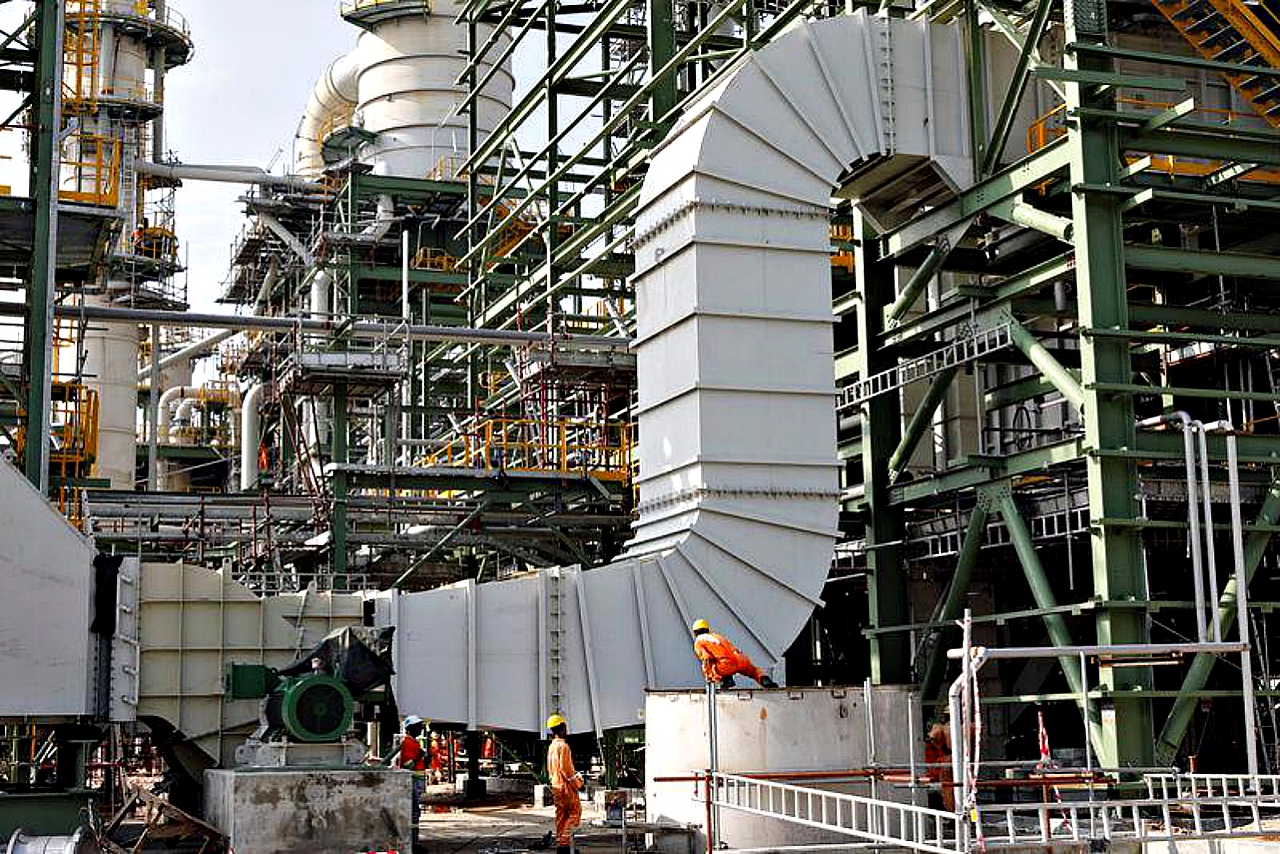
Aliko Dangote, who first announced his plans for a new oil refinery in Nigeria in late 2013, is battling against conditions at Nigeria’s ports to avoid further delays.
Initially planned to start production in 2016, the refinery deadline slipped to the end of 2019 after a change of location. In August, Reuters reported that industry insiders now don’t expect fuel output before 2022.
Nigeria’s inefficient ports have hampered the progress of what will be Africa’s largest oil refinery, with executives citing problems with importing steel and other equipment as a reason for the delays.
- “The reasons for the delay in completing the refinery include the challenges with port capacity to berth heavy equipment,” says Femi Ademola, a consultant commissioned by the Lagos Chamber of Commerce and Industry (LCCI) to co-write a report on Nigeria’s ports in 2018.
- Ademola expects that the refinery will be operational in 2021/2022 after 2020 completion.
- In its July newsletter, the LCCI implored the government to address the poor quality of the roads leading in and out of the country’s ports.
- The current gridlock is causing “untold hardship and cost on businesses”, the LCCI said.
- According to Ademola, port conditions have a “very negative impact on the ease of doing business” in Nigeria.
The World Bank’s Doing Business report this year ranked Nigeria at 182 out of 190 countries on trading across borders. According to Steve Cameron, managing director of Cameron Maritime Resources in London, there remains “a fundamental problem with congestion in the ports.”
- Cameron says the gridlock is partly due to the current outdated transport infrastructure, which is unable to cope with the cargo volumes.
- The lack of intermodal transport planning has allowed warehouses and residential homes to be built alongside each other around the ports, restricting growth and causing congestion, he says.
- Other factors contributing to the congestion include the poor road network, cumbersome transit procedures and inefficient logistics systems.
- Some of the existing infrastructure in the ports was built more than 40 years ago.
- The queuing of container and tanker trucks stretching back over the 3 bridges that link Lagos with its islands and the north reduce the usable lanes by 50 percent or more, often leaving only a single lane available, Cameron adds.
“Given that Dangote has to cope with these significant logistics challenges, it is hardly surprising that the refinery is behind schedule,” Cameron says. “If it is ready by the end of 2020, it may be considered to be something of a triumph.”
Chicken and egg
Nigeria’s existing refineries are dysfunctional, causing the country to import virtually all of its fuel despite its oil riches. The Dangote refinery, once completed, will ease that dependence and free up port space.
Refined fuel is currently Nigeria’s biggest import, with agricultural products the major export. To manage the limited capacity of the Lagos ports, dedicated terminals are being created for agricultural exports.
- While this is not optimal, it at least “helps to moderate the impact of the crowding effects of the refined fuel imports and heavy equipment facilities,” Ademola says.
In the meantime, the refinery project is itself worsening port congestion.
The Africa Report © Copyright 2019
