
Life
Being black and famous is no protection from police misconduct
OPINION – By publicizing and advertising what had happened to them, these African-American celebrities have provided a public service…
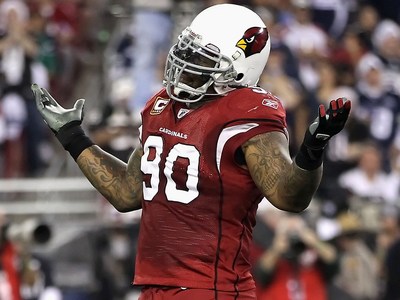
Dockett, who previously posted a photo of an officer giving him a ticket, continued, “Police said ‘do you mind if we look around in your Vehicle?’ I said I sure DO! He said ‘I’m gonna call back up’ I said u wanna use my phone? … I think they (POLICE) going to get a search warrant cuz they sitting here looking like fools waiting on something! … These COPS really think I’m stupid they playing good cop bad cop! BOY STOOOOP! I’m not falling for that! NO SIR YOU WILL NOT LOOK IN MY CAR! … This cop just ask me how tall R u & where R U from! I’m bout to ask him can I go across the street to POPEYS while we sitting here waiting! …”
Using media and social media to publicize their encounters with law enforcement, these four high-profile black men reacted to their experiences in four different ways. While Rock held a press conference to show he was “lawyering up” and assuming a political activist-type of role to expose police misbehavior, Johnson used Twitter to shed light on his wealth as a reason for harassment and profiling by the cops.
But Dunn took a more strategic, highbrow approach. He tweeted on the sense of violation he felt when he was racially profiled. Moreover, Dunn’s written statement was designed to further indict the police and garner more sympathy for himself as the upstanding son of an officer. Dockett, on the other hand, was purely humorous, but no less effective.
Over the years, comedy has proven itself an effective means of truth telling and instructing society on various political and social realities. Besides, given their daily realities — ranging from poverty and joblessness to violence and the cruelties of the criminal justice system — black folks often must laugh to keep from crying.
By publicizing and advertising what had happened to them, these African-American celebrities have provided a public service. There are thousands of innocent black men in this country who are the victims of racial profiling and other unsavory police practices and tactics, but lack the status that would cause the public to pay attention to their stories.
In an era of 24-hour multimedia news on the one hand, and personal empowerment through citizen-driven social media and camera phones on the other, it is easier for the truth to come to the light. Technology brings greater transparency. And when more people are aware that a problem exists, there is a greater chance that solutions to the problem will follow.
If you are not convinced, just look at the transformation taking place in Tunisia, Egypt, Syria and other Arab nations has been as much a technological revolution as a social and political revolution. Decades earlier, in the Jim Crow South of the 1950s and 1960s, television cameras captured the brutality of police brutalizing nonviolent civil rights protesters with batons, dogs and fire hoses. These images of police abuse helped to turn public opinion and facilitate the passage of federal civil rights legislation.
Rock, Johnson, Dunn and Dockett are not the only black athletes and celebrities to face the police of late. Some cases appear to have been relatively minor or innocuous, ranging from an apparent misunderstanding to the ridiculous. No teachable moments here. For example, free agent defensive end Raheem Brock, formerly of the Indianapolis Colts, was arrested in Philadelphia for failing to pay a $27 bar tab. He was charged with theft and resisting arrest, reportedly after a minor struggle with police.
Hines Ward, the Pittsburgh Steelers wide receiver, was recently arrested by Hollywood, California police, and quickly released, after police stopped him for driving a car that had been reported stolen by the woman who was his passenger. Apparently the woman had reported her car stolen when she couldn’t find it, and failed to call back once she found her car. Hines, who was born in South Korea to a Korean mother and African-American father, was a recent winner on the TV show Dancing with the Stars.
But other incidents provide insight into how some black men get caught up when they come in contact with the police. For example, San Diego Chargers wide receiver Legedu Naanee was arrested last February at an Indianapolis crime scene for public intoxication. When police tried to stop him, Naanee refused and said, “Why are you being an (expletive)?” When Naanee refused to leave the area, police handcuffed and pepper sprayed him, and he resisted. According to police reports, after he was arrested, Naanee asked, “Do you know who I am?” telling police, “I am an NFL player, and I am going to sue your (expletive).”
And on March 30, former NBA star Allen Iverson had choice words for Atlanta police when his Lamborghini, of which he was a passenger, was stopped for refusing to signal when changing lanes, then taken away for tags that expired in 2009. The former MVP for the Philadelphia 76ers became irate when it was clear he would miss dinner due to the police investigation. “I’m the (expletive) passenger,” Iverson said, according to police records.
When Iverson and the driver were asked to exit the vehicle, Iverson continued to curse at the officer, according to the police report. “Take the vehicle, I have 10 more,” Iverson said after it was revealed that his car would be towed, according to the report. “Police don’t have anything else (expletive) to do except (expletive) with me.” He then asked, “Do you know who I am?”
“Do you know who I am?” is not a good question to ask the police, even if you think they should know who you are. The Naanee and Iverson encounters reflect more on the missteps and unfortunate behavior of the celebrities themselves, and how their status gives them a misplaced sense of immunity and invincibility when encountering law enforcement. Although these men may feel wronged, cursing or talking back to police is playing with fire, particularly for a black man in America, with or without celebrity status.
As the ACLU urges in their guide, Know Your Rights: What To Do If You’re Stopped By Police, Immigration Agents or the FBI, “Stay calm. Don’t run. Don’t argue, resist or obstruct the police, even if you are innocent or police are violating your rights. Keep your hands where police can see them…. Do not resist arrest, even if you believe the arrest is unfair. Say you wish to remain silent and ask for a lawyer immediately. Don’t give any explanations or excuses.” This is good advice for NBA and NFL players, rappers and everyday folks alike.
At a time when black celebrities and athletes draw attention to their criminal wrongdoing and prison time — Plaxico Burress and Lil Wayne for gun possession, Michael Vick for dogfighting, Wesley Snipes for tax evasion and O.J. Simpson for kidnapping and armed robbery — it is worth remembering that some black men are victims. And unfortunately, the trappings of fame provide no protection from racial profiling. But that celebrity status can help expose and correct a recurring problem.
Source: The Grio
