
Opinion
Tanzania’s Power Play: How One Dam Is Rewiring East Africa’s Industrial Future
With the Julius Nyerere Hydropower Project now fully online, Tanzania has flipped the region’s oldest economic constraint – chronic power scarcity – into a source of geopolitical leverage.

By Ratnakar Wagh
For decades, the story of industrialization in East and Central Africa has come with an asterisk: if only the power supply were reliable. Factories built plans around diesel backup generators. Investors discounted growth projections to account for rolling blackouts. Energy, or the lack of it, was the quiet tax on every ambition the region held for itself.
That asterisk just got a lot smaller.
A Surplus Where There Used to Be a Shortfall
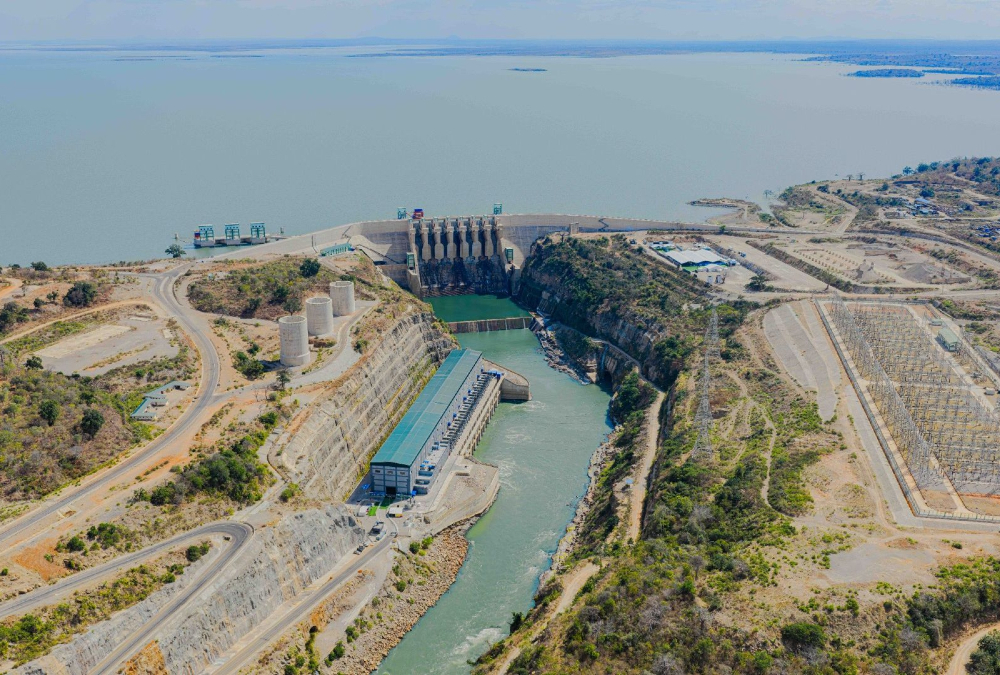
On August 22, 2026, Tanzania officially commissioned the Julius Nyerere Hydropower Project (JNHPP), a 2,115-megawatt facility on the Rufiji River that stands as the largest power station in East Africa and one of the largest dams on the continent. Nine turbines, each generating 235 megawatts, now feed electricity into the national grid through a new 400-kilovolt transmission network.
The math is the headline. JNHPP more than doubled Tanzania’s generation capacity, pushing the national total to roughly 4,646 megawatts against peak domestic demand of about 2,271 megawatts. That leaves a surplus north of 2,300 megawatts – enough to power the country’s own ambitions and still have plenty left to sell.
Built at a cost of roughly 7.45 trillion Tanzanian shillings (about US$2.9 billion) and financed entirely through domestic resources, the project was constructed by an Egyptian consortium and has been decades in the making; the government first began weighing a dam at Stiegler’s Gorge back in the 1960s. Funding gaps and shifting political priorities repeatedly shelved it, until Dodoma revived the project as a national strategic priority and pushed it to completion.
President Samia Suluhu Hassan, presiding over the inauguration in Rufiji, used the occasion to push back on years of skepticism. She rejected the notion that the dam would become a “white elephant,” pointing to progress on major transmission infrastructure, and framed the project’s completion as proof of national capability – one she hopes will unlock momentum for the country’s other strategic ambitions.
That is not empty rhetoric. It is a bet that energy self-sufficiency can be the foundation for a broader industrial transformation – and Tanzania is already moving to cash it in.
From Domestic Fix to Regional Anchor
What makes JNHPP more than a national infrastructure story is what Tanzania plans to do with the excess capacity: export it.
Dodoma has signed an agreement to sell power to Zambia and reached a separate trading arrangement with Kenya, positioning Tanzania as a net electricity supplier rather than a net importer for the first time in its history. The Democratic Republic of Congo and Burundi are also positioned to benefit through expanded regional grid interconnections, which stand to stabilize manufacturing and processing operations in landlocked corridors that have long struggled with unreliable power.
This is where the story shifts from a national success to a regional inflection point. Three effects are worth watching closely:
Manufacturing gets its missing input. Consistent, affordable baseload power removes one of the most persistent bottlenecks to industrialization – the ability to run factories, agro-processing plants, and heavy industry without the constant threat of outages eating into output and eroding investor confidence.
Regional economies stop competing for scarce power. Cross-border power pools mean neighboring economies no longer need to rely on volatile fuel imports or expensive standby generation to keep operations running. That lowers the cost of doing business precisely as companies look to scale across East and Southern Africa.
Trade corridors get more credible. Reliable energy infrastructure is a signal to investors as much as it is a utility. It suggests a level of institutional follow-through that makes East Africa look less like a collection of individual markets and more like an integrated economic bloc worth betting on.
The AfCFTA Test Case
Energy security has always been treated as an abstraction in discussions about the African Continental Free Trade Area (AfCFTA) – a precondition mentioned in passing before the conversation moves on to tariffs and customs harmonization. JNHPP forces a more concrete question: what does structural transformation actually look like when the power constraint is lifted?
Tanzania’s answer, so far, is regional power-sharing agreements negotiated alongside the dam’s completion, not years after it. That sequencing matters. Infrastructure that arrives with export agreements already in motion sends a different signal than infrastructure that sits idle while diplomats negotiate access.
None of this guarantees success. Megaprojects of this scale carry real risks – cost overruns, transmission bottlenecks, environmental trade-offs along the Rufiji River basin, and the political durability of cross-border agreements once they are tested by actual demand. Surplus capacity on paper is not the same as reliable delivery at scale, and Tanzania’s neighbors will be watching closely to see whether the power actually flows as promised.
But the direction of travel is unmistakable. A country that spent decades importing anxiety about its own electricity supply is now exporting electrons to its neighbors. If Tanzania can convert that surplus into durable regional trade relationships, JNHPP will be remembered as more than a dam. It will be the moment East Africa’s industrial ceiling started to lift.
Ratnakar Wagh is an entrepreneur, management professional, and CEO of Tanzania-based Kinglion Investment Company, an investment firm driving industrial development across Africa through initiatives in manufacturing, renewable energy, and logistics infrastructure. He specializes in organizational transformation, sustainability, and leadership, with a strong focus on building high-performing teams and creating long-term value across emerging markets.
