
Alorh’s eye on the Motherland
Nuclear Energy : US – Africa relations

By Mary Alorh
A few months ago, I wrote about how the United States and its allies could reestablish a strong presence in Africa following the events in the Sahel region. One key suggestion was to focus on forging strong partnerships with the littoral states, fostering growth and development for these countries and the continent as a whole.
In recent months, the U.S. has made strides in this direction, building relationships with countries like Ghana, Benin, and Ivory Coast (Côte d’Ivoire). Notably, in Côte d’Ivoire, the U.S. is constructing a new military base to support counter-terrorism operations in the region.
The U.S. has also partnered with Ghana to develop the nation’s first nuclear power plant, a significant step towards promoting sustainable development and energy security while addressing climate change concerns by reducing reliance on fossil fuels. This collaboration marks a positive direction for both nations.
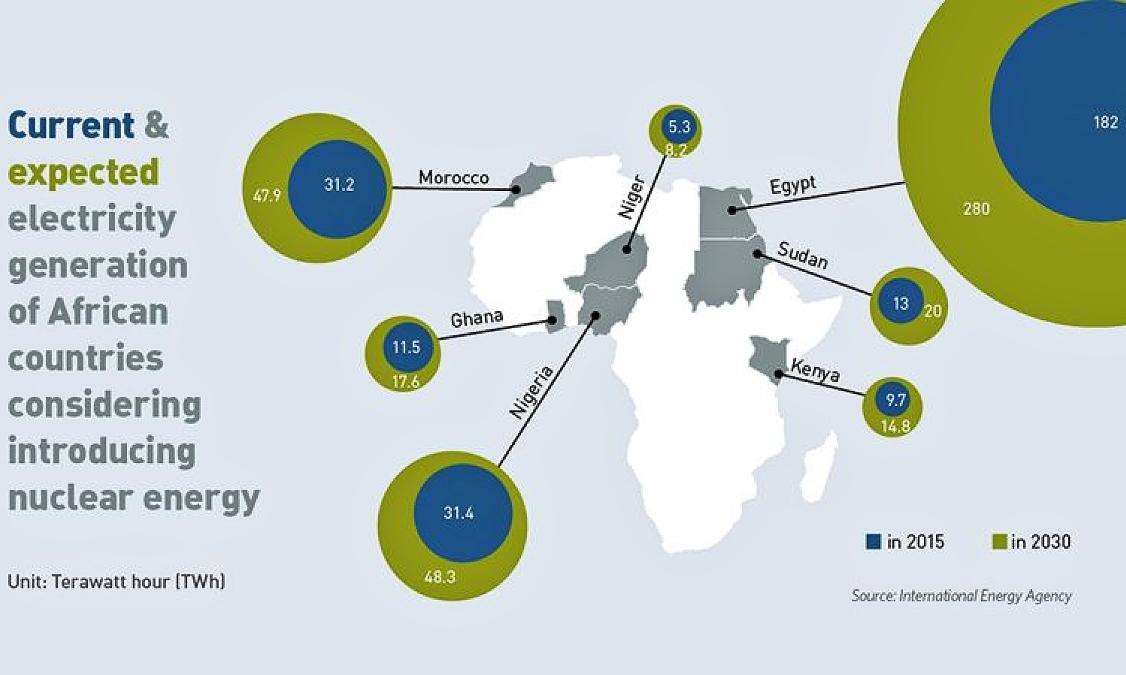
Ghana’s interest in nuclear technology is not new. In the 1960s, under the leadership of Kwame Nkrumah, the government launched the Kwabenya Nuclear Reactor Project despite significant opposition. Today, there are 440 nuclear reactors across 32 countries. Several African nations, including Rwanda, Uganda, and Egypt, are also exploring nuclear energy to achieve reliable electricity supply.
Now, more than 60 years later, Ghana is once again embarking on a nuclear journey, in partnership with the U.S., to build its first nuclear reactor. This initiative positions Ghana to become a hub for nuclear energy in West Africa.
Many African countries struggle with inadequate infrastructure for electricity generation, resulting in limited access to power. Ghana’s nuclear ambitions have regional significance, supporting the West African Power Pool’s vision for a unified energy market powered by clean and reliable energy.
Nuclear power is a critical low-emission source of electricity. From a public health standpoint, it is much safer than fossil fuels and plays a vital role in reducing global carbon emissions. Nuclear reactors account for nearly one-third of the world’s carbon-free electricity and are key to achieving climate goals. Unlike renewable energy sources, nuclear power is a reliable option, as it is not weather-dependent.
Ghana, well-acquainted with power shortages (locally known as “dumsor“), understands the importance of reliable energy for economic growth. Although the country has made significant improvements since 2016, it still faces challenges in providing safe, dependable, and clean energy.
From 2007 to 2015, Ghana experienced severe power crises, which triggered public protests and underscored the link between energy and national security.
This nuclear project also presents a strategic opportunity for the U.S. to counter the growing influence of China, Russia, Turkey, and other emerging powers on the continent, particularly in regions like the Sahel. In 2023, for instance, Burkina Faso signed an agreement with Russia’s Rosatom to build a nuclear power plant.
Mary Alorh is Director of Administration at DefSEC Analytics Africa Ltd., and is an expert in Gender, Youth, and Peace & Security initiatives in West Africa.
